Mammoth Tusks in Luxury Interior Design
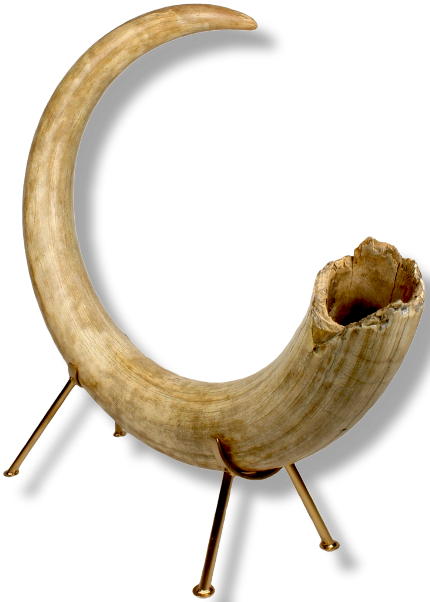
Some objects are designed. Some are manufactured. A very few simply exist, and a whole woolly mammoth tusk (Mammuthus primigenius) belongs to that last group. It was grown over a lifetime by a single animal that gracefully walked the Ice Age landscape, and it lay in the frozen ground of Siberia for thousands of years before it was recovered from the permafrost. Its form was shaped by the life of that animal, and no two tusks are alike.
That is what sets a natural mammoth tusk apart in a luxury interior. Designers and architects looking for a centrepiece that no other client will own are drawn to it for that reason. So are private collectors who value objects of genuine substance, and who would rather live with one remarkable thing than with many expensive ones.
The practical side of owning a tusk — mounting, light, climate and care — is covered in our guide "How to Display a Fossil Mammoth Tusk: A Collector's Guide to Care, Mounting & Interior Design." The focus here is the tusk itself, and the part it can play in a room.
A Natural Object in a World of Manufactured Luxury
Even the finest manufactured object belongs to a series. However limited the edition, its design exists, and another can be made. A mammoth tusk has no design and no series. It is a natural object, and its supply is finite. The woolly mammoth is extinct — its last known population survived on Wrangel Island in the Arctic Ocean until about 4,000 years ago — and no new mammoth tusk will ever grow. The tusks that exist today are all there will ever be.
In that respect, a mammoth tusk has more in common with the work of an artist who is no longer living than with any product of a luxury house: the body of work is closed, and each piece in it is the only one of its kind. Every tusk is singular in its length, its girth, its curve, its surface and its colouring.
It is also entirely real. A natural mammoth tusk is not a composite or an imitation. It is the animal's own tusk, preserved in the permafrost, carrying the long, sweeping curve it grew in life. That curve, together with its scale, is what makes a tusk work architecturally. Seen in a room, it reads as sculpture from every angle: an organic line set against straight walls, ceilings and joinery, or a calm, weighty presence within a richer, layered scheme.
A Colour Palette Formed by Nature
No designer chose the colours of a mammoth tusk. They developed during its long burial, as minerals from the surrounding ground interacted with the tusk, and they are as individual as the tusk itself.
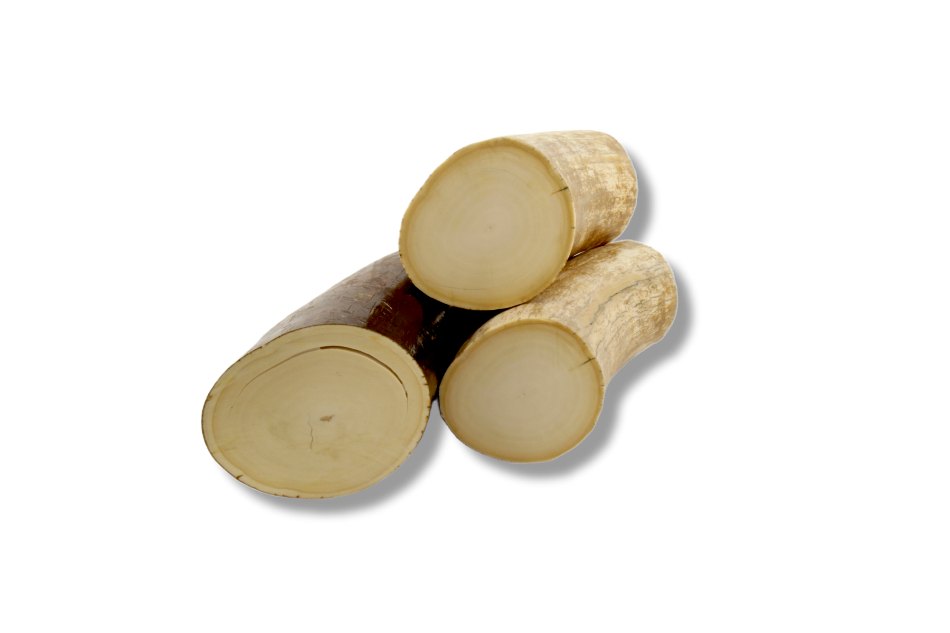
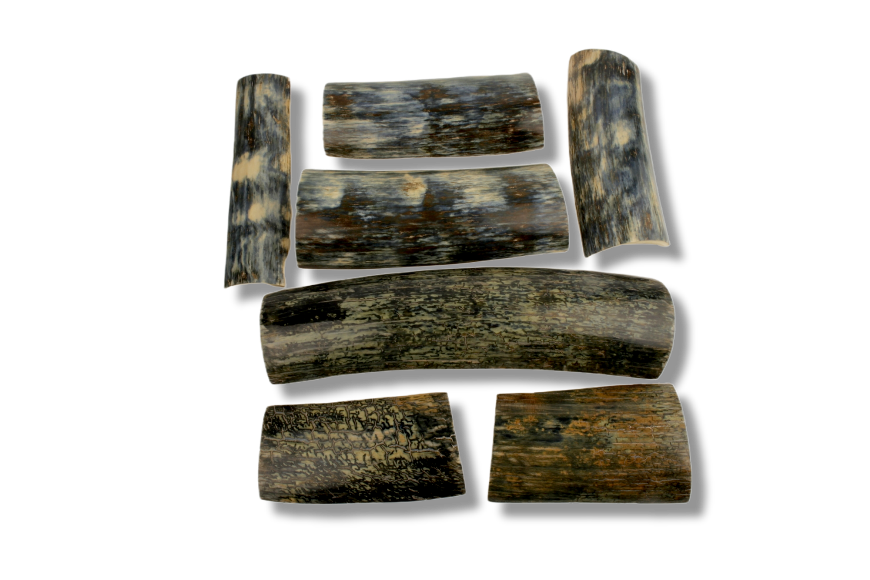
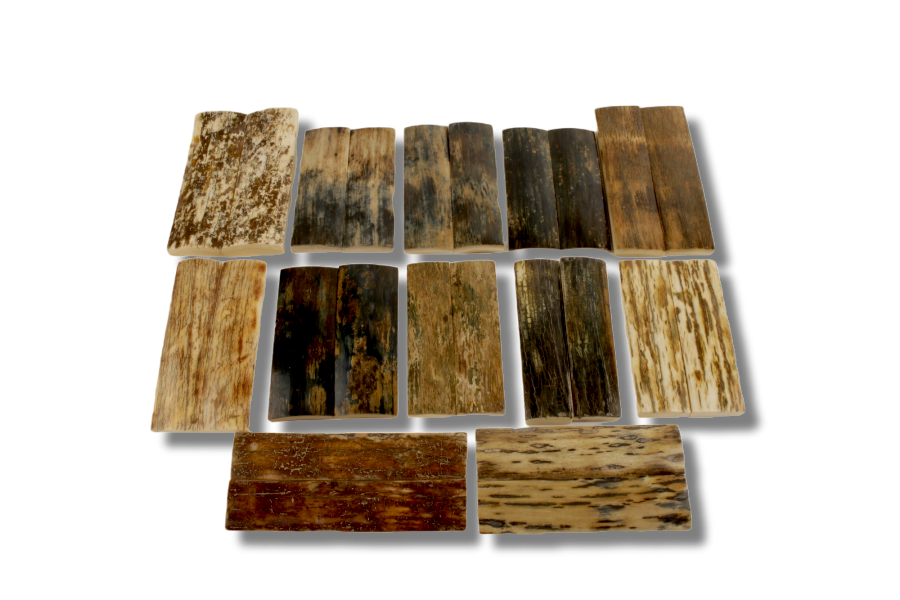
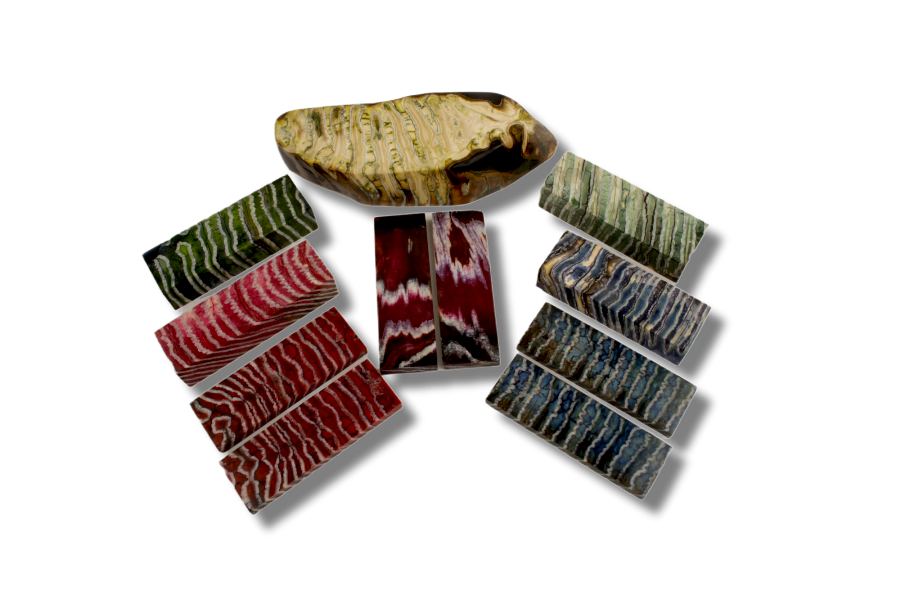
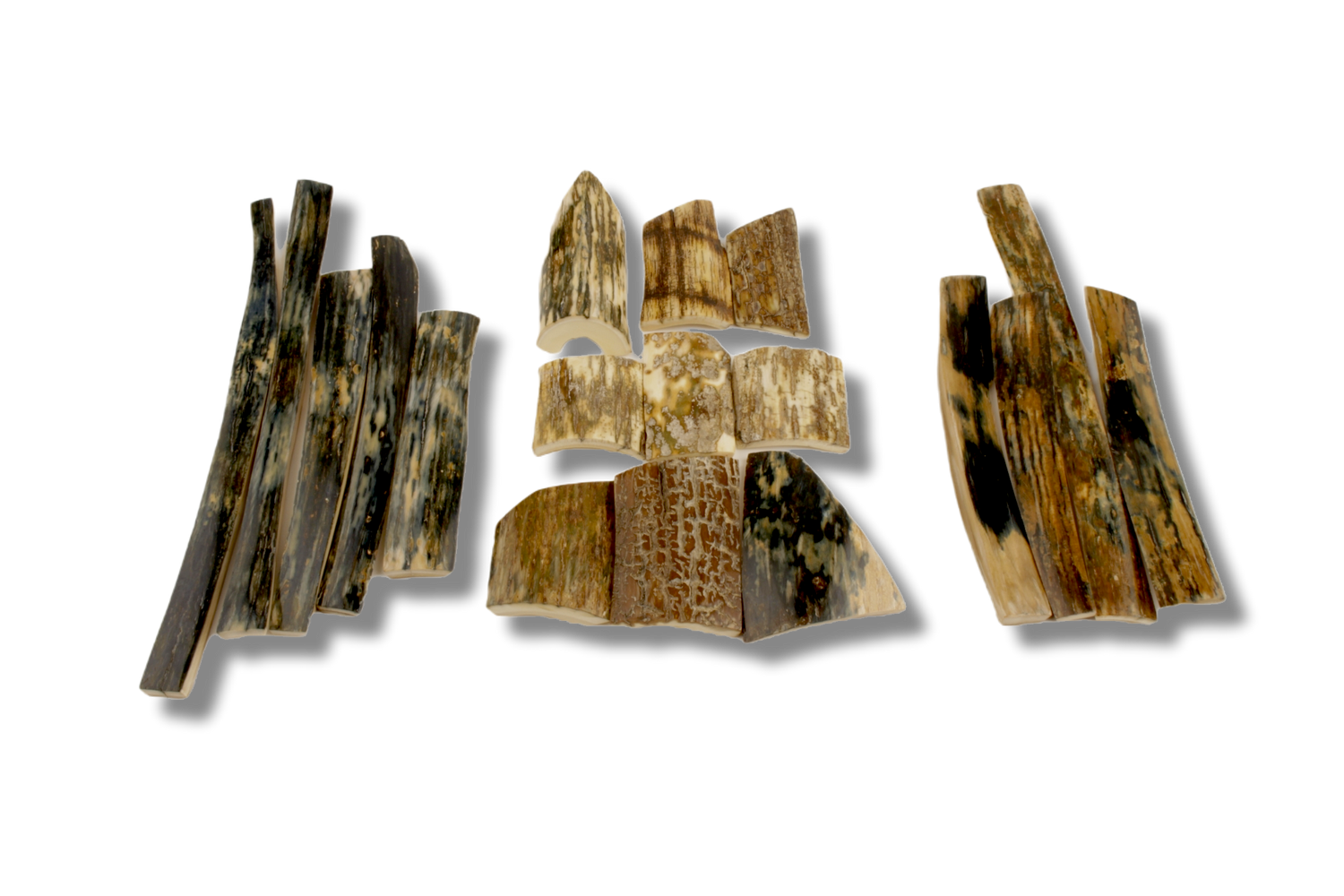
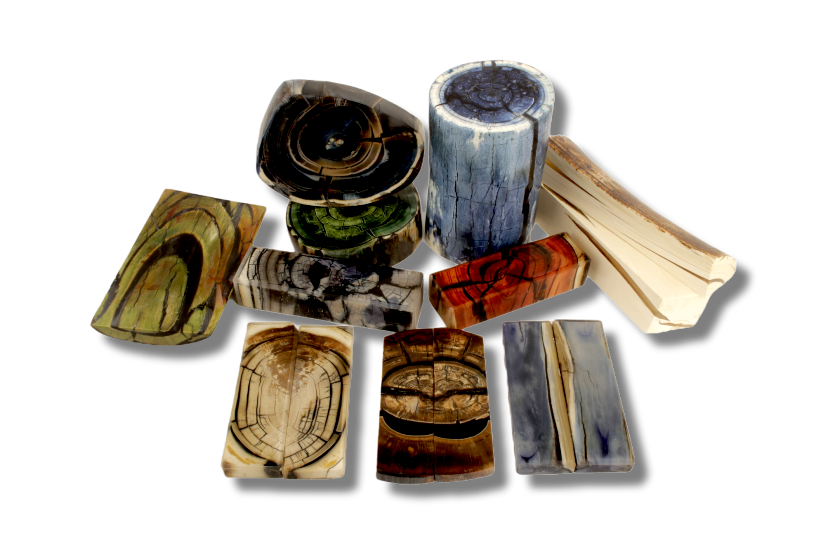
The outer layer of a tusk, known as mammoth bark, is often brown, in shades ranging from pale honey and warm tan through caramel to deep chocolate, and it is often darker along natural cracks. Gemmological research has traced these brown tones to iron and manganese minerals that crystallised on the surface during burial. More rarely, the bark can appear blue, deep blue or even almost black. The blue tones are associated with vivianite, an iron phosphate that forms as iron entering the tusk reacts with the phosphate in the ivory. Beneath the bark lies the ivory itself: dentine with the creamy, yellowish-white tone that most people associate with ivory.
The result is a palette that cannot be ordered, matched or repeated. Two tusks of similar size can differ markedly in colour, and the colouring can vary considerably along a single tusk. On a natural tusk, these colours are the tusk's own: nothing has been dyed or painted on. For anyone composing an interior, that palette becomes a starting point — warm browns that sit naturally beside leather, walnut, oak and stone, and rarer cool blues that bring depth to a contemporary scheme of plaster, steel or pale timber.
A Piece of Natural History That Starts a Conversation
Every mammoth tusk carries a story, and it is not a story anyone invented. A tusk continued growing throughout its owner's life, so its length can preserve a record of that life from youth to old age. Scientists have shown how literally this can be read. In a study published in Science in 2021, researchers analysed strontium isotopes along the full 1.7-metre (5.6 ft) length of a single woolly mammoth tusk and reconstructed where that animal travelled across its roughly 28-year life, some 17,100 years ago — and how its range changed from one stage of life to the next.
Few tusks will ever be studied in that way. Every tusk, however, belonged to an individual animal that lived during the last Ice Age, on a landscape very different from today's, and then lay in the frozen ground of Siberia for millennia. Placed in a room, it brings all of that with it. Guests ask how old it is, where it was found, how something so large survived for so long. It is the rare object that people want to walk around, to look at more closely, and to talk about.
The fascination is far from new. The Venus of Hohle Fels, a small figurine found in a cave in the Swabian Jura of southwestern Germany, was carved from mammoth ivory at least 35,000 years ago and is among the oldest known examples of figurative art anywhere in the world.
The story of a mammoth tusk was not written by a designer or a brand. It was written by nature, over many thousands of years.
Where a Mammoth Tusk Comes Into Its Own
A mammoth tusk is at home wherever a space is meant to be remembered. Our bespoke selection of mammoth tusks spans a wide range of sizes, curvatures and price levels, allowing a designer to select a piece suited to the scale and character of the space. Five settings show what is possible.
The private residence. In a double-height hall, on a stair landing, or at the point where a long enfilade of rooms converges, a large tusk holds its own against architecture on a grand scale. In a more intimate drawing room, a smaller tusk on a console can anchor a seating group without overwhelming it.
The library, study or private office. Among leather bindings, dark timber and the soft light of a reading lamp, a tusk becomes the room's quiet centre of gravity: an object that rewards a long look and suits a space made for thinking. Behind a desk, it speaks of permanence and a long view.
The chalet and the hunting lodge. Stone, oak beams, weathered larch, a fire and a window full of peaks. In such rooms, the curve and warm colouring of a tusk echo the landscape outside and carry it indoors.
The superyacht. A saloon or owner's suite at sea is among the most exclusive spaces there are. A natural tusk gives it something no shipyard can build and no other owner can order. On board, secure mounting deserves particular attention at the design stage.
Hotels, restaurants and members' clubs. In a hotel lobby, a tusk becomes a first impression that guests photograph and remember. In a restaurant or club whose interior tells a story — of the north, of exploration, of the wild — it can become the signature object that gives the room its identity.
Choosing a Tusk for a Space
The right tusk is the one the room seems to have been waiting for. Size alone does not decide it, and a larger tusk is not automatically the better choice. Five considerations help.
Scale. Judge the tusk against the room rather than in isolation: its length along the curve against the width of the wall and the height of the ceiling, and its girth against the furniture around it. A long, dramatically curved tusk needs a double-height hall, a wide living room or the far end of a gallery or saloon. A more compact tusk suits a console, a desk, a bookcase or a vitrine, where it can be appreciated at close range.
Space around it. A tusk needs room to breathe. The empty space around it — clear wall, open floor, an uncluttered surface — decides whether it reads as elegant or crowded. A tusk of modest size, generously spaced, often has more presence than a much larger one squeezed into a corner.
Curve and orientation. The same tusk reads very differently standing upright on a stand, rising like a crescent, or held horizontally on a wall, where its sweep runs with the line of the room. A stand makes it a freestanding sculpture to be walked around; a wall mount makes it part of the architecture. It is worth deciding where the tusk will be seen from — the doorway, the sofa, the dining table — before deciding how it will be presented.
Colour and material. Warm browns and honey tones settle into classic and rustic interiors alongside leather, wood and stone; the rarer blue and slate tones bring depth and coolness to contemporary ones. A tusk can harmonise with its surroundings or stand in deliberate contrast to them, and a raw, organic form set against polished stone, glass or lacquer can be the most striking choice of all.
Role in the room. Decide whether the tusk is to be the single focal object, with everything else arranged around it, or one element in a considered collection of natural objects, books and art. The first calls for a statement piece and generous space; the second for a tusk whose scale and colouring sit comfortably with what surrounds it.
Our particular passion is the natural tusk: a specimen recovered whole and offered without restoration, so that its character is entirely its own. For many collectors, that authenticity is precisely the point, and it is in its natural state that a tusk is at its most beautiful. We also offer professionally restored tusks for settings where a more complete or uniform line is preferred; the distinction is explained in "Natural vs Restored Mammoth Tusks." What determines the price of a tusk is set out in "How Much Is a Mammoth Tusk Worth? A Buyer's Guide."
Every large mammoth tusk in our Tusks collection is accompanied by a Certificate of Origin, issued on our application by the German Chamber of Industry and Commerce (IHK). The certificate documents the declared origin of the tusk; it is not a scientific authentication of the specimen. For a designer specifying a piece on a client's behalf, it forms part of the tusk's documentation, which should remain with the tusk for as long as it is owned.
Matched Pairs
Where a single tusk creates a focal point, a pair creates a composition. Set either side of a fireplace, a doorway, an archway or a long console, two tusks frame a space and give it a formal, almost architectural symmetry. A genuine pair from the same animal is rare, and it offers a naturally related composition: two tusks that grew together, on one animal. Symmetry is not the only option, though. A single tusk placed off-centre and balanced by a painting or a piece of furniture can give a room a more relaxed, contemporary feel. We usually have pairs available.
Smaller Pieces, the Same Story
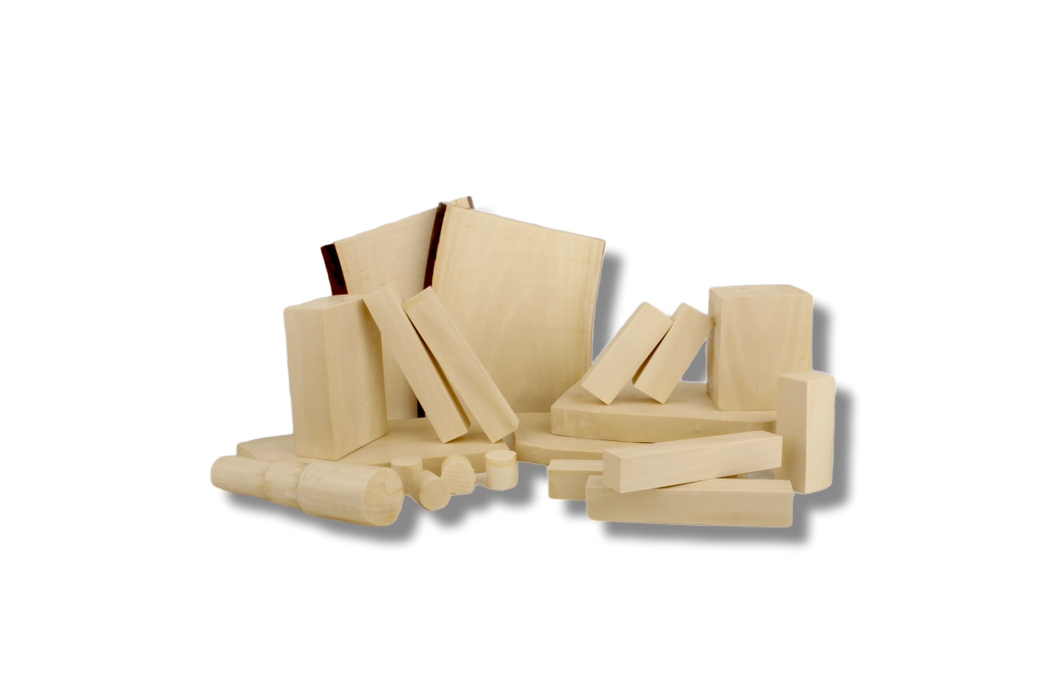
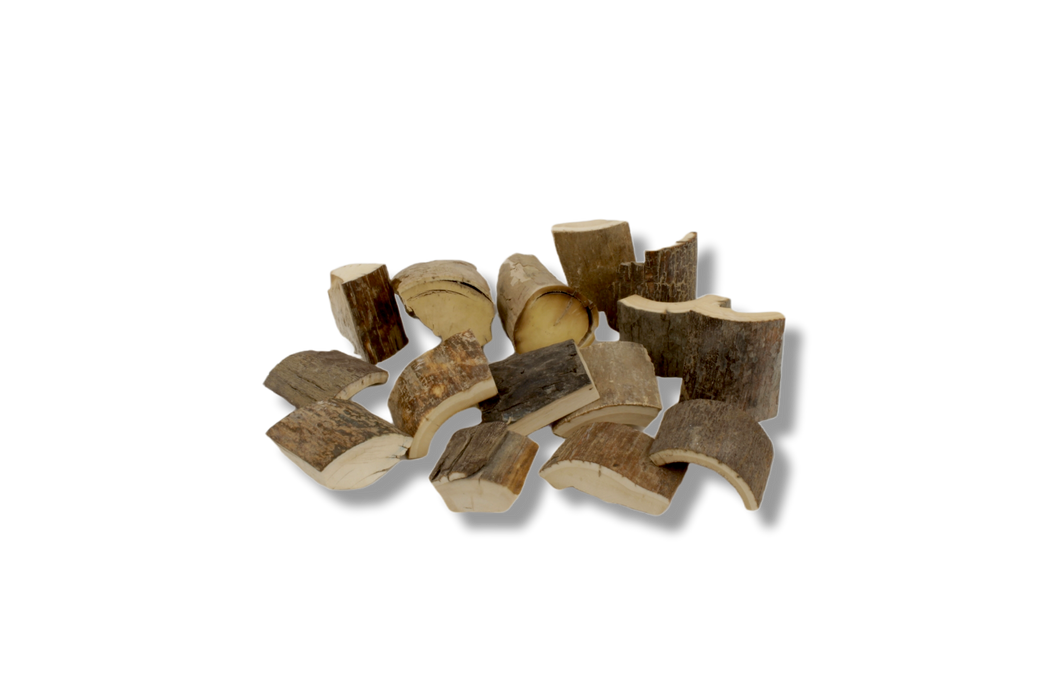
Not every space calls for a whole tusk. In a private study, on a bookshelf, desk or console, or inside a glass vitrine, a smaller natural specimen can be the better choice. It is seen at arm's length, where its surface, colouring and texture can be studied closely, and it sits comfortably within a collection rather than commanding the whole room. Smaller specimens of this kind are gathered in our Collection Pieces, and each carries the same deep history as its larger counterparts.
For readers interested in mammoth ivory as a working material rather than as a complete natural specimen, its characteristics are described in "What Is Mammoth Ivory?".
Meaningful Luxury, Held in Trust
Owning a mammoth tusk is a different kind of luxury. The tusk existed long before its owner and will exist long after, and that changes the nature of ownership.
Because the woolly mammoth has been extinct for thousands of years, its ivory is not obtained by hunting any living animal. How fossil mammoth ivory is sourced and documented, and how the claims of any supplier can be tested, is set out in "The Business of Ethical Mammoth Ivory: Sourcing, Identification and Verification."
We regard ourselves less as sellers of these tusks than as their temporary custodians. For more than twenty-five years our small family business has looked after them with deep respect for the natural history they represent, and we prefer to see a whole tusk kept whole rather than cut or carved, so that future generations can encounter it exactly as we do. Whoever acquires one takes on that same role. With its documentation kept alongside it, a natural mammoth tusk can be handed on intact — to children, to grandchildren, or one day to a museum — still carrying the story it has told for millennia.
If you have any questions, please email us: info@arcticantiques.com
Bibliography:
Conard, N. J. (2009). "A female figurine from the basal Aurignacian of Hohle Fels Cave in southwestern Germany". Nature, 459(7244): 248–252. DOI: 10.1038/nature07995. (The Venus of Hohle Fels, carved from mammoth ivory at least 35,000 years ago.)
Huang, Z.; Chen, T.; Zheng, J.; Wang, D.; Xu, X. (2023). "Origins of Color in Brown Mammoth Ivory". Gems & Gemology, 59(2). Gemological Institute of America. (Brown as the most common surface colour; occasional blue to black surfaces; iron and manganese minerals crystallised during burial as the cause of brown colouration; recovery from permafrost deposits.)
Shen, M.; Lu, Z.; Xu, Y.; He, X. (2021). "Vivianite and Its Oxidation Products in Mammoth Ivory and Their Implications to the Burial Process". ACS Omega, 6(34): 22284–22291. DOI: 10.1021/acsomega.1c02964. (Vivianite, formed by infiltrating iron reacting with phosphate in the ivory, as the cause of blue colouration; yellowish-white dentine.)
Vartanyan, S. L.; Garutt, V. E.; Sher, A. V. (1993). "Holocene dwarf mammoths from Wrangel Island in the Siberian Arctic". Nature, 362(6418): 337–340. (Survival of the last woolly mammoths until approximately 4,000 years ago.)
Wooller, M. J.; Bataille, C.; Druckenmiller, P.; et al. (2021). "Lifetime mobility of an Arctic woolly mammoth". Science, 373(6556): 806–808. DOI: 10.1126/science.abg1134. (Strontium isotope analysis along a 1.7-metre tusk reconstructing the movements of a mammoth that lived about 17,100 years ago, across its roughly 28-year life.)