Mammoth Ivory Customs Codes: HS Classification for Raw, Worked and Finished Products
Our article "Is Mammoth Ivory Legal? A Buyer's Guide to CITES, National Law and Customs" explains why fossil mammoth ivory sits outside CITES and where national law still applies. It touches on customs classification only briefly, and promises this article.
Customs classification is the part of international trade that buyers notice only when it goes wrong. A correctly classified consignment moves. An incorrectly classified one is held, queried, re-assessed, and occasionally returned. For fossil mammoth ivory the question is more involved than for most goods, because the same biological material can fall under four or five different headings depending on what has been done to it and how it is presented.
Arctic Antiques GmbH is a German company. Our entire stock is held in our office in Germany, in our own ownership, and every international shipment leaves Germany under a German export declaration with the documentation that German and European Union (EU) law require. Before going further, one point of scope. This article concerns shipments that leave the European Union. Shipments within the EU are not affected by the customs declarations, customs duties and import formalities this article describes, and the reason is worth setting out because it is a frequent source of confusion.
The European Union is a single customs territory. Article 28 of the Treaty on the Functioning of the European Union establishes a customs union covering all trade in goods, which prohibits customs duties between Member States and applies a common external tariff to goods arriving from outside. The extent of that territory is defined in Article 4 of the Union Customs Code. Internal customs duties between Member States were abolished on 31 December 1969.
Our fossil mammoth ivory has already been imported into Germany, with the full German import documentation that entry required, and released for free circulation. Under Article 28(2) of the Treaty, goods from third countries that are in free circulation in a Member State enjoy the same freedom of movement as goods originating there. Our stock therefore has the status of Union goods.
The practical consequence is straightforward. When we ship from Germany to a customer in France, Italy, Spain, the Netherlands or any other Member State, no customs declaration is made, no customs duty arises and no import formalities apply, because the consignment never crosses a customs frontier. Value-added tax is a separate matter governed by its own rules and is not a customs charge.
Everything that follows — export declarations, commodity codes, HTS numbers, de minimis thresholds and tariffs — applies only when a parcel leaves the EU customs territory. That is what we mean in this article by an international shipment.
This article explains how that works, which codes arise in practice, and why the numbering looks different depending on which country you are in.
One qualification governs everything below, and we state it before any code appears. Arctic Antiques GmbH is not a customs broker, and we do not provide customs advice, legal advice or advice of any other professional kind. Tariff classification must be established for the individual product and the destination country. It depends on the precise nature, condition, presentation and intended use of the goods, and on the national tariff in force. It is ultimately a matter for the declarant and the customs administration concerned. What follows describes our own practice and the published nomenclature it rests on. It is not a definitive classification of any particular item.
Three Different Numbers for the Same Goods
The single most common source of confusion is that the same consignment carries different code lengths in different countries. This is not an inconsistency. It is how the international customs system is built.
The German customs administration sets this out directly. The basis of the classification system is the Harmonized System, administered by the World Customs Organization, which fixes the first six digits.
Those first six digits are the only part that is internationally harmonised. They are identical in Germany, the United States, the United Kingdom, Japan and every other territory applying the Harmonized System. Everything after the sixth digit is national or regional, and differs from one customs territory to another. This is the single most useful thing to understand about customs codes, and it explains most of the apparent contradictions people encounter when comparing paperwork from two countries.
From the sixth digit onward, the European Union (EU) extends the code to eight digits through the Combined Nomenclature. Digits nine and ten encode EU measures such as tariff quotas and suspensions, producing the ten-digit TARIC code. Germany adds an eleventh digit for national purposes.
From that structure follow three practical rules, all stated by the Zoll (German customs) itself:
For an import declaration into Germany, the full eleven-digit Codenummer (code number) is always required. This is the German term for the complete import commodity code, and there is no shorter English equivalent in official use.
For an export declaration out of the EU, only the eight-digit Warennummer (commodity code) is required. This is the same number published by the Federal Statistical Office in the Warenverzeichnis für die Außenhandelsstatistik (Commodity Classification for Foreign Trade Statistics) and used for Intrastat reporting.
The United States operates its own Harmonized Tariff Schedule, in which the first six digits match the HS and the remaining digits are national. A US entry is made on a ten-digit HTS number, and all of our shipments to the United States carry the appropriate ten-digit US HTS code.
In practice this means a parcel leaving our premises in Germany for a customer in the United States carries both numbers, each where it belongs. We ship most of our parcels to the United States with DHL, and the ten-digit US HTS code is entered on the DHL customs form to ensure the consignment clears without difficulty. Where a German export declaration is also required, that declaration carries the eight-digit German Warennummer (commodity code).
The first six digits of the two numbers agree, because they are the internationally harmonised part. Beyond that they diverge, because each territory subdivides for its own purposes. Anyone comparing the two and expecting them to be identical will conclude something is wrong when nothing is.
A German export declaration is not required for every parcel. It is lodged only where the weight of the consignment exceeds 1 kg or its value exceeds €/EUR 1,000, and the thresholds are explained in full further below. Where one is required, it is lodged electronically through ATLAS, the automated tariff and customs handling system. The authoritative reference for both import and export classification is EZT-Online, the Electronic Customs Tariff maintained by the Generalzolldirektion (General Directorate of Customs).
The Principle That Decides Almost Everything: "Worked" or "Unworked"
Before any individual code, one distinction does most of the work, and it is routinely misunderstood.
The controlling definition comes from the World Customs Organization's Explanatory Notes to heading 96.01. For customs purposes, "worked" describes material that has undergone processes extending beyond the simple preparations permitted for the raw material. The Notes state that the heading covers pieces of ivory in the form of sheets, plates, rods and the like, cut to shape, or polished, or otherwise worked by grinding or drilling.
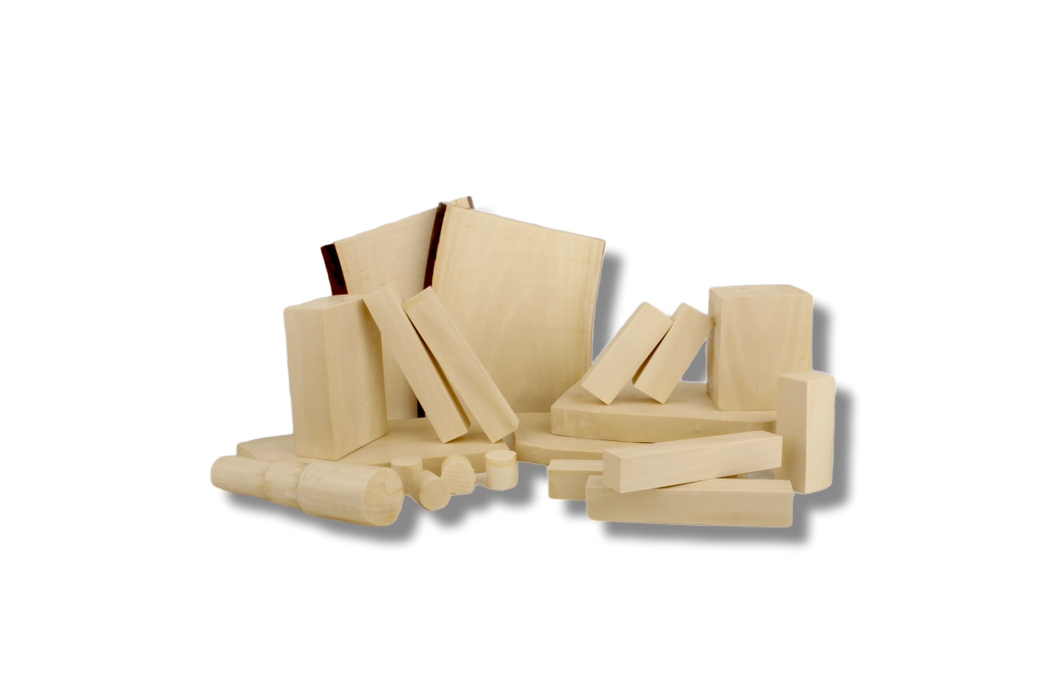
"Working" therefore has nothing to do with carving, engraving or artistry. A plain rectangular block sawn from a mammoth tusk and sanded flat is "worked" ivory for customs classification purposes, even though no artistic work has been done to it whatsoever. Cutting to shape, polishing, grinding and drilling all cross the line. Relatively simple cleaning or preparation may remain within the concept of "unworked" material.
The German nomenclature reflects the distinction. The Federal Statistical Office's alphabetical index to the Warenverzeichnis (commodity classification) lists Elfenbein bearbeitet (worked ivory) and Elfenbeinwaren (articles of ivory) under 9601 10.
Note 3 to Chapter 5 is also worth knowing, because it explains why mammoth material engages the ivory provisions at all despite the species being extinct: throughout the nomenclature, the tusks of elephant, hippopotamus, walrus, narwhal and wild boar, rhinoceros horn and the teeth of all animals are regarded as ivory. A mammoth tusk is a tooth.
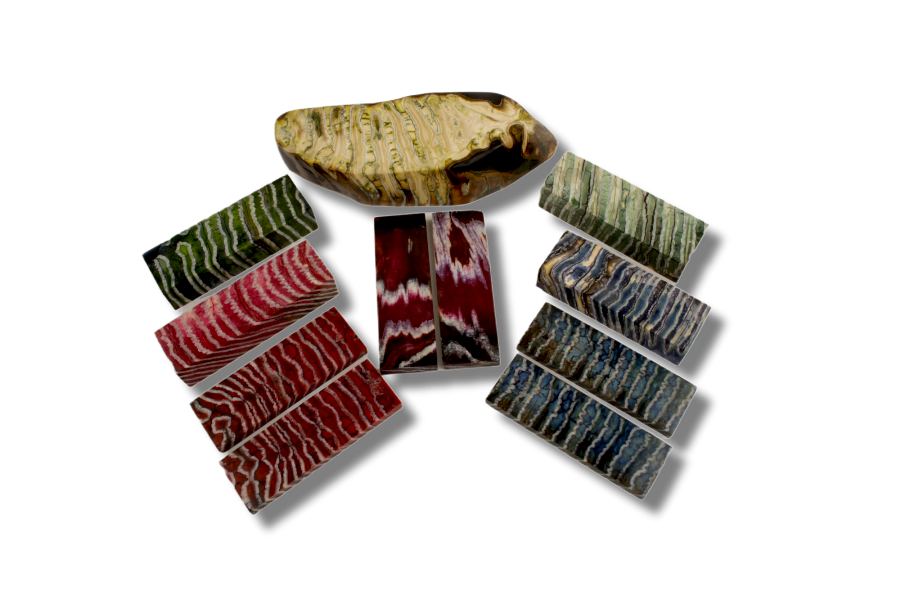
Stabilised mammoth ivory has been cut and impregnated with specifically mixed resin under vacuum. Both operations extend well beyond simple preparation, so stabilised material is to be classified as "worked" — though, as always, the applicable classification remains a matter for the tariff and the customs authority concerned.
The Codes That Arise in Our Shipments
The following are the classifications that recur in our own export practice, shown in the ten-digit form used on the United States entry. The eight-digit stem is the German Warennummer (commodity code) for the export declaration. We give the official description from the nomenclature in each case rather than a paraphrase, because the official wording is what a customs officer will apply.
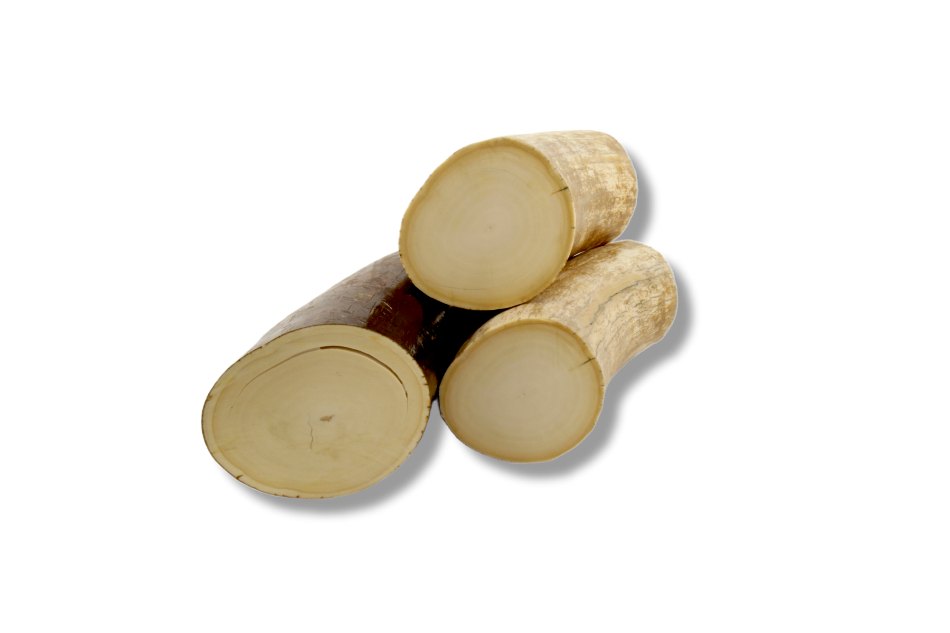
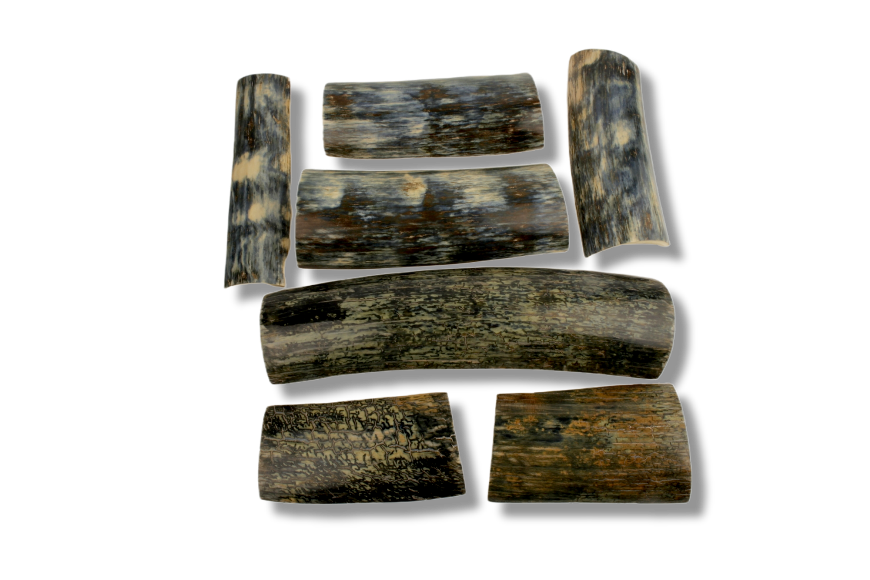
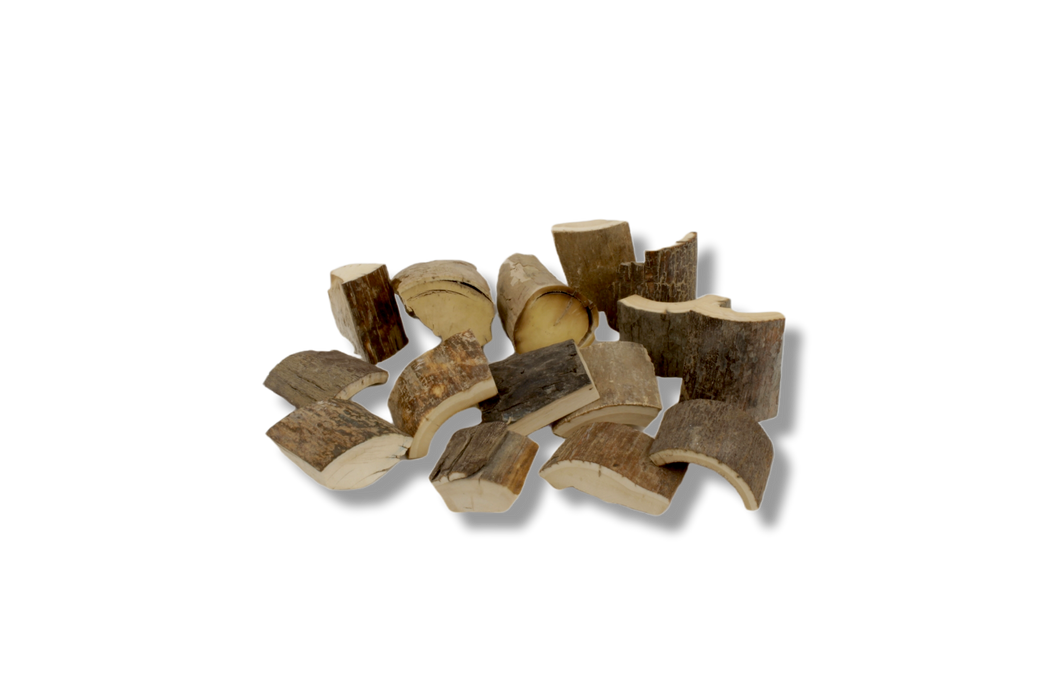
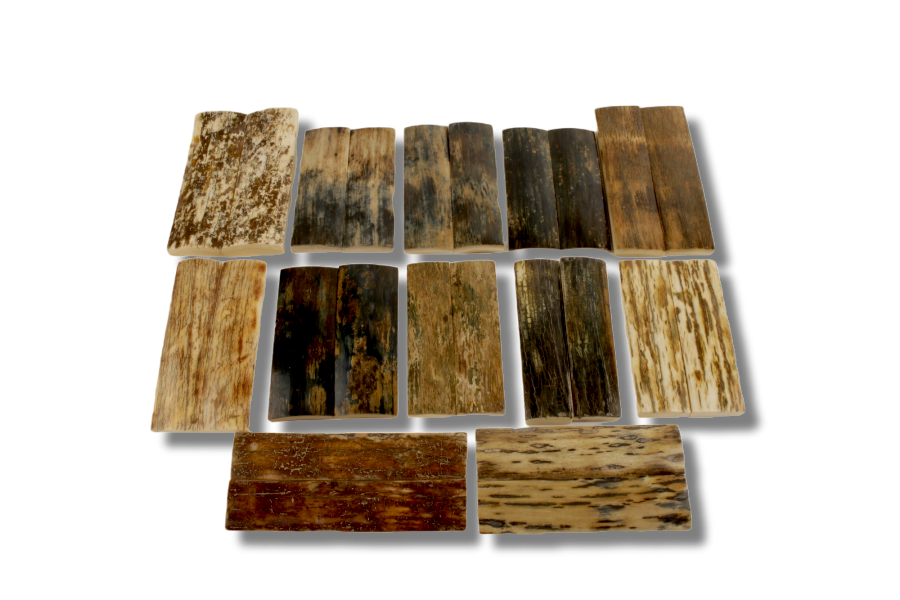
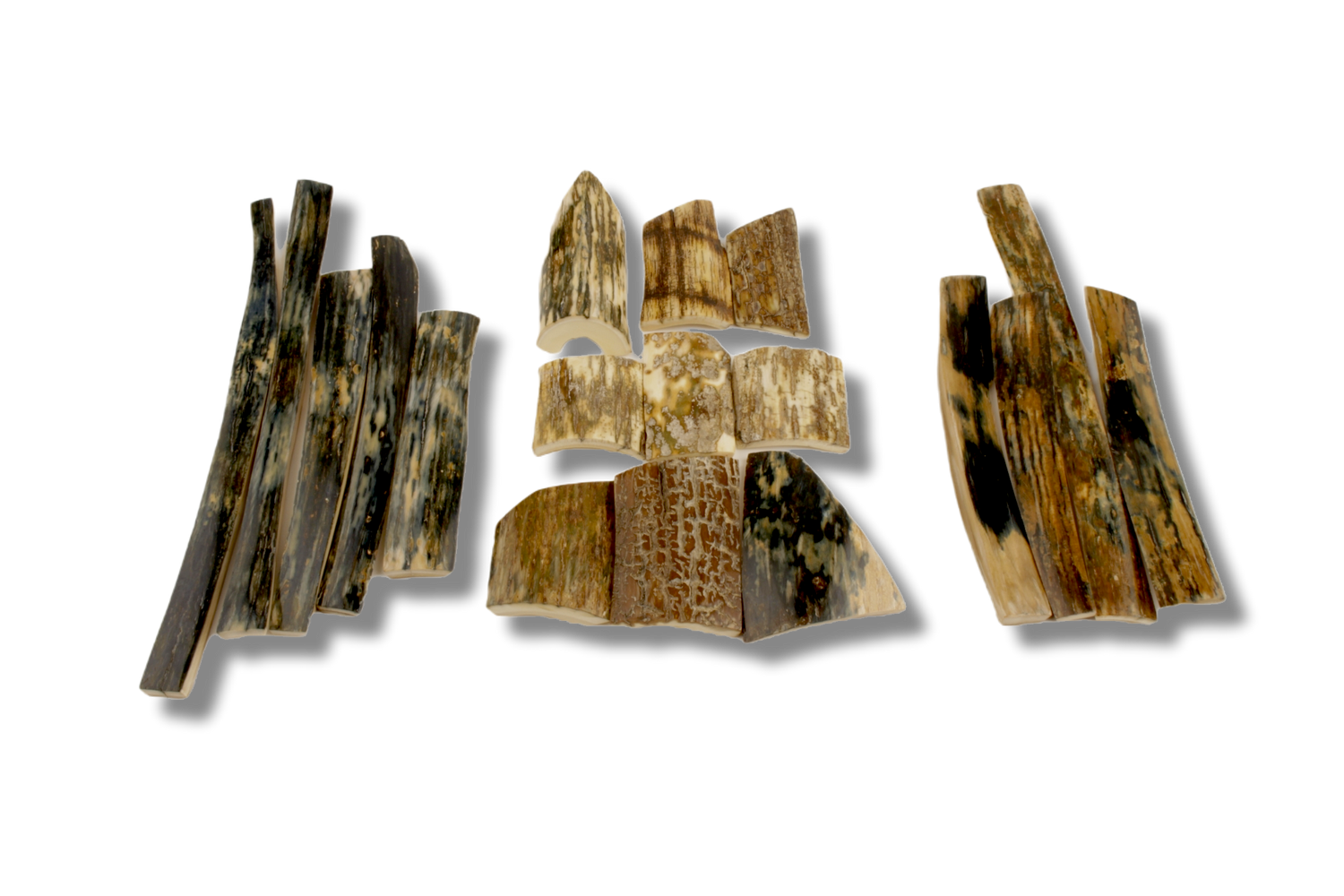
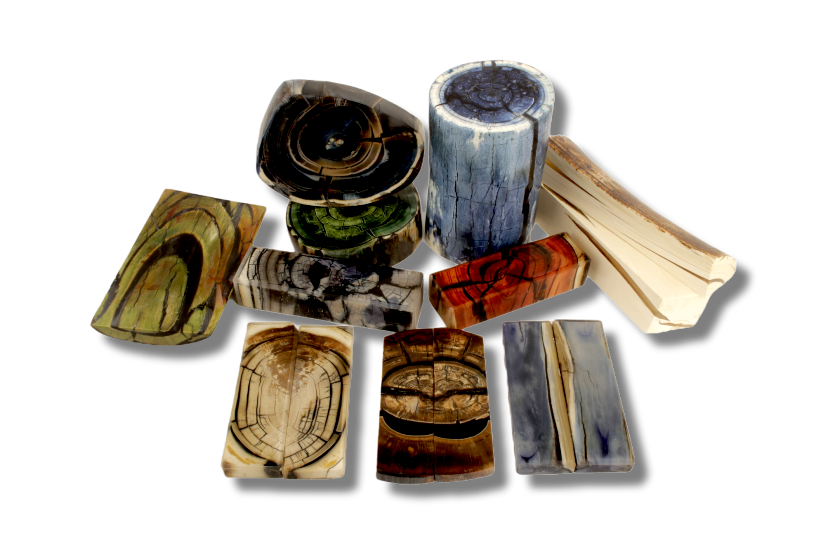
9601 10 00 — Elfenbein, bearbeitet, und Waren aus Elfenbein (worked ivory and articles of ivory). This is the code under which the majority of our products travel: cut segments, bark pieces, knife scales, blocks, sawn or ground offcuts, and stabilised ivory. If a piece has been cut to shape, polished, ground or drilled, this is where it belongs. In ten-digit form for the United States entry, 9601.10.00.00.
9601 90 00 — the residual subheading within heading 9601. The Combined Nomenclature describes it as Bein, Schildpatt, Horn, Geweihe, Korallen, Perlmutter und andere tierische Schnitzstoffe (ausg. Elfenbein), bearbeitet, und Waren aus diesen Stoffen, a.n.g. (bone, tortoise-shell, horn, antlers, coral, mother-of-pearl and other animal carving material, excluding ivory, worked, and articles of those materials, not elsewhere specified). We use this code for "unworked" material. Because the published wording of the subheading and its application to unworked mammoth material are not self-evident from the text alone, this is precisely the kind of classification that should be confirmed against EZT-Online for the specific goods, or settled by a binding tariff ruling. In ten-digit form for the United States entry, 9601.90.00.00.
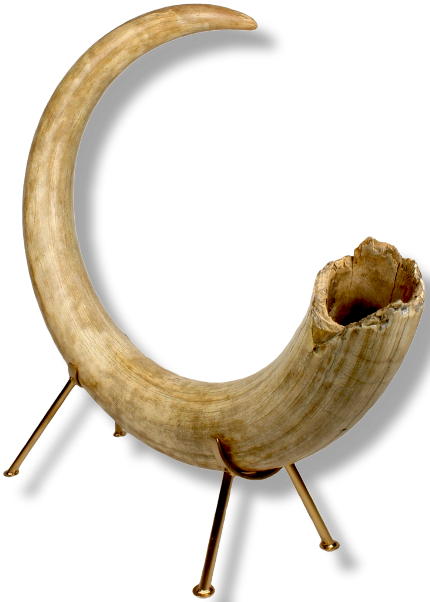
9705 22 00 — Exemplare ausgestorbener oder gefährdeter Arten und Teile davon (specimens of extinct or endangered species and parts thereof), as collections or collectors' pieces of zoological, botanical, anatomical or palaeontological value. This is the code for mammoth tusks, whether natural or restored. Tusks are collectors' pieces in the proper sense — they go to museums, galleries, fossil collectors and private collections — and this subheading, created in the 2022 revision of the Harmonized System, describes them more precisely than any other provision in the tariff. Note also that goods classified under heading 9705 may engage the EU cultural goods regime under Regulation (EU) 2019/880. That regulation applies to objects of palaeontological interest which are more than 200 years old and have a customs value of €18,000 or more; the tariff heading alone does not trigger it, and both thresholds must be met. The point is set out more fully in our legality article. In ten-digit form for the United States entry, 9705.22.00.00.
9703 90 00 — Originalerzeugnisse der Bildhauerkunst, aus Stoffen aller Art (ausg. mehr als 100 Jahre alt) (original sculptures and statuary, in any material, other than more than 100 years old). This is the code for our carved pieces, and the reason is a detail that is easy to miss. Since the 2022 revision, heading 9703 has been split by the age of the work: 9703 10 00 for sculpture more than a hundred years old, and 9703 90 00 for everything else. The age refers to the sculpture, not to the material it is made from. A figurine carved recently from thirty-thousand-year-old mammoth ivory is a new sculpture, and belongs under 9703 90 00. Our carved figurines therefore fall under 9703 90 00, because they were carved less than 100 years ago, however ancient the ivory they were carved from. In ten-digit form for the United States entry, 9703.90.00.00.
7117 90 00 — Fantasieschmuck, anderer (imitation jewellery, other). Mammoth ivory jewellery that does not incorporate precious metal, pearls or precious or semi-precious stones belongs in Chapter 71 rather than Chapter 96, and the reason is explicit: Note 1(c) to Chapter 96 provides that the chapter does not cover Fantasieschmuck (imitation jewellery) of heading 7117. Where the article is of base metal, 7117 19 00 applies instead; where non-metallic material predominates, as in an ivory pendant on a cord, 7117 90 00 is the provision. This is why the goods description on the paperwork should state Fantasieschmuck (imitation jewellery) expressly — that word is what directs the classification away from Chapter 96. In German eleven-digit form the code is 7117.90.00.00.0, and in ten-digit form for the United States entry, 7117.90.00.00.
Why Chapter 5 Does Not Arise
Heading 0507 covers ivory, tortoise-shell, whalebone, horns, antlers, hooves, claws and beaks, raw or simply prepared. It is sometimes wrongly assumed that an uncut mammoth tusk must belong there. It does not, and the structure of the nomenclature explains why.
Chapter 5 is headed Andere Waren tierischen Ursprungs, anderweit weder genannt noch inbegriffen (other products of animal origin, not elsewhere specified or included). That final phrase makes it a residual chapter. Goods that are specified elsewhere in the nomenclature do not fall into it.
Fossil material such as fossil mammoth ivory is specified elsewhere. Heading 9705 covers collections and collectors' pieces of palaeontological value, and since the 2022 revision subheading 9705 22 00 names specimens of extinct or endangered species and parts thereof expressly. A woolly mammoth tusk recovered from Siberian permafrost and presented as a specimen is described there far more precisely than by a heading drafted for raw animal by-products.
Once material has been cut, ground or polished it is "worked", and heading 9601 applies instead. Between the two, our goods are accounted for. We have never classified our material under 0507 10 and have never been advised to.
Why the Same Goods Are Not the Same Thing at a Border
A complete raw tusk, a cut section, a piece of bark, inner core, a set of knife scales, a finished carving and a pendant are not interchangeable at a frontier, even though the species is identical in every case. They differ in what has been done to them and how they are presented, and those are precisely the facts the nomenclature keys on.
Declaring a "worked" article under a raw material heading, or the reverse, invites exactly the delay that correct classification is meant to avoid. The same applies to describing a piece of ivory jewellery without the word that signals Chapter 71.
Restoration deserves a specific note, because it is a category we supply and because it is frequently misunderstood. Professional restoration does not change the biological species: a restored mammoth tusk remains fossil mammoth ivory. Restoration is distinct from manufacture, and it should be documented rather than concealed. Where consolidating resins or adhesives have been used, that treatment belongs on the accompanying paperwork, both because customs may ask and because a future buyer is entitled to know. Our approach is set out in "Natural vs Restored Mammoth Tusks."
What Accompanies a Parcel Leaving Germany
Not every parcel requires a formal export declaration, and it is worth being precise about when one does.
Where a consignment exceeds 1 kg in weight, or where the value of the shipment exceeds €/EUR 1,000, we lodge a formal export declaration — an Ausfuhranmeldung (export declaration) — through ATLAS, the German customs administration's automated tariff and customs handling system. That declaration carries the eight-digit Warennummer (commodity code), a description of the goods, the value, the weight and the destination. Below those thresholds, a formal ATLAS declaration is not legally required. The consignment instead travels under a CN 22 customs declaration, together with the same accompanying paperwork.
The CN 22 and its larger counterpart the CN 23 are the customs declaration forms of the Universal Postal Union, used for postal items sent to destinations outside the EU customs territory. They apply because we ship through the postal network: DHL Paket International and Deutsche Post Warenpost International are postal services operating within the Universal Postal Union system, and postal consignments are declared on a CN form rather than on the commercial-invoice-only basis used by the express couriers. The CN 22 is the short form, used for lighter and lower-value items; the CN 23 is the fuller version for parcels and higher values. It records the sender and recipient, a description of the contents, the quantity, the weight, the value and the commodity code, and it is attached to the outside of the item.
The distinction, then, is this. Where a consignment exceeds 1 kg or €/EUR 1,000, a formal Ausfuhranmeldung (export declaration) through ATLAS is required by law, in addition to the CN form and all the other documents described below. Below both thresholds, the CN 22 and the accompanying documents are what travel with the parcel. In either case the commodity code and the goods description are the same; what changes is whether a separate electronic declaration is lodged with German customs.
Every shipment, regardless of size, is accompanied by a commercial invoice identifying seller and buyer, describing the material as fossil mammoth ivory and giving the scientific name Mammuthus primigenius in full.
Where a customer has ordered a Certificate of Origin, issued on our application by the German Chamber of Industry and Commerce (IHK), it is handled in two ways. The customer receives a digital copy by email, and the original document travels physically with the parcel.
What those documents prove, and what they do not, is set out in "The Business of Ethical Mammoth Ivory: Sourcing, Identification and Verification." A Certificate of Origin establishes declared origin; it is not a scientific authentication, not a certificate of legality, and it does not certify tariff classification.
The United States: Tariffs, De Minimis and Longer Transit
For our customers in the United States this subject stopped being academic in 2025.
The United States has introduced new tariff measures and suspended duty-free de minimis treatment under Executive Orders issued by President Trump — Executive Order 14324 of 30 July 2025, continued by Executive Order 14388 of 20 February 2026. U.S. Customs and Border Protection then published regulations on 24 June 2026 indefinitely suspending the de minimis exemption for mail shipments and establishing a dedicated postal informal entry process, effective 24 July 2026, with further compliance requirements following on 22 October 2026.
The practical consequence is that virtually every international shipment entering the United States now undergoes additional customs processing, and the classification on the entry matters more than it did when low-value consignments cleared without formality.
Since the tariffs were introduced we have encountered no classification difficulties and no refused entries attributable to how our goods are declared. What we have encountered are longer delivery times. Parcels are held longer at US customs, processing durations vary considerably between states, and tracking status can remain unchanged for many days and in some cases weeks. An unchanged tracking status does not mean a parcel is lost; it usually means it is waiting for customs processing.
None of that is within our control. Once a shipment is handed to DHL Premium in Germany it passes into the international postal network and then into the US customs system, and no exporter can accelerate, prioritise or bypass those procedures. What we can control is our own end, and we do: orders placed on a business day are dispatched within 24 hours, correctly declared, with complete documentation. The full picture, including why we ship by DHL Premium rather than express courier, is set out in "Shipping from Germany to the USA: Understanding Current Customs Delays and U.S. Tariffs."
When Classification Needs to Be Certain
Where a shipment is valuable, or its treatment genuinely uncertain, the reliable course is to obtain a binding ruling in advance rather than to argue about it at the border.
In the EU this is a Binding Tariff Information decision, valid for a maximum of three years under Article 33(3) of the Union Customs Code, and capable of ceasing to be valid earlier if the nomenclature changes or if the decision is annulled or revoked. The United Kingdom issues Advance Tariff Rulings through HM Revenue and Customs. The United States issues binding rulings through U.S. Customs and Border Protection, which publishes them in its Customs Rulings Online Search System.
A binding ruling gives legal certainty for the classification it covers, for a defined period. It does not prevent customs from inspecting a consignment or taking samples to confirm that the goods correspond to those described.
What We Can and Cannot Do
We classify our own goods for our own export declarations, and we take that obligation seriously. We are not customs brokers, we do not act as importers of record in other countries, and we cannot determine the classification that a foreign customs administration will apply to a consignment on arrival.
If you are importing our material and need certainty for your own entry, speak to a customs broker in your country, or apply for a binding ruling. We will supply whatever documentation you need in order to support you: the invoice, the goods description, the weights, the origin documentation and a clear statement of whether the material is natural, restored or stabilised.
If you have any other questions, please email: info@arcticantiques.com
Bibliography:
Generalzolldirektion / Zoll online. Informationen zum Zolltarif und zur Ermittlung der Codenummer — on the structure of the eleven-digit Codenummer, the role of the Harmonized System in the first six digits, and the requirement of the eleven-digit Codenummer for import declarations and the eight-digit Warennummer for export declarations.
Generalzolldirektion / Zoll online. Zolltarif — Fragen und Antworten (ATLAS), on EZT-Online and its relationship to TARIC.
Generalzolldirektion. EZT-Online Auskunft, the Electronic Customs Tariff enquiry system — the authoritative reference for German import and export classification: https://auskunft.ezt-online.de/ezto/Welcome.do
Generalzolldirektion. Benutzerhandbuch EZT-Online Auskunft.
Statistisches Bundesamt (Destatis). Warenverzeichnis für die Außenhandelsstatistik, alphabetical index: Elfenbein bearbeitet 9601 10; Elfenbeinwaren 9601 10.
Consolidated version of the Treaty on the Functioning of the European Union, Articles 28 to 30, establishing the customs union, prohibiting customs duties between Member States and extending free movement to goods from third countries in free circulation in a Member State.
Regulation (EU) No 952/2013 establishing the Union Customs Code, Article 4, defining the customs territory of the Union.
Council Regulation (EEC) No 2658/87 on the tariff and statistical nomenclature and on the Common Customs Tariff, as amended, establishing the Combined Nomenclature; and the Combined Nomenclature as published for the current year.
World Customs Organization. Harmonized Commodity Description and Coding System, headings 0507, 7117, 9601, 9703 and 9705; Note 3 to Chapter 5; Note 1(c) to Chapter 96; and the Explanatory Notes to heading 96.01 on the meaning of "worked". Subheading 9705.22 and the subdivision of heading 9703 by age of the work were introduced in the 2022 revision.
Universal Postal Union. Convention and Regulations, providing the CN 22 and CN 23 customs declaration forms for postal items.
Deutsche Post DHL. Zollinhaltserklärung CN 22 / CN 23 (customs declaration), as applied to DHL Paket International and Deutsche Post Warenpost International shipments to destinations outside the EU.
Regulation (EU) No 952/2013 establishing the Union Customs Code, Articles 33 and 34, on binding tariff information decisions and their period of validity.
Regulation (EU) 2019/880 of the European Parliament and of the Council of 17 April 2019 on the introduction and the import of cultural goods.
The White House. Suspending Duty-Free De Minimis Treatment for All Countries, Executive Order 14324, 30 July 2025; and Continuing the Suspension of Duty-Free De Minimis Treatment for All Countries, Executive Order 14388, 20 February 2026.
U.S. Customs and Border Protection. Indefinite Suspension of the De Minimis Exemption for Mail Shipments and New Postal Informal Entry Process, 91 Fed. Reg. 37801, 24 June 2026; effective 24 July 2026.
United States International Trade Commission. Harmonized Tariff Schedule of the United States, Chapters 5, 71, 96 and 97.