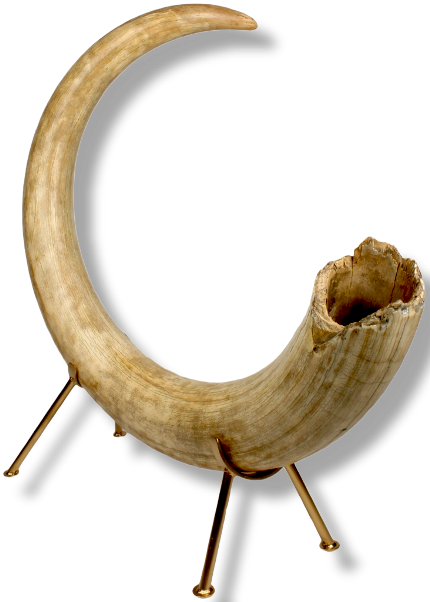
The Business of Ethical Mammoth Ivory: Sourcing, Identification and Verification
Our article "Is Mammoth Ivory Legal? A Buyer's Guide to CITES, National Law and Customs" sets out the legal framework: why fossil mammoth ivory is treated differently from elephant ivory, where that difference holds, and where national law overrides it. Legality, however, is only the first question. It establishes that a category of material may lawfully be traded. It says nothing about where a particular mammoth tusk came from, how it entered commerce, or whether the person selling it can demonstrate either.
This article addresses that second question. It explains what responsible sourcing of fossil mammoth ivory actually requires, how a legitimate mammoth ivory piece travels from the Siberian permafrost to a documented commercial product, and — most importantly — how a buyer can verify each stage for themselves rather than taking our word for it.
It also confronts the two strongest objections to our business directly: that trading fossil mammoth ivory might, despite appearances, harm living elephants, and that the way the material is extracted damages the Arctic environment. We set out the evidence on both, including the evidence against our position.
What "Ethical" Means Here, Stated as Testable Propositions
"Ethical" is an easy word to use and a hard one to check. We would rather define it as a set of specific claims that can be examined individually. For us, responsible trade with fossil mammoth ivory means all of the following:
The material originates from the extinct woolly mammoth, Mammuthus primigenius, which lived during the Pleistocene and disappeared from the Siberian mainland in the early Holocene.
No living animal was killed, injured or disturbed to obtain it. The animal died thousands of years before anyone found its remains.
The material was acquired through lawful channels and its provenance can be described.
Applicable export, import and customs requirements were met, and documentation exists to show it.
The material is never represented as anything other than what it is, and "mammoth" is never used as a description for material from a living species.
Destination-country restrictions are respected, including those that prohibit mammoth ivory.
Each of those is a factual claim about which a seller can be questioned. That is the point of stating them this way.
Why This Material Is Legally Different
Briefly, because our companion article covers it in full. Mammuthus primigenius is extinct and appears on no CITES Appendix, so CITES requires no permit or certificate for international trade in mammoth ivory. That is a statement about CITES alone. National, state, provincial, customs, fossil-heritage and biosecurity law can and does still apply — India and Israel prohibit the trade throughout their territories, and seven US jurisdictions restrict it.
The distinction that matters, and which is frequently blurred, is between three separate questions. Is the species CITES-listed? Is the trade lawful under the relevant country's law? And can the seller demonstrate the origin of this particular piece? A dealer who answers only the first is not answering the question a careful buyer is actually asking.
Where the Material Comes From
The majority of woolly mammoth carcasses are found in Siberia. According to the CITES Secretariat, approximately 80% of fossilised mammoth ivory originating in the Russian Federation comes from the Republic of Sakha (Yakutia). Our material comes from northern Siberian permafrost, principally Yakutia.
Collection there is licensed. Rights to collect palaeontological mammoth-fauna material are granted through a licensing system administered at republic level, within the framework of Russian subsoil legislation and the specific legislation of the Republic of Sakha (Yakutia). A collector registers a defined plot and obtains a licence for it. Indigenous communities may and do participate within that legal framework as licence holders. Published figures give a sense of the scale: in 2023, 781 licences for the extraction of mammoth tusks and other mammoth remains were issued in Yakutia, held by 117 users across fifteen Arctic and northern districts, with the largest concentrations in the Ust-Yansky and Abyysky districts. Obtaining the necessary permissions is reported to involve some two dozen separate certifications and to cost in the region of 50,000 roubles.
Two features of the Russian framework matter because they are frequently misunderstood. Under Russian law, only mammoth tusks that have naturally surfaced — typically through permafrost melting — may lawfully be harvested. And export is regulated separately from collection, under Russian legislation on the import and export of cultural property, with the Ministry of Culture as the responsible regulator. Tusks are subject to expert examination to determine their cultural and scientific value.
The Russian regulatory position is not static: federal legislation in this area has been under development for several years, and a buyer who needs the current position should not rely on any commercial website, including ours.
Responsible Collection and the Permafrost
An article that uses the word "ethical" has to address the environmental objection rather than wait for somebody else to raise it.
The CITES Secretariat's 2025 report on mammoth ivory states the concern plainly. Russian law permits the harvesting only of tusks that have surfaced naturally. However, the Secretariat records that some miners expedite the process by using high-pressure hoses to blast the permafrost, which can accelerate the destruction and loss of permafrost and pollute local river systems. It further notes that melting permafrost with high-pressure pumps can release carbon dioxide and methane trapped in the permafrost layers, and that when miners extract the tusks and leave the remainder of the carcass in place, decomposition can release further greenhouse gases. The proposal to list mammoth at CoP18 made the same argument.
We do not dispute this, and we will not claim that every practice historically associated with this trade is environmentally benign. It is not.
But there is a question rarely asked when the environmental impact of recovering mammoth ivory is discussed, and it is the one that decides whether the concern is proportionate: what is the physical scale of this activity compared with the other forms of resource extraction taking place in the same landscape?
The Scale of the Landscape
According to the Russian Federation's official Arctic portal, the Arctic territories of the Republic of Sakha (Yakutia) cover 1,608,800 square kilometres — around half the republic's total area of 3,103,200 square kilometres, and roughly a third of Russia's entire Arctic zone. In comparison, Germany covers approximately 357,600 square kilometres.
The Arctic zone of Yakutia alone is therefore about four and a half times the size of Germany. The republic as a whole is roughly eight and a half times the size of Germany. The Arctic zone's thirteen districts have a combined population of approximately 68,000 people — against Germany's 83 million in an area four and a half times smaller.
Against that, the licensed mammoth collection activity is remarkably thin on the ground. The published figures for 2023 record 781 licences for the collection of mammoth tusks and other mammoth remains, held by 117 users across fifteen Arctic and northern districts. Those are licence holders rather than a headcount of individuals in the field, so the number of people physically involved is higher. But the activity is unambiguously small and dispersed: a scattering of licensed collectors moving across a territory four and a half times the size of Germany, looking for material that the thawing ground has already exposed.
That does not make a damaging extraction method acceptable at the site where it is used. It does mean the effect has to be weighed against what else is happening on the same ground.
What Else Is Happening on the Same Ground
Yakutia is one of Russia's major mineral-producing regions, and the environmental record of that industry is documented in peer-reviewed research rather than asserted by us.
A 2022 study in Land on the mining industry of the Republic of Sakha and the environmental and social security of indigenous peoples records large-scale disturbance of the Earth's surface and pollution of water bodies, naming the Vilyuy, Daldyn, Malaya Botuobiya, Adycha, Allah-Yun, Seligdar and Khroma rivers. It records that 131,500 hectares of forest were flooded by the Vilyuy reservoir, raising phenol concentrations along the length of the river. It notes that more than half the territory of Yakutia north of 62°N is characterised by high vulnerability to technogenic impact, and that vulnerability doubles from south to north.
An earlier assessment of the region found that destructive diamond and gold mining had destroyed over 25,000 hectares of land in Sakha, and that these devastated areas remained without recultivation for lack of financing.
The comparison becomes sharper when you look at where each activity happens. The same Land study records that placer gold — more than 500 kilograms a year — is mined in Arctic Yakutia in the Ust-Yansky, Momsky, Verkhoyansk and Bulunsky districts. Ust-Yansky is also the district with the largest concentration of mammoth collection licences. In the same district, in the same permafrost, one industry strips and processes frozen ground at scale to recover metal, and another sends licensed collectors to pick up tusks that the ground has already given up.
The pattern is not unique to Yakutia. A satellite study of gold mining in the neighbouring Magadan Oblast cryolithozone found that in the Tenkinsky district the area of disturbed land increased more than sevenfold between 2001 and 2021, and identified alluvial gold deposits as the main source of suspended sediment in the Berelekh, Ayan-Yuryakh and Kolyma rivers.
Forestry adds a further layer across Russia as a whole. Around two million hectares of forest are lost annually to logging and land clearing. The Russian Federal Forestry Agency recorded 18,400 cases of illegal logging in 2014 alone, totalling more than 1.3 million cubic metres, and independent analysis of the Russian Far East has found illegal harvesting of valuable hardwoods running at two to four times the permitted volume, driven substantially by export demand.
We should be careful here, because the temptation to overstate is real. We have not found reliable evidence for the specific claim that hundreds of hectares of Yakut forest are illegally cut and sold to China each year, and a recent statement from the Yakutian Ministry of Ecology indicates that Yakut timber is currently supplied to the domestic market rather than exported to China. We do not make that claim. The documented pattern of large-scale illegal logging for export concerns the wider Russian Far East, particularly Primorsky Krai, rather than Arctic Yakutia specifically.
Why the Comparison Matters
Nor can we offer a clean numerical comparison of greenhouse gas emissions. No credible study quantifies total emissions attributable to mammoth tusk recovery across Yakutia and sets them against emissions from mining, forestry, road construction, fires or climate-driven permafrost thaw. Anyone who offers you that number has invented it. What the evidence does establish is the relative physical footprint, and there the difference is not marginal.
Mammoth ivory recovery attracts disproportionate attention for a reason that has nothing to do with its scale. It is unusual, visually striking and easy to picture: a person with a hose, a prehistoric tusk, a hole in the frozen ground. It makes an arresting photograph. Industrial placer mining across tens of thousands of hectares, or the annual loss of two million hectares of forest, does not photograph as well and is defended by far larger commercial interests.
We are not arguing that other industries' damage excuses poor practice in ours. It does not. The point is narrower and, we think, harder to dispute: the environmental discussion about mammoth ivory should be conducted at the same standard of evidence and proportion applied to every other form of resource extraction in the Arctic, rather than treating this one in isolation because it is conspicuous.
The useful questions are not whether recovering a mammoth tusk can damage the environment — it clearly can, depending on the method. They are: how large is the activity, what area is actually disturbed, what method was used, was the operation licensed, and how does its footprint compare with what else is happening in the same district?
Our own standard is straightforward. Russian law distinguishes the collection of naturally exposed material from extraction involving mining or other works, and the destructive hydraulic methods the CITES Secretariat describes fall outside what the law permits. The Secretariat's own observation is that while the trade itself is lawful, extraction is often conducted illegally, without permits or adherence to regulation. We source through identifiable, lawful, licensed commercial channels and do not support unlicensed or destructive extraction. That is a claim about our supply chain rather than about the industry as a whole, and a buyer is entitled to ask any supplier — including us — to explain it.
The Chain of Provenance
For legally collected commercial mammoth ivory from Yakutia, the supply chain broadly operates as follows.
A mammoth tusk, or fragments of one, are found at the surface on a licensed plot. They are acquired and consolidated by a Russian exporting company, and exported under Russian export documentation, having been subject to expert examination. They arrive in Germany and are cleared through German customs, generating import documentation. They enter our inventory, where they are cleaned, dried and prepared. They are sold against a commercial invoice describing the material and its origin, and exported from Germany under full customs documentation.
Each stage generates paperwork. We hold the import and customs records for our own inventory, and we supply the transaction-level documentation to the buyer. Provenance in this trade is documented at the level of the consignment and the company, not the individual specimen, and a seller who claims to trace a particular tusk to a named collector on a named plot is overstating what the system produces.
Does Mammoth Ivory Help or Harm Elephants?
This is the serious question, and it deserves a serious answer rather than an assertion. The argument against us runs: fossil mammoth ivory and elephant ivory resemble one another, therefore mammoth ivory provides cover for laundering elephant ivory, therefore the mammoth trade sustains elephant poaching. That argument is made in the peer-reviewed literature and was the basis of a formal proposal to bring mammoth within CITES.
The question has now been examined directly by the CITES Secretariat. Decision 19.102, adopted at CoP19 in 2022, directed the Secretariat to compile information on the potential contribution of mammoth ivory trade to illegal trade in elephant ivory and elephant poaching. The Secretariat reported to the Standing Committee in February 2025 in document SC78 Doc. 65.7. Its findings are the most authoritative source available on this question.
On whether laundering is widespread, the Secretariat concluded that although instances have been reported where elephant ivory was mislabelled as mammoth ivory, available information and studies suggest that the extent of this practice is limited and that mislabelling is not widespread, being mostly confined to small processed items in localised domestic markets.
On conservation impact, it concluded that neither the responses to its Notification to Parties nor the available studies provide clear evidence suggesting that the mammoth ivory trade impacts the conservation of elephants in range States. It went further: available information seems to suggest that the increase in trade in mammoth ivory might have contributed to reducing the price and demand for elephant ivory, thus reducing negative impact on elephant populations.
The economic mechanism behind that is quantified and peer-reviewed. Farah and Boyce, writing in Environment and Development Economics in 2019, modelled the effect of Russian mammoth ivory supply on elephant poaching. The Secretariat summarises their finding that without the 80 tonnes of Russian mammoth ivory exported annually from 2010 to 2012, elephant ivory prices could have doubled and poaching levels increased. It also records their estimates that one tonne of Russian mammoth ivory exports decreases elephant ivory seizures by between 0.4 and 1.1 tonnes, and that each tonne of exports lowers the price of elephant ivory by about 1.50 US dollars per kilogram. The Secretariat further notes that the CITES MIKE programme treats mammoth ivory as a covariate in elephant ivory supply and demand, and that mammoth ivory prices correlate with black-market elephant ivory prices.
This is the substitution mechanism as modelled. Where mammoth ivory acts as a substitute for elephant ivory, additional legal supply can reduce the price of, and the demand pressure on, the illegal product. The magnitude of that effect depends on consumer behaviour, enforcement, and the extent to which the two materials genuinely substitute for one another.
Two Parties addressed the question directly in their submissions. China, including the Hong Kong SAR, stated that laundering of elephant ivory as mammoth ivory is insignificant and rarely found, confirmed by shop inspections and market surveys, and argued that the mammoth ivory trade makes no contribution to the illegal killing of elephants. Canada stated that there is no evidence suggesting that trade in woolly mammoth ivory impacts the conservation of elephants in range States. A survey of the French market submitted by Robin des Bois indicated no recorded seizures of worked elephant ivory fraudulently labelled as mammoth ivory in France, and that the risk appears even lower for raw mammoth ivory.
Now the other side, stated fairly. The Secretariat also recorded concerns that the benefits may prove transient, since mammoth ivory is not a renewable resource and demand may revert to elephant ivory once supply is depleted. It documented real cases of mislabelling, including a New York store found in possession of 126 elephant ivory items valued at 4.5 million US dollars, mislabelled as mammoth ivory. It noted that when ivory is shaped into curved or dyed products, distinguishing mammoth from elephant becomes challenging, and that elephant ivory is sometimes deliberately discoloured to resemble mammoth, in which case DNA testing may be the only reliable method. Studies published in 2024 and 2025 developing Raman spectroscopy, stable isotope and DNA techniques are explicitly motivated by this concern.
The honest reading is this. The evidence supports a genuine substitution effect, although its magnitude and overall conservation consequences remain debated. The laundering concern is also genuine. Improved identification methods reduce that risk by making species substitution easier to detect, but identification works only when combined with documentation and effective enforcement. That is the case for rigorous practice at every stage, not a reason to dismiss the objection.
Why We Think the CITES Position Is Correct
The Secretariat reached a conclusion on this question too, and it is more directly supportive of our position than anything we could say ourselves. Considering the study findings, it stated that including mammoth ivory in CITES Appendix II would have limited benefit and might even be counterproductive, because such inclusion may disincentivise market actors from using mammoth ivory as a substitute for elephant ivory, which could inadvertently lead to an increase in illegal trade in elephant ivory and an increase in elephant poaching. It added that international permit requirements for an extinct species would introduce new administrative and financial burdens on Parties and divert limited resources away from protecting living endangered species from unsustainable international trade. The Secretariat also restated that the inclusion of an extinct species in the CITES Appendices falls outside the CITES mandate.
Our own view, clearly labelled as such: after more than twenty-five years in this trade we agree. Listing would provide no direct conservation benefit to mammoths, because the species is extinct. Proponents argue it could nevertheless indirectly benefit living elephants by making laundering harder. We think the better response to that risk is rigorous species identification, documentation and enforcement directed at the living protected species, rather than CITES controls on an extinct one. Readers should weigh the contrary literature for themselves.
It is worth noting what the Standing Committee was invited to recommend: that Parties exporting and importing mammoth ivory strictly apply the domestic regulatory measures they have in place, and that Parties where domestic ivory markets exist closely monitor those markets to identify, prevent and address any attempt to launder or mislabel elephant ivory as mammoth ivory. That is the standard we understand ourselves to be working to.
What Our Customers Tell Us
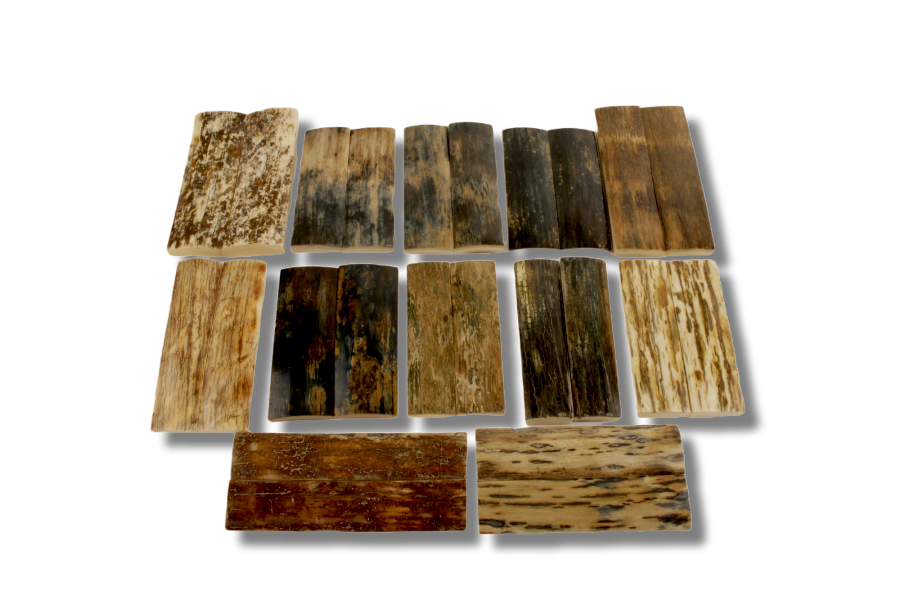
Something we can report directly, though it is observation rather than data. Over the years a significant number of our customers — knifemakers, musical component makers, gunmakers, engravers, scrimshanders, jewellers and restorers — have told us that they moved to fossil mammoth ivory from other ivories they previously worked with. The reasons they give are consistent: the natural colouration of mammoth bark, which occurs in no other material and cannot be reproduced; the density and stability of well-dried material; the documentation that accompanies it; and, repeatedly, the character of working a material that came out of the Ice Age.
We report this as customer feedback from our own trade, not as survey data.
Why Identification Matters, and What Proves It
Because mammoth and elephant ivory can resemble one another, correct identification is not merely a commercial nicety — it is what makes enforcement of elephant ivory restrictions possible. This is treated at length in "How to Identify Genuine Mammoth Ivory (and Spot Fakes)," and we will not repeat it here beyond the essential point.
The CITES Identification Guide for Ivory and Ivory Substitutes distinguishes the two materials by Schreger angle, with mammoth ivory exhibiting an angle of less than 90° and elephant ivory greater than 115°. In controlled discriminant analysis using Schreger pattern features together with information about location within the tusk, mammoth and extant elephant samples have been separated with greater than 99% accuracy; where location information is unavailable, accuracy is lower. It is a scientific identification tool, not a legal test, and it should not be applied as a single measurement on a single surface.
Identification in practice draws on tusk morphology, the cementum layer, dentine structure, mineralisation, magnification and, where value or doubt warrants it, laboratory analysis — Raman spectroscopy, FTIR, DNA sequencing or radiocarbon dating. Any customer is welcome to have a piece bought from us independently tested at their own initiative and expense, and we support that.
What Our Documentation Proves — and What It Does Not
This section exists because overclaiming is the fastest way to lose a careful reader.
We can supply a German Certificate of Origin, issued on our application by the German Chamber of Industry and Commerce (IHK), and we hold a Clearance Certificate from the German Federal Agency for Nature Conservation (BfN) confirming that Mammuthus primigenius appears on no CITES list. Every sale is accompanied by a commercial invoice describing the material and naming the species in full.
What these documents do not do:
A Certificate of Origin establishes declared origin. It is not a scientific authentication of a specimen, and not a certificate of legality. It does not certify tariff classification.
The BfN Clearance Certificate confirms the CITES status of the species. It is not an import permit and does not address any national restriction.
Neither document is a CITES permit or certificate. CITES does not require such documentation for Mammuthus primigenius, because the species is not listed in the CITES Appendices.
None of it overrides the law of the destination country. Documentation identifies material; it does not make an import lawful where the destination prohibits it.
A photograph alone does not establish species, and a single Schreger angle measurement should not be treated as conclusive.
"Fossil" does not automatically mean "unrestricted".
Being transparent about the limits makes the documents more credible, not less.
Preparation, and Why It Is Not Merely a Production Story
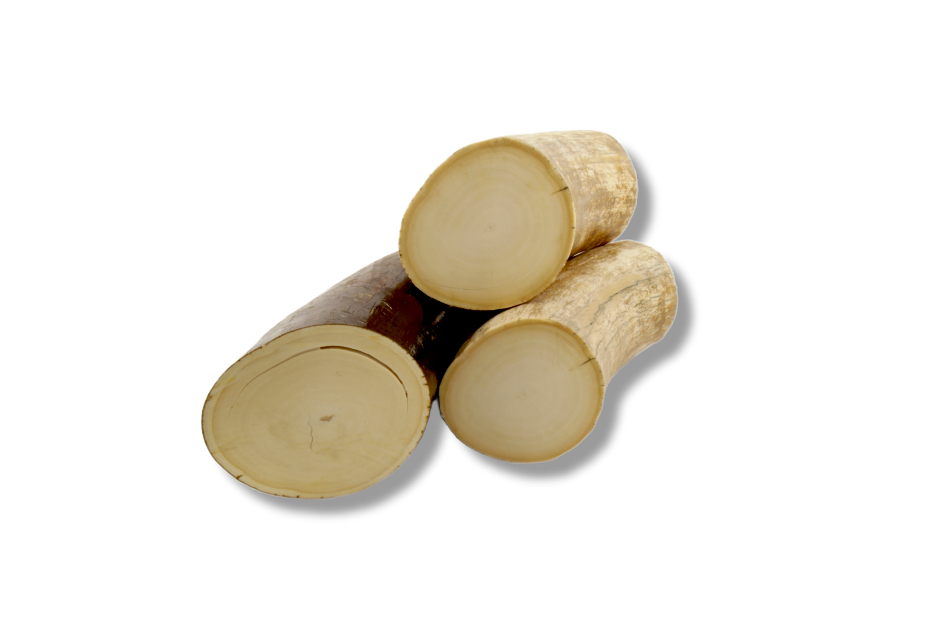
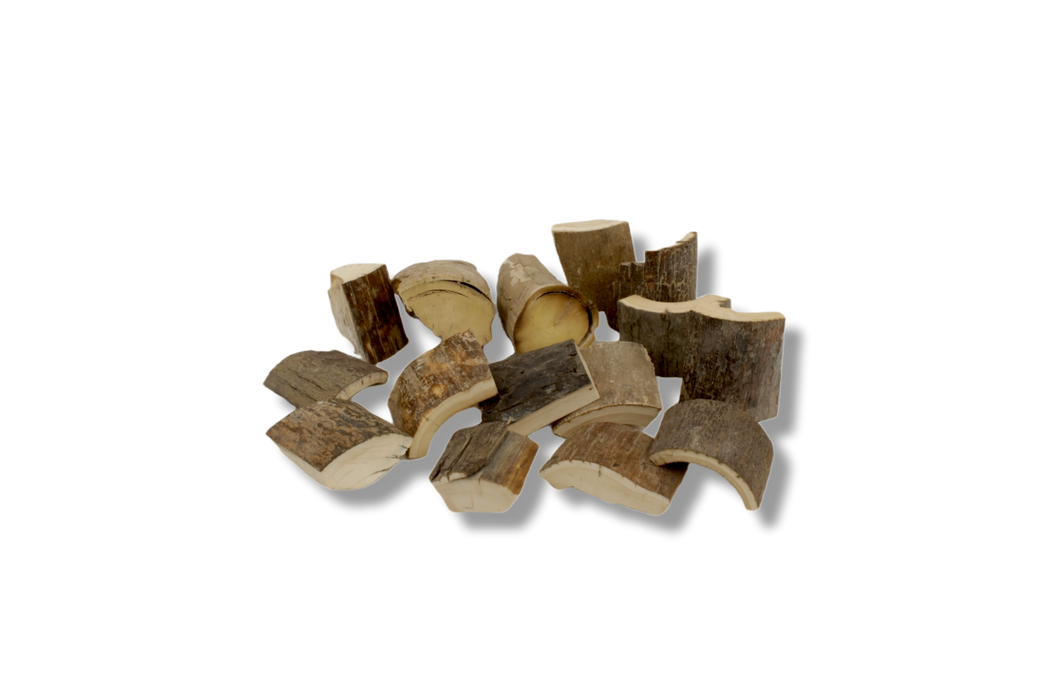
Mammoth ivory emerges from permafrost carrying moisture and sediment it has held for tens of thousands of years. Once removed from that environment it begins to equilibrate with ambient conditions, and because ivory is anisotropic — it moves differently along the grain than across it — uncontrolled drying sets up internal stresses that open cracks. Slow, controlled drying reduces those stresses. This is a material-science rationale, not a marketing claim, and it is why our white mammoth ivory segments typically dry under controlled conditions for at least five years before sale.
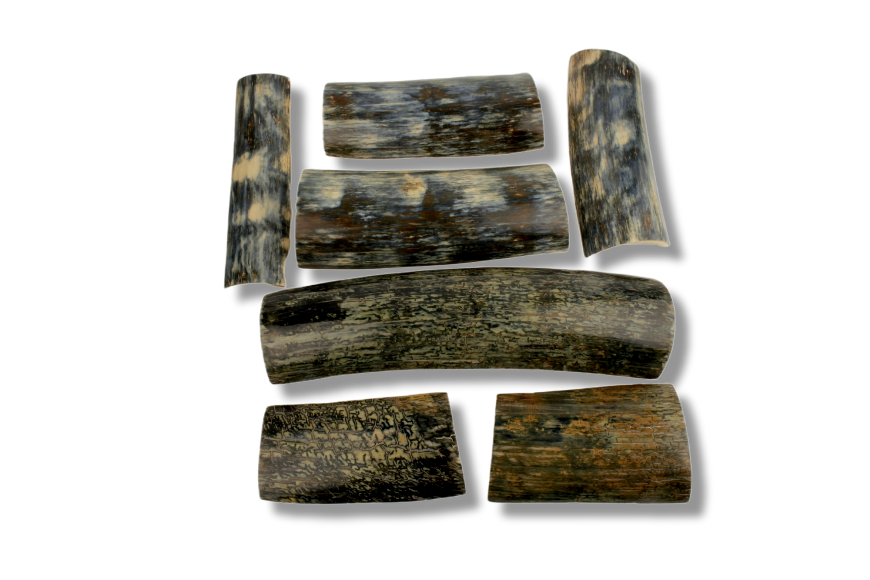
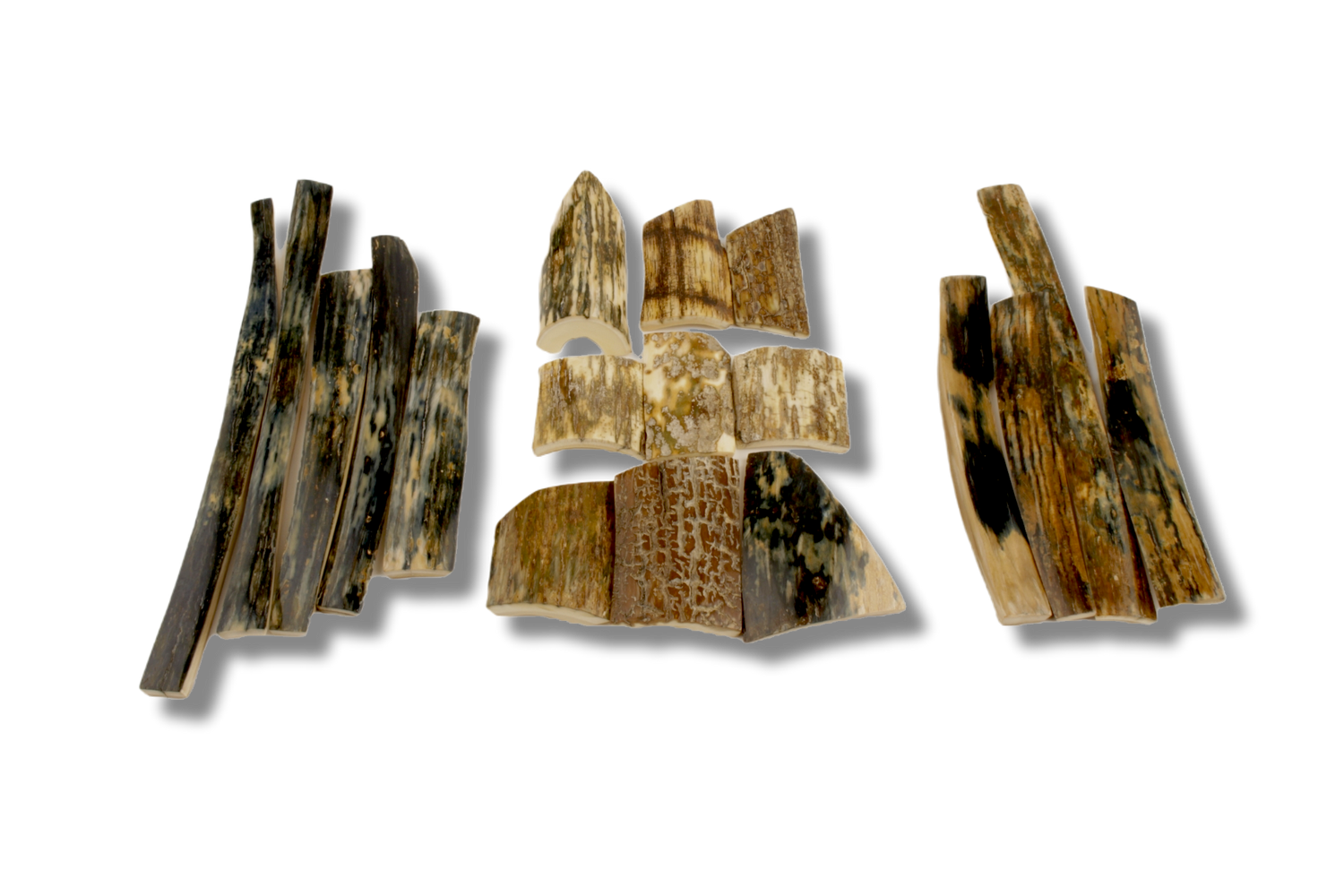
Processing separates the outer bark layer from the inner core and removes damaged material. Offcuts and filtered ivory dust generated during that process are collected and, where technically suitable, used as source material in stabilisation. This allows material that would otherwise be discarded to be put to productive use.
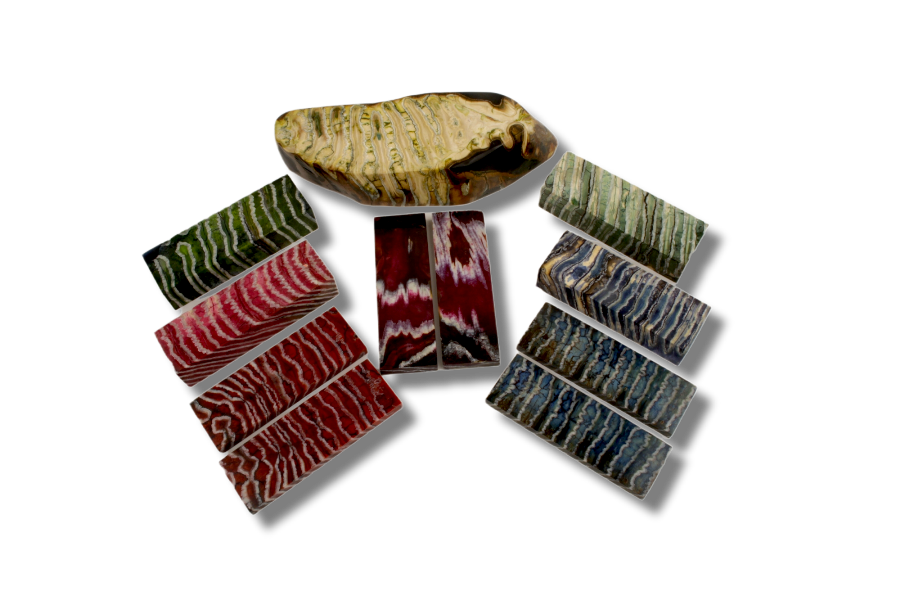
Material is sold as natural, restored or stabilised, and those terms are distinct. Restoration repairs or reconstructs damaged areas of a tusk; stabilisation consolidates cracks, porous areas or voids, typically using resin under vacuum. Neither treatment changes the biological identity of the underlying material — a restored mammoth tusk remains fossil mammoth ivory — but both should be disclosed, and each piece of our stabilised material is described as such. The distinctions are set out in "Natural vs Restored Mammoth Tusks."
How to Evaluate Any Mammoth Ivory Supplier
Rather than ask you to trust us, here is how to test any supplier in this trade, including this one.
Ask for the scientific identification of the species, in full. Ask for the region of origin and how the material entered the seller's inventory. Ask the seller to confirm that the photographs show the actual piece offered for sale, and that the piece is physically held in their inventory. Ask whether a commercial invoice describing the material will be issued. Ask what customs documentation exists and what will accompany the shipment. Ask whether a Certificate of Origin is available. Ask whether the piece is natural, restored or stabilised. Ask for the company's commercial registry number, address and VAT registration, and verify them independently. Ask what restrictions apply in your own country.
An established specialist dealer should be able to provide clear answers to these questions and to explain exactly what each document does — and does not — establish. A seller who responds only that the material is "legal mammoth ivory" has not answered the question.
The Bottom Line
Responsible trade in mammoth ivory cannot be demonstrated by the word "mammoth" alone. It requires correct species identification, lawful sourcing, a documented commercial chain, accurate customs declarations and compliance with the destination country's law. No single certificate proves all of those things. A buyer should therefore judge a supplier by the complete documentary and factual chain rather than by any one document or claim.
If you have any questions, please email us: info@arcticantiques.com
Bibliography:
CITES Secretariat. Trade in mammoth ivory, SC78 Doc. 65.7, Seventy-eighth meeting of the Standing Committee, Geneva, 3–8 February 2025. See in particular paragraphs 11, 15–22, 24–34 and the Conclusions at paragraphs 36–39.
CITES. Consideration of proposals for amendment of Appendices I and II, CoP18 Prop. 13 (Israel), Eighteenth meeting of the Conference of the Parties, Geneva, 2019; withdrawn, with Decisions 18.120 and 18.121 on Trade in mammoth ivory adopted in its place.
CITES. Decisions 19.102 and 19.103 on Trade in mammoth ivory, adopted at the Nineteenth meeting of the Conference of the Parties, Panama City, 2022.
CITES Secretariat. Notification to Parties No. 2023/136, 27 November 2023, inviting submission of research and studies on trade in mammoth ivory. Responses received from Mainland China, the Hong Kong SAR of China, Canada, the University of Kent, IWMC World Conservation Trust and Robin des Bois.
CITES Secretariat (2020). Identification Guide for Ivory and Ivory Substitutes.
CITES. Report on Monitoring the Illegal Killing of Elephants (MIKE), CoP18 Doc. 69.2.
Farah, N.; Boyce, J. R. (2019). "Elephants and mammoths: the effect of an imperfect legal substitute on illegal activity". Environment and Development Economics, 24(3): 225–251. DOI: 10.1017/S1355770X18000554.
Aryal, A.; et al. (2018). "Conserving elephants depend on a total ban of ivory trade globally". Biodiversity and Conservation, 27(10): 2767–2775. DOI: 10.1007/s10531-018-1534-x.
Cox, C.; Hauser, L. (2023). "Ice Ivory to White Gold: Links Between the Illegal Ivory Trade and the Trade in Geocultural Artifacts". Journal of International Wildlife Law & Policy, 26(1): 22–46. DOI: 10.1080/13880292.2023.2217615.
Nash, G. (2022). The trade in mammoth ivory: its role in the illegal trade in elephant ivory. MScRes thesis, University of Kent. DOI: 10.22024/UniKent/01.02.95670.
Martin, E.; Martin, C. (2010). "Russia's mammoth ivory industry expands: what effect on elephants?" Pachyderm, 47: 26–35.
Stoner, S. (2021). Wildlife trade on e-commerce sites in China, with a focus on mammoth ivory: A Rapid Assessment. Wildlife Justice Commission.
Xiao, Yu (2018). China's Ivory Market After the Ivory Trade Ban in 2018. TRAFFIC Briefing.
Trapani, J.; Fisher, D. C. (2003). "Discriminating Proboscidean Taxa Using Features of the Schreger Pattern in Tusk Dentin". Journal of Archaeological Science, 30(4): 429–438.
Espinoza, E. O.; Mann, M.-J. (1991). Identification Guide for Ivory and Ivory Substitutes. World Wildlife Fund and The Conservation Foundation; subsequently published by the CITES Secretariat.
Shepherd, R. F.; Lister, A. M.; Roberts, A. M.; Taylor, A. M.; Kerns, J. G. (2024). "Discrimination of ivory from extant and extinct elephant species using Raman spectroscopy: A potential non-destructive technique for combating illegal wildlife trade". PLOS ONE, 19(4): e0299689.
Ngatia, J. N.; Lan, T. M.; Ma, Y.; Dinh, T. D.; Wang, Z.; Dahmer, T. D.; Xu, Y. C. (2019). "Distinguishing extant elephants ivory from mammoth ivory using a short sequence of cytochrome b gene". Scientific Reports, 9: 18863.
Ministry for the Development of the Russian Far East and the Arctic. Republic of Sakha (Yakutia): Arctic Regions of Russia — area of the republic 3,103,200 km²; area of the Arctic territories 1,608,800 km²; thirteen Arctic districts; Arctic zone population approximately 68,000.
Burtseva, E.; Sleptsov, A.; Bysyina, A.; Fedorova, A.; Dyachkovski, G.; Pavlova, A. (2022). "Mining Industry of the Republic of Sakha (Yakutia) and Problems of Environmental and Social Security of Indigenous Peoples". Land, 11(1): 105. DOI: 10.3390/land11010105.
Ilyushina, P. G.; Shikhov, A. N.; Makarieva, O. M. (2023). "Satellite-Based Mapping of the Negative Impact of Gold Mining Enterprises on the Natural Environment of the Cryolithozone (Using the Example of Magadan Oblast)". Izvestiya, Atmospheric and Oceanic Physics. DOI: 10.1134/S0001433823090086.
Lebedev, A.; Newell, J.; Gordon, D. (2000). Plundering Russia's Far Eastern Taiga: Illegal Logging, Corruption and Trade. Bureau for Regional Oriental Campaigns (BROC), Friends of the Earth–Japan, and Pacific Environment and Resources Center. Vladivostok, Tokyo and Oakland, March 2000. 47 pp.
Friends of the Earth–Japan / Global Environmental Forum. Saving Russia's Far Eastern Taiga: Deforestation, Protected Areas, and Forest Hotspots, Section VI, Republic of Sakha (Yakutia) — recording over 25,000 hectares of land destroyed by diamond and gold mining in Sakha without subsequent recultivation.
Federal Forestry Agency of the Russian Federation (Rosleskhoz), illegal logging statistics for 2014, as reported in Illegal Logging and Trade in Forest Products in the Russian Federation.
Environmental Investigation Agency (2013). Liquidating the Forests: Hardwood Flooring, Organized Crime, and the World's Last Siberian Tigers; and World Wide Fund for Nature (2013), Illegal Logging in the Russian Far East.
Federal Law of the Russian Federation No. 2395-1 "On Subsoil", as amended; and the legislation of the Republic of Sakha (Yakutia) on the collection of mammoth fauna remains, under which collection licences are administered.
Licensing statistics for the Republic of Sakha (Yakutia) as reported in Sibirica: Interdisciplinary Journal of Siberian Studies, 24(1) (2025).
Bundesamt für Naturschutz (BfN), Germany's CITES Management Authority. Clearance Certificate confirming that Mammuthus primigenius appears on no CITES list.
Deutsche Industrie- und Handelskammer (IHK). Guidance on Certificates of Origin as proof of non-preferential origin.