Is Mammoth Ivory Legal? A Buyer's Guide to CITES, National Law and Customs
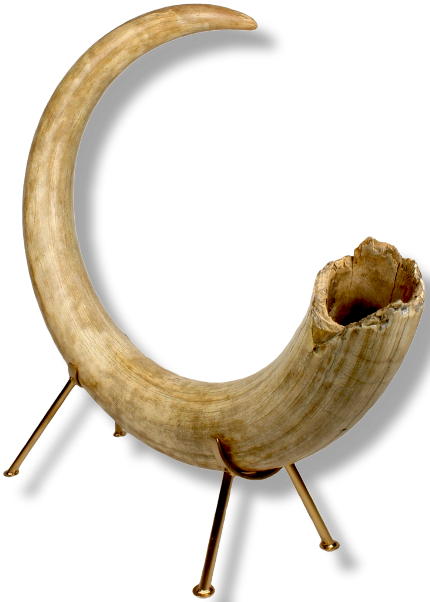
Fossil mammoth ivory (Mammuthus primigenius) comes from the woolly mammoth, an animal that died out thousands of years ago. It has nothing to do with living elephants or with elephant ivory. The two materials are not the same thing, and they are not governed by the same law. That single distinction explains most of the confusion buyers encounter, and it is where this guide begins.
The short answer is that fossil mammoth ivory is not listed under CITES. The CITES Secretariat has reported that trade in mammoth ivory is generally legal and that legislation prohibiting it is not widespread among CITES Parties. The longer answer is that "not covered by CITES" is not the same as "automatically legal everywhere," and a number of jurisdictions have introduced their own restrictions that encompass mammoth ivory.
A selection of jurisdictions is examined below. It is beyond the scope of any single article to set out the position in every country in the world, and we have not attempted it. Where a country is covered here, it is because we were able to identify the governing legislation and the responsible authority from official sources. For many jurisdictions that information is difficult to obtain, is published only in the national language, or simply does not address fossil material like mammoth ivory at all.
The Bottom Line
Genuine fossil mammoth ivory is not regulated by CITES, because Mammuthus primigenius is not a CITES-listed species. This does not mean that mammoth ivory is automatically unrestricted in every country. India and Israel prohibit trade throughout their territories, and several U.S. states, together with the District of Columbia, have specific mammoth ivory restrictions. Other laws concerning customs, fossils, cultural goods, biosecurity and national wildlife trade may also apply.
Important Notice: This Is General Guidance, Not Legal Advice
Arctic Antiques GmbH is a specialist dealer in certified fossil mammoth ivory. We are not a law firm, a legal advisory body, a customs broker, or any form of official advisory authority, and nothing in this guide constitutes legal advice.
What follows is general information compiled from publicly available official and legal sources, together with our own practical experience of shipping this material worldwide for over 25 years, provided as a service to our customers and to anyone researching the subject.
This guide is not a substitute for advice from a qualified lawyer, from your national wildlife trade authority, or from your customs administration. We accept no liability for any decision taken, or not taken, on the basis of this guidance, whether by our customers or by third parties.
Three further points should be stated.
First, legal conditions change continuously. Wildlife trade law, customs practice and national implementing rules are amended regularly, and enforcement practice can shift without any change in the underlying legislation. Any statement in this guide reflects the position we were able to verify from official sources at the time of writing, in October 2026. It may already have changed by the time you read it.
Second, buyers are responsible for their own position. It is the buyer's responsibility to establish what applies in their own country before ordering and importing mammoth ivory into their respective jurisdiction, and to understand how the import process works there — what must be declared, under which customs classification, to which authority, and with what documentation. That responsibility rests with the buyer and cannot be transferred to us. If you are in any doubt about the legal position where you live, make your own enquiries with the responsible authority before purchasing from our website or from anyone else.
None of this should be taken to suggest that buying mammoth ivory from us is a complicated undertaking. It is not. Arctic Antiques GmbH is based in Germany, and every consignment leaves Germany with the full customs paperwork required for a correct and properly declared export. That is our standard procedure on every order, not something arranged on request. Our documentation states what the material is, gives the scientific name in full and identifies its declared origin, providing the destination authorities with the information they need to assess the shipment. Where a destination raises a specific question, we will supply the relevant supporting documentation. For the overwhelming majority of our customers, in the overwhelming majority of destinations, the process is straightforward. What we cannot do is determine your legal position in your own country for you, which is why the responsibility described above rests where it does.
Third, our business is fossil mammoth ivory only. Arctic Antiques GmbH trades exclusively in genuine fossil mammoth ivory from an extinct species. We do not buy, sell, broker, evaluate, handle or process elephant ivory in any form. We never have and never will. That is a matter of our moral principles and not merely of compliance.
Nor do we provide valuation, assessment or identification services for carved pieces, antiques, ancient artefacts or worked objects of any kind. That work falls outside the scope of our expertise. We are not appraisers of finished objects, and we hold no accreditation to act as such. Carved or antique ivory objects should be submitted to a specialist auction house or an accredited expert with the relevant knowledge and authority to examine them.
Two Materials, Two Legal Regimes
The woolly mammoth (Mammuthus primigenius) has been extinct for thousands of years. It was a cold-adapted animal, abundant through the Middle and Late Pleistocene across a belt of steppe-tundra reaching from Western Europe through Asia and Beringia into North America. Mainland populations in Eurasia and North America had disappeared by roughly 10,500 to 9,500 years ago, in the early Holocene. Relict island populations survived longer in isolation: on St. Paul Island in the Bering Sea until around 5,600 years ago, and on Wrangel Island in the Arctic Ocean until approximately 4,000 years ago. There is no living mammoth population anywhere, and there has not been one throughout recorded history.
The African elephant (Loxodonta) and the Asian elephant (Elephas maximus) are living species, both under protection. Their ivory is regulated accordingly.
Neither has ever inhabited the environment in which mammoth ivory is found. Both are tropical and subtropical animals: Loxodonta is confined to sub-Saharan Africa, and the historical range of Elephas maximus reached at its furthest north only the Yangtze (China). The woolly mammoth, by contrast, was adapted to the extreme cold of the Late Pleistocene Arctic, and it is from that frozen ground that fossil mammoth ivory is recovered. The two animals never shared a habitat.
This is the reason the two materials are treated differently in law. Wildlife trade legislation exists to prevent the over-exploitation of species that are alive and can still be harmed by trade. No living animal is affected by the recovery of mammoth ivory, because the animal died thousands of years before anyone found it.
Two practical consequences follow. First, legislation drafted for elephant ivory does not automatically extend to mammoth ivory, and in most jurisdictions it does not. Second, because the two materials can resemble one another closely once cut and polished, customs authorities need to be able to establish which species a shipment actually contains. That is why clear species documentation is important even where no CITES permit is required. Documentation provides the initial evidence of what a shipment contains; where the material is unclear or disputed, authorities may request additional expert or scientific identification. The point is developed further below and in our article "How to Identify Genuine Mammoth Ivory (and Spot Fakes)."
Physical identification supports documentation but does not replace it. Schreger-pattern geometry is an established method for distinguishing mammoth from elephant ivory, and the CITES Secretariat publishes an identification guide covering exactly this comparison, although identification becomes more difficult in highly worked, curved or altered material. A customs officer at a border is not usually in a position to conduct that analysis, which is why the documentation accompanying a shipment carries much of the practical weight.
Does Mammoth Ivory Require a CITES Certificate?
No. CITES — the Convention on International Trade in Endangered Species of Wild Fauna and Flora, also known as the Washington Convention — regulates international trade in species listed in its three Appendices, together with their parts and derivatives.
Mammuthus primigenius is an extinct species and appears on no CITES Appendix. Because it is not listed in the CITES Appendices, CITES does not require a CITES permit or certificate for the international trade of mammoth ivory. That is a statement about CITES alone, and says nothing about what other documentation a national authority may require.
The common misconception is the equation "ivory equals CITES." It does not hold. CITES regulates listed species, not materials by name. Elephant ivory is regulated because elephants are listed; mammoth ivory is not, because mammoths are extinct and unlisted.
The question of whether mammoth ivory should be brought within CITES has been raised more than once, and the record is worth setting out accurately.
At CoP18 in 2019, Israel proposed listing mammoth on Appendix II as a look-alike species, in proposal CoP18 Prop. 13. The proponent agreed to withdraw that proposal, and the Conference of the Parties instead adopted Decisions 18.120 and 18.121 on Trade in mammoth ivory. The Secretariat also clarified at that meeting that the relevant annexes to Resolution Conf. 9.24 (Rev. CoP17) concern the deletion of species from the Appendices rather than their inclusion, and were not applicable to including an extinct species in Appendix II.
At CoP19 in 2022 the Conference of the Parties adopted Decisions 19.102 and 19.103, directing the Secretariat to compile information on the potential contribution of mammoth ivory trade to the illegal trade in elephant ivory and to elephant poaching. The Secretariat issued Notification to Parties No. 2023/136 of 27 November 2023 inviting submissions, and received responses from Mainland China, the Hong Kong Special Administrative Region of China and Canada, together with the University of Kent, IWMC World Conservation Trust and Robin des Bois. It reported to the Standing Committee at its 78th meeting in document SC78 Doc. 65.7, and to CoP20 in document CoP20 Doc. 76.1, Part 6. At CoP20, held in Samarkand in late 2025, the Conference of the Parties removed those Decisions from its list of active instructions on the ground that they had been carried out.
The position as at the date of writing is therefore that mammoth remains unlisted, that the matter has been examined by the Parties over three successive meetings of the Conference, and that no listing has been adopted.
Can You Import, Sell or Own Mammoth Ivory? Five Different Questions
Confusion arises from treating "is it legal?" as a single question. It is at least five, and a jurisdiction can answer them differently:
Possession — may you own the material at all?
Domestic sale — may it be bought and sold within the country?
Commercial trade — may it be dealt in as a business, as distinct from a private transaction?
Import — may it be brought into the country?
Export or re-export — may it be sent out again?
A country may permit possession while restricting commercial sale. Material that leaves Germany entirely lawfully may meet a restriction on arrival elsewhere. The legality of a transaction depends on the law at both ends, and sometimes in between.
For any international purchase, five things therefore need to be established: the law of the seller's country, the law of the buyer's country, the position in any country of transit, the correct customs classification, and what import documentation the destination expects.
Is Mammoth Ivory Legal in the European Union (EU)?
CITES is implemented in the European Union through the EU Wildlife Trade Regulations, principally Council Regulation (EC) No 338/97 and Commission Regulation (EC) No 865/2006. These can and do impose measures stricter than CITES itself requires.
The EU's restrictions on ivory are indeed strict. Commercial trade in ivory to, within and from the EU is generally prohibited, subject to narrow exemptions for pre-1975 musical instruments and certain pre-1947 antiques. The current framework is set out in the Commission Notice of 30 December 2021 containing revised guidance on the EU regime governing trade in ivory, which took effect on 19 January 2022. The reference dates derive from Article 2(w) of Regulation 338/97, under which a pre-1947 antique is a worked specimen acquired more than fifty years previously.
That guidance document, however, carries a footnote that buyers should read carefully. Footnote 5 states: the reference to ivory in this guidance document relates only to ivory from elephants.
The EU ivory regime is therefore an elephant ivory regime. It is drafted around Loxodonta and Elephas maximus, both CITES-listed, and it does not extend to an unlisted extinct species. Fossil mammoth ivory falls outside Regulation 338/97 because the species is not in its Annexes.
There is, however, a separate body of EU law that can apply to fossil material and that has nothing to do with wildlife protection at all.
Regulation (EU) 2019/880 on the introduction and import of cultural goods came fully into force on 28 June 2025. It applies to goods imported into the EU from third countries. Part C of its Annex covers, among other categories, rare collections and specimens of fauna, flora, minerals and anatomy, and objects of palaeontological interest, falling under customs heading 9705. Where such an object is more than 200 years old and has a customs value of €18,000 or more, the importer must file an importer statement through the EU's centralised Import of Cultural Goods electronic system before the goods are released.
A fossil mammoth tusk may fall within the category of objects of palaeontological interest covered by Part C, and is self-evidently more than 200 years old. A large specimen can exceed the value threshold. Buyers and institutions importing high-value fossil material into the EU from outside it should therefore establish whether an importer statement is required in their particular case. This obligation is frequently overlooked because it sits in cultural property law rather than wildlife law, and because it is recent.
Finally, EU Member States are not interchangeable. National implementing measures, enforcement priorities and customs practice differ. Germany, France, Italy, Spain and the Netherlands should not be assumed to behave identically simply because the underlying Regulation is common to all of them.
Is Mammoth Ivory Legal in the United States?
The United States requires the longest treatment because federal law and state law answer the question differently, and a buyer must satisfy both.
At federal level the position is explicit. In the preamble to its revision of the Endangered Species Act section 4(d) rule for the African elephant, published in the Federal Register on 6 June 2016, the U.S. Fish and Wildlife Service stated: ivory from extinct species, such as mammoth, is not regulated under statutes implemented by the Service.
The same document confirms that the rule regulates only African elephants and African elephant ivory, that Asian elephant material is regulated separately under the ESA, and that walrus ivory falls under the Marine Mammal Protection Act. Mammoth is not regulated under those wildlife statutes in the way elephant ivory is.
That does not mean every federal rule is irrelevant to fossil mammoth material. The Service states elsewhere that fossil ivory, including mammoth and mastodon, is regulated by an array of federal and state laws and may not be collected on any state or federal public land, though it may be collected on private land with the owner's permission. Collection of fossils on federal land is governed by the Paleontological Resources Preservation Act of 2009. Those provisions concern the collection of fossil material within the United States rather than the import of material lawfully recovered elsewhere, but they illustrate that fossil ivory sits outside wildlife law without sitting outside law altogether. It is worth noting that the Service arrived at this clarification partly in response to comments from scrimshanders concerned about the rule's scope.
Federal permissibility, however, settles only the federal question. Several states, together with the District of Columbia, have enacted legislation whose definitions of ivory expressly include mammoth. The following list reflects the statutes we verified as at October 2026:
California — Fish and Game Code § 2022
Hawaii — Hawaii Revised Statutes § 183D-66(d), which states in terms that no person shall sell, offer to sell, purchase, trade, possess with intent to sell, or barter for any part or product from mammoth (Mammuthus), although the species is extinct
Illinois — 815 Illinois Compiled Statutes § 357
Nevada — Nevada Revised Statutes § 597.905
New Jersey — New Jersey Revised Statutes § 23:2A-13.1 to 13.5
New York — Environmental Conservation Law § 11-0535-a
District of Columbia — Ivory and Horn Trafficking Prohibition Act of 2020, D.C. Law 23-126, § 2, which defines ivory to include the tusk of any species of elephant, hippopotamus, mammoth, mastodon, narwhal or whale
Two cautions apply to this list. Other states have ivory legislation confined to elephant and other living species, which does not reach fossil mammoth ivory; New Hampshire and Oregon are examples, and their inclusion in some published lists of "ivory ban states" has caused avoidable confusion. Conversely, Connecticut's ivory bill originally included mammoth and the reference was removed during passage. State legislation changes, and a buyer in the United States should verify the current position in their own state rather than relying on any list, including this one.
A shipment may therefore be entirely lawful under federal law while a particular state prohibits the sale. Consequently, we do not ship our mammoth ivory to the states listed above, or to the District of Columbia.
Is Mammoth Ivory Legal in Germany?
Germany is where Arctic Antiques GmbH is established, and the CITES position is clear.
Fossil mammoth ivory may be traded lawfully in Germany. Mammuthus primigenius is not listed under CITES, is not in the Annexes to Regulation 338/97, and is not subject to the German implementing provisions that govern protected species.
We hold a Clearance Certificate issued by the Bundesamt für Naturschutz (BfN), Germany's Federal Agency for Nature Conservation and its CITES Management Authority, confirming that Mammuthus primigenius appears on no CITES list. This is a company-held document rather than a per-order certificate, and it is available to view on our website.
Separately, we can supply a Certificate of Origin issued on our application by the German Chamber of Industry and Commerce (IHK), documenting the declared origin of the goods. It is included automatically with every large tusk we offer for sale; for all other material it is available on request and can be added to the shopping cart during checkout.
A Certificate of Origin establishes origin. It is not a scientific authentication of a particular specimen, and it should not be presented as one. Our commercial documentation identifies the goods as fossil mammoth ivory and states the scientific name Mammuthus primigenius in full.
Neither document is a CITES permit, because no CITES permit exists for an unlisted species. What they do is record, in official form, what the material is and where it comes from, which provides the destination authorities with clear information about the declared material and origin.
Keeping documentation that proves species, fossil origin and lawful acquisition is sensible even where no permit is legally required. It is what allows a shipment to be released quickly, what supports a subsequent resale, and what answers a question years later if the original invoice has been lost.
Is Mammoth Ivory Legal in Switzerland?
Switzerland is not an EU Member State and operates its own framework. The Federal Food Safety and Veterinary Office (FSVO, in German the BLV) is Switzerland's CITES Management Authority, and enforcement rests on the Federal Act on CITES together with the FDHA Ordinance on the Control of Trade in Protected Plant and Animal Species, generally called the CITES Control Ordinance.
Those controls are keyed to listing. Import of CITES-protected animals, plants and derived products requires a CITES export permit from the country of origin, an FSVO import permit, and a protected species inspection on arrival. The FSVO notes one significant extension beyond CITES: with few exceptions, all live specimens of non-domesticated mammals, birds, reptiles and amphibians also require an import permit. That extension concerns live animals and has no application to fossil material.
Mammuthus primigenius is on no CITES Appendix and is therefore outside the permit and inspection regime the FSVO administers. Ordinary Swiss customs requirements apply in the normal way, and because Switzerland sits outside the EU customs union, a shipment from Germany is a customs import rather than an intra-Union movement.
Swiss implementation of the CITES CoP20 amendments took effect on 1 May 2026.
Is Mammoth Ivory Legal in Norway?
Norway implements CITES through the Regulation on import, export, domestic possession etc. of endangered species of wild fauna and flora, commonly called the CITES Regulation (FOR-2018-06-15-889), which came into force in 2018 and replaced the earlier 2002 regulation. The Norwegian Environment Agency (Miljødirektoratet) is the Management Authority; the Norwegian Scientific Committee for Food and Environment (VKM) is the Scientific Authority.
The Regulation's operative provisions are tied to its Annex 1, Lists A and B, which transpose the CITES Appendices. Section 4 permits import of specimens of species in those Lists only on presentation of a CITES export permit from the exporting country together with a Norwegian import permit. Infringements are penalised under the Nature Diversity Act.
Mammoth is not in Annex 1, and fossil mammoth ivory therefore falls outside the Regulation. Norway is in the European Economic Area but outside the EU customs union, so customs formalities apply to shipments from the EU.
Is Mammoth Ivory Legal in the United Kingdom?
The United Kingdom operates its own framework following its departure from the EU, and the position requires care.
The Ivory Act 2018 prohibits dealing in ivory in the United Kingdom, and the import and re-export of ivory for commercial purposes, subject to narrow exemptions. It is among the strictest ivory laws anywhere.
The operative question is what the Act means by "ivory." Section 37 originally defined it as the tusk or tooth of an elephant. The Ivory Act 2018 (Meaning of "Ivory" and Miscellaneous Amendments) Regulations 2025 came into force on 28 January 2025 and extended that definition. Regulation 2 amends section 37 so that "ivory" means the tusk or tooth of an elephant, a common hippopotamus, a killer whale, a narwhal or a sperm whale.
Mammoth is not among them. The five species named in the amended definition are all living species listed under CITES. The Department for Environment, Food and Rural Affairs guidance on dealing in items made of or containing ivory lists the covered species as elephant, hippopotamus, killer whale, narwhal and sperm whale.
It would nevertheless be too simple to say "mammoth ivory is legal in the UK" and stop there. Three qualifications matter. The Ivory Act is not the only relevant legislation; general customs, import and wildlife trade rules continue to apply. The position on extending the Act to extinct species has been raised publicly by campaigning organisations and remains a live policy question. And because mammoth and elephant ivory resemble one another, a UK importer should expect to be able to demonstrate which species a consignment contains.
Is Mammoth Ivory Legal in Canada?
Canada implements CITES through the Wild Animal and Plant Protection and Regulation of International and Interprovincial Trade Act (WAPPRIITA) and the Wild Animal and Plant Trade Regulations (WAPTR). Schedule I to WAPTR comprises the species listed in the CITES Appendices.
Canada has gone considerably further than CITES on elephant material. Since 8 January 2024, raw elephant ivory and raw rhinoceros horn may not be imported into or exported from Canada except under permits issued only for museum, scientific research or law enforcement purposes, and permits are required for all worked elephant ivory including personal and household effects.
These measures are directed at elephant and rhinoceros, both CITES-listed and both within WAPTR Schedule I. Mammoth, being unlisted, does not fall within that Schedule. Canada nonetheless illustrates the wider point of this guide particularly well: a jurisdiction can impose requirements far stricter than CITES on one material while leaving another untouched, and a buyer who assumes that Canada's elephant ivory rules describe its position on mammoth ivory would be reasoning from the wrong statute.
One further point applies specifically to Canada. The CITES Secretariat records that Canadian legislation at provincial level restricts and regulates the extraction of mammoth material. That legislation concerns fossils as a palaeontological and heritage resource rather than as wildlife, and it illustrates the distinction drawn later in this guide between wildlife trade law and fossil heritage law. Anyone excavating, exporting or acquiring fossil material within Canada should establish the provincial position as well as the federal one.
Is Mammoth Ivory Legal in Australia?
Australia regulates the import and export of wildlife specimens under the Environment Protection and Biodiversity Conservation Act 1999 (EPBC Act) and the Environment Protection and Biodiversity Conservation Regulations 2000. The Department of Climate Change, Energy, the Environment and Water (DCCEEW) administers the regime as Australia's CITES Management Authority, with enforcement support from the Australian Border Force and the Australian Federal Police.
The EPBC Act's wildlife trade provisions exist, in the Department's own words, to meet Australia's obligations under CITES and the Convention on Biological Diversity and to regulate trade in Australian native species. DCCEEW's guidance on ivory is framed accordingly: because ivory comes from CITES-listed species, its import and export are restricted, and elephant ivory cannot be brought into Australia without a pre-CITES certificate. That guidance is directed at elephant material.
Mammoth is neither CITES-listed nor an Australian native species, and so does not engage the permit pathways DCCEEW's decision process is built around. In a departmental application guidance document the Department states that non-Australian specimens not listed on CITES do not require an export permit or wildlife trade operation approval.
One additional point deserves emphasis for Australia specifically. Controls under the EPBC Act operate in addition to those under the Biosecurity Act 2015, administered by the Department of Agriculture, Fisheries and Forestry. Australian biosecurity requirements for animal-derived material are among the strictest anywhere and are entirely separate from wildlife trade law. Any buyer importing fossil material into Australia should confirm the biosecurity position as well as the wildlife trade position, because the two are assessed by different agencies against different criteria.
Is Mammoth Ivory Legal in New Zealand?
New Zealand implements CITES through the Trade in Endangered Species Act 1989, administered by the Department of Conservation. The Director-General of Conservation is designated as the Management Authority under section 3 of the Act, and the Act transposes the CITES Appendix listings, sets out permit and certificate requirements, and creates offences for trading or possessing listed species without the appropriate documentation.
Because the Act's scope follows the CITES Appendices, an unlisted extinct species falls outside it. As in Australia, New Zealand maintains strict biosecurity controls under the Biosecurity Act 1993, administered by the Ministry for Primary Industries, and these apply independently of the Trade in Endangered Species Act. Both should be checked.
Is Mammoth Ivory Legal in Japan?
Japan divides the question between two statutes. International movement is controlled under the Foreign Exchange and Foreign Trade Act, with the Ministry of Economy, Trade and Industry (METI) acting as CITES Management Authority alongside the Ministry of Agriculture, Forestry and Fisheries, and the Ministry of the Environment serving as Scientific Authority. Domestic trade is governed by the Act on Conservation of Endangered Species of Wild Fauna and Flora, generally abbreviated ACES or LCES.
Both instruments operate on listed species. METI's published guidance on ivory is framed explicitly around the CITES entry-into-force dates for the two elephant species — 1 July 1975 for Elephas maximus and 26 February 1976 for Loxodonta africana — and the ACES prohibits domestic trade in species listed on CITES Appendix I together with nationally rare Japanese species specified in the Order for Enforcement of the Act.
Mammoth appears in neither category. Japan is, however, the jurisdiction in this guide where the underlying law is most actively under review: the ACES has been the subject of a statutory review, and Japan's domestic elephant ivory market has attracted sustained international attention. Anyone trading into Japan should verify the current position rather than rely on this summary.
Is Mammoth Ivory Legal in Singapore?
Singapore implements CITES through the Endangered Species (Import and Export) Act (Cap. 92A), administered by the National Parks Board through its Animal and Veterinary Service. Under that Act a CITES permit issued by NParks is required to import, export or re-export a CITES-listed species, including its parts and derivatives, and it is an offence to possess, sell, offer for sale or publicly display CITES specimens imported without the necessary permits.
Singapore also operates a domestic ivory ban. The Endangered Species (Import and Export) (Prohibition of Sale) (Amendment) Notification 2021, in force from 1 September 2021, prohibits the sale of elephant ivory and elephant ivory products, and their public display for the purpose of sale. Penalties are substantial. The prohibition is expressed in terms of elephant ivory.
Both the permit regime and the domestic ban are therefore keyed to CITES-listed species and to elephant material respectively. Mammoth falls within neither description. Singapore is also the world's busiest transhipment hub and enforces vigorously against consignments transiting its ports, so accurate description of goods matters here even more than elsewhere.
Is Mammoth Ivory Legal in Malaysia?
Malaysia implements CITES through the International Trade in Endangered Species Act 2008 (Act 686), known as INTESA, which came into operation on 28 December 2009. The Act's long title describes it as an Act to implement the Convention on International Trade in Endangered Species of Wild Fauna and Flora.
INTESA operates on scheduled species, and those scheduled species are the species listed in Appendices I, II and III of CITES, set out in the Third Schedule to the Act. Import, export, re-export, possession or transit of a scheduled species requires a permit. The Department of Wildlife and National Parks (PERHILITAN) is a Management Authority under the Act, alongside authorities for fisheries, agriculture and timber.
Mammoth is not a scheduled species under the Third Schedule, and fossil mammoth ivory accordingly falls outside INTESA's permit requirements.
Is Mammoth Ivory Legal in Thailand?
Thailand's position involves two separate statutes and repays careful reading, because Thailand has ivory-specific legislation that is easily misread as general.
The Elephant Ivory Act B.E. 2558 (2015) governs the use of elephant ivory sourced from captive elephants registered under the Draught Animals Act and their offspring. It requires registration of ivory in a person's possession, licensing of ivory traders, and notification of changes in ownership. It is, as its name indicates, an elephant ivory statute.
Separately, the Wild Animal Conservation and Protection Act B.E. 2562 (2019), which replaced the 1992 Act of the same name, introduced a category for non-native CITES-listed species and increased penalties substantially. The African elephant was listed as a protected species by Ministerial Regulation in 2015, making trade in African elephant ivory illegal in Thailand. The Department of National Parks, Wildlife and Plant Conservation administers both instruments.
Neither statute extends to an extinct, unlisted species like the woolly mammoth. Buyers should nonetheless be aware that Thailand's enforcement posture on ivory is active, and that material entering the country will be assessed against these frameworks.
Is Mammoth Ivory Legal in Vietnam?
Vietnam implements CITES through Decree No. 06/2019/ND-CP of 22 January 2019 on the management of endangered, precious and rare species of forest fauna and flora and observation of CITES, in force from 19 March 2019 and subsequently amended by Decree No. 84/2021/ND-CP. The CITES Management Authority of Vietnam sits within the Ministry of Agriculture and Rural Development.
The Decree's scope is defined by reference to species in the CITES Appendices together with Vietnam's own lists of endangered, precious and rare forest species, designated Groups IB and IIB. CITES permits are issued for export, import, re-export and introduction from the sea of specimens falling within those lists. The CITES Secretariat places Vietnam's national legislation in Category 1 of the National Legislation Project, meaning it is believed generally to meet the requirements for implementing the Convention.
Mammoth appears in neither the CITES Appendices nor the Vietnamese group lists.
Is Mammoth Ivory Legal in French Polynesia?
French Polynesia requires separate treatment because its status is frequently misunderstood, including by shippers.
French Polynesia is an overseas collectivity of the French Republic, and is associated with the European Union as an Overseas Country or Territory under Articles 198 to 204 of the Treaty on the Functioning of the European Union. Critically, the European Commission and the European External Action Service both state the position plainly: the Overseas Countries and Territories are not part of the EU customs territory, and EU legislation does not apply to them.
Two consequences follow for a buyer in Papeete. A shipment from Germany to French Polynesia is an export from the EU customs territory, not an intra-Union movement, and is treated accordingly for customs purposes. And the EU Wildlife Trade Regulations, including Regulation 338/97, do not apply there of their own force; CITES applies through France's adherence to the Convention, as given effect in the territory.
Buyers in French Polynesia should confirm the applicable territorial arrangements with the relevant French and territorial authorities before ordering.
Is Mammoth Ivory Legal in India?
No. India prohibits trade in mammoth ivory, and the prohibition has been tested and upheld at the highest level.
The CITES Secretariat addressed the wider question directly in document SC78 Doc. 65.7. Its finding was that trade in mammoth ivory is generally legal, that legislation prohibiting it is not widespread among CITES Parties, and that India and Israel are the only Parties where trading in mammoth ivory is illegal throughout their territories. In the United States, the Secretariat noted, such laws exist at state level while no federal prohibition applies.
The Wild Life (Protection) Act 1972, as amended by Amendment Act No. 44 of 1991, banned trade in imported ivory and articles made from it. Dealers holding mammoth ivory challenged the application of that ban to their material, arguing that mammoth ivory derives from an extinct species, is properly fossil ivory, and cannot be considered ivory at all for the purposes of the Act. The Full Bench of the Delhi High Court rejected that argument in Ivory Traders and Manufacturers Association v. Union of India, AIR 1997 Delhi 267. The Supreme Court of India subsequently held in Balram Kumawat v. Union of India that the 1991 Amendment prohibits trade in ivory of every description, whether elephant ivory or mammoth ivory. The constitutional validity of the amendment was upheld separately in Indian Handicrafts Emporium v. Union of India.
The reasoning in those proceedings is worth noting, because it goes to the concern that has driven the CITES discussion. The authorities' position was that traders were manufacturing articles from Indian elephant ivory under the guise of mammoth ivory. The prohibition on mammoth material was a response to that substitution problem rather than a judgement about mammoths.
Consequently, we do not ship our mammoth ivory to India.
Is Mammoth Ivory Legal in Israel?
No. Israel banned all commercial trade in mammoth ivory with effect from 1 January 2021, together with non-commercial international trade save under special permit for enforcement, conservation or research purposes. Material already in a person's possession on that date is covered by a grandfather provision.
Consequently, we do not ship our mammoth ivory to Israel.
Further Destinations
We ship to a number of further countries. For each of those below we have been able to identify the responsible authority, and in some cases the implementing legislation as well; where we have not been able to verify the legislation to the standard applied elsewhere in this guide, we state what can be said accurately and no more.
All are Parties to CITES. CITES is not self-executing, so each Party gives effect to the Convention through its own national legislation, and the CITES Secretariat maintains a published legislative status table recording how far each Party's legislation meets the Convention's minimum requirements. Because mammoth appears on no Appendix, CITES-implementing legislation does not by its own terms reach fossil mammoth ivory. Parties may, however, adopt stricter domestic measures than the Convention requires, as several have done for elephant ivory. Confirmation before purchase is therefore the sensible course.
South Korea. The Ministry of Environment is the responsible authority, with the Korea Customs Service enforcing at the border.
United Arab Emirates. The Ministry of Climate Change and Environment is the responsible authority. The UAE has an unusual CITES history, having acceded in 1974, withdrawn in 1988 and become a Party again on 9 May 1990.
Saudi Arabia. The National Center for Wildlife is the responsible authority.
Mexico. The Secretaría de Medio Ambiente y Recursos Naturales (SEMARNAT), acting through the Dirección General de Vida Silvestre (DGVS), is the CITES Management Authority, with the Procuraduría Federal de Protección al Ambiente (PROFEPA) responsible for enforcement.
Brazil. The Instituto Brasileiro do Meio Ambiente e dos Recursos Naturais Renováveis (IBAMA) is the CITES Management Authority, acting through its Directorship of Sustainable Use of Biodiversity and Forests (DBFLO) and the Coordination for Biodiversity Foreign Trade (COMEX/DBFLO).
Chile. The Servicio Agrícola y Ganadero (SAG), under the Ministry of Agriculture, is the responsible authority for terrestrial species, with the Servicio Nacional de Pesca y Acuicultura (SERNAPESCA) responsible for marine species.
Argentina. CITES is given effect by Ley N° 22.344 and its implementing Decreto N° 522/97. The Dirección Nacional de Biodiversidad, within the Secretaría de Política Ambiental en Recursos Naturales of the Ministerio de Ambiente y Desarrollo Sostenible, is the designated CITES Management Authority.
Countries Not Covered Above
We will not publish country-by-country statements for jurisdictions we have not examined. To do so would be to guess, and a guess published as guidance is worse than no guidance at all.
For countries not covered above, we have not established a sufficiently specific legal basis to make a country-specific statement. What can be said generally is that where no legislation specifically addresses mammoth ivory, the general framework applies instead: customs declaration, correct tariff classification, accurate description of the goods, and the possibility that an inspector will want to satisfy themselves that a consignment described as mammoth is not elephant. Countries that have implemented CITES strictly for elephant ivory have not, as a rule, extended those measures to extinct species.
If your country is not covered above, contact your national CITES Management Authority or your customs administration before ordering. They will answer a specific question about a specific consignment far better than any general guide can, and we will supply the relevant documentation you need in order to ask.
Rather than a simple legal-or-illegal table, the honest classification across jurisdictions is threefold: generally permitted; restrictions may apply; and confirmation from the responsible authority recommended before purchase. No country should be assumed into the first category without checking.
Customs Classification and Why It Matters
Mammoth ivory does not have a single customs code. Which code applies depends principally on whether the material is worked or unworked, and that distinction is narrower than most people assume.
Before any code is mentioned, one qualification governs everything that follows. The applicable tariff classification must be established for the individual product and the destination country. Classification depends on the precise nature, condition, presentation and intended use of the goods, and on the national tariff in force. It is ultimately a matter for the declarant and the customs administration concerned. The examples below are provided for orientation only and should not be treated as a definitive classification of any particular item.
The underlying principle is the distinction between raw and worked material, and it is worth understanding because it is routinely misunderstood.
The controlling definition comes from the World Customs Organization's Explanatory Notes to heading 96.01. For customs purposes, worked refers to material that has undergone processes extending beyond the simple preparations permitted for the raw material. The Notes state that the heading covers pieces of ivory in the form of sheets, plates, rods and the like, cut to shape, or polished, or otherwise worked by grinding or drilling.
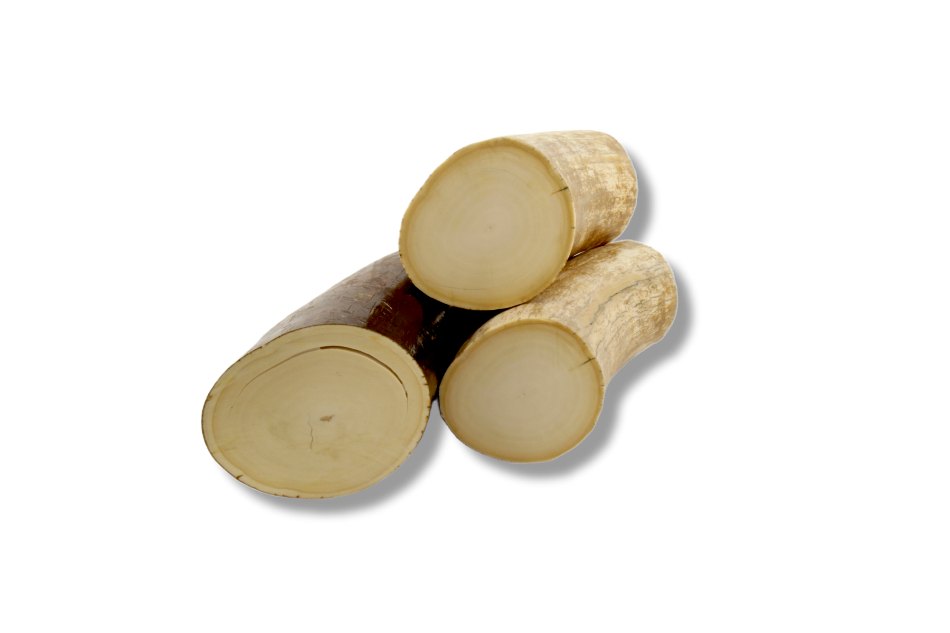
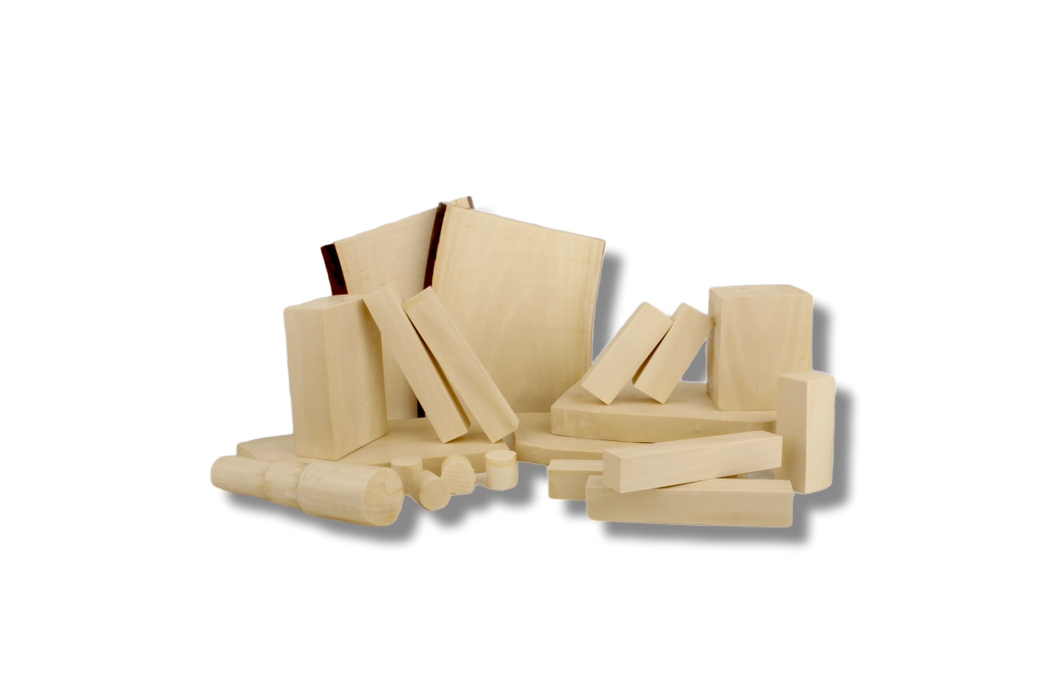
Working therefore has nothing to do with carving, engraving or artistry. For customs purposes, relatively simple cleaning or preparation may remain within the concept of unworked material, whereas cutting to shape, polishing, grinding, drilling and other processing can move the goods into a worked-material classification. A plain rectangular block sawn from a mammoth tusk and sanded may well be worked ivory, even though no artistic work has been done to it at all. Stabilised mammoth ivory that has been cut and impregnated with resin would generally be expected to require classification as worked material, but the applicable classification remains a matter for the relevant customs tariff and customs authority.
Examples of customs headings that may become relevant include the following.
Heading 9601, and subheading 9601.10, covers worked ivory and articles of ivory.
Heading 9705 covers collections and collectors' pieces, and since the 2022 revision of the Harmonized System includes subheading 9705.22 for extinct or endangered species and parts thereof, as collections or collectors' pieces of zoological, botanical, anatomical or palaeontological interest. Whether a particular specimen meets the collector or specimen criteria for this heading is a determination for the customs administration. It is also this heading that engages the EU cultural goods regime described earlier.
Other headings can apply depending on the article: original sculpture and statuary falls in heading 9703, subdivided by the age of the work rather than of the material, and jewellery not incorporating precious metal or stones falls in heading 7117. We intend to treat tariff classification in detail in a separate article, "Mammoth Ivory Customs Codes: HS Classification for Raw, Worked and Finished Products."
Where a shipment is valuable or its treatment uncertain, the reliable course is to obtain a binding ruling in advance — in the EU through a Binding Tariff Information decision, in the United Kingdom through an Advance Tariff Ruling, and in the United States through a ruling from Customs and Border Protection. A binding ruling can provide legal certainty for the classification it covers, generally for a defined period. In the EU a Binding Tariff Information decision is valid for a maximum of three years under Article 33(3) of the Union Customs Code, and may cease to be valid earlier if the nomenclature changes or if the decision is annulled or revoked. Holding one does not prevent customs from inspecting a consignment or taking samples to confirm that the goods correspond to those described.
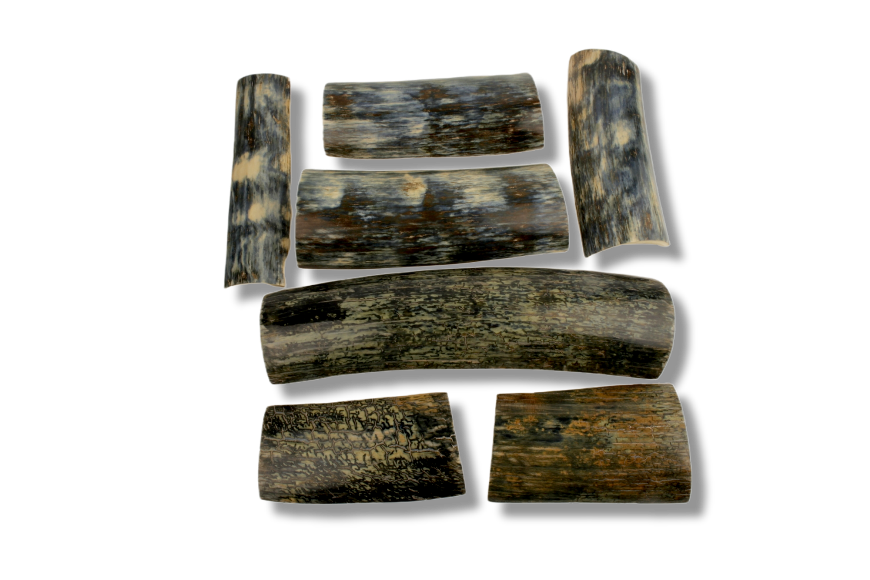
A complete raw tusk, a cut section, bark, inner core, a set of knife scales, a finished carving and a piece of jewellery are consequently not all the same thing at a border, even though the underlying species is identical in every case. Declaring a worked article under a raw material heading, or the reverse, invites delay.
Restoration deserves a specific note, as it is a category we supply. Professional restoration does not change the biological species: a restored mammoth tusk remains fossil mammoth ivory. Restoration is distinct from manufacture, and it should be documented rather than concealed. Where consolidating resins or adhesives have been used, that treatment should be disclosed on the accompanying paperwork, both because customs may ask and because a future buyer is entitled to know. Our approach to this is set out in "Natural vs Restored Mammoth Tusks."
What Documents Do You Need to Buy Mammoth Ivory?
The absence of a CITES permit requirement does not mean an absence of paperwork. For any significant purchase, a buyer should expect and retain the following.
A commercial invoice identifying the seller, the buyer and the goods. A description that states the material is fossil mammoth ivory, with the scientific name Mammuthus primigenius given in full. A statement of country of origin. An indication that the material is fossil rather than modern. Evidence of lawful acquisition. Export and import documentation where applicable, and the customs declaration. A Certificate of Origin where one is available. A copy of any relevant import or export permit, declaration or correspondence with a customs or wildlife authority, where applicable. Photographs and identifying details for high-value pieces. And, where the material has been restored or stabilised, a statement of what was done.
Keep these documents together for as long as you own the piece, and retain them if you later sell, export, insure or transfer it. The absence of documentation can make future resale, export or insurance substantially more difficult.
Why "Not CITES-Listed" Does Not Mean "No Requirements"
This is the misunderstanding that causes the most difficulty in practice. A material can sit entirely outside CITES and still be subject to customs declaration requirements, import restrictions in the destination country, export restrictions in the source country, fossil and palaeontological heritage legislation, national wildlife legislation broader than CITES, state or provincial law, and cultural property rules of the kind introduced by EU Regulation 2019/880.
Several of these have nothing to do with species protection. Palaeontological heritage law in particular exists to regulate the export of fossils as scientific and cultural patrimony, and operates on an entirely different rationale from wildlife trade law.
The correct conclusion is not that mammoth ivory is difficult to buy. It is that being outside CITES removes one requirement, not all of them.
If Customs Cannot Identify the Material
Consider the position from the other side of the counter. An officer is presented with a consignment described as mammoth ivory. It resembles elephant ivory. Elephant ivory is heavily restricted and mammoth ivory is not. The officer must decide.
Where documentation is clear, this is quickly resolved. Where it is not, the realistic outcomes are detention of the shipment pending enquiry, a request for further evidence of species and origin, referral for expert identification, storage and administrative costs falling on the importer, delay measured in weeks rather than days, and — if the authority is not satisfied that the material was lawfully imported — seizure.
This is the practical reason to prefer documented material from an identifiable supplier.
Buying Mammoth Ivory Online
Most mammoth ivory now changes hands online, and both the quality of sellers and the quality and authenticity of the material offered for sale vary enormously. Social media in particular has become a significant channel for fraud. We are aware of a considerable volume of fake accounts on Instagram, Facebook, TikTok and other social media platforms — some impersonating legitimate dealers, including ours — that solicit advance payment and deliver nothing, or deliver bone, resin or elephant ivory misdescribed as mammoth.
The same applies to entire websites. Fraudulent operators build one-to-one clone sites that reproduce a legitimate dealer's layout, product descriptions and photographs, copy the company details, and offer exactly the same pieces at a much lower price. The domain name usually differs from the genuine one by a character or two, or carries the same name under a different extension — .net in place of .com, for instance. Such a website looks identical to the original in every respect while having no stock, no company behind it and no intention of shipping anything. You place an order, you pay, and then nothing happens. Our own website has been cloned by fraudsters on a number of occasions, so this is not a hypothetical risk.
The defence is straightforward. If you are in any doubt about a website or a seller, contact the business directly before sending money, and telephone rather than write. An email to a clone site reaches the fraudster, who will simply reply confirming whatever you hoped to hear; a telephone conversation is considerably harder to fake. Ask for the commercial register number and the VAT registration number, and verify both yourself rather than accepting them as given — VAT numbers issued in the European Union can be checked through the European Commission's VIES system. Ask whether the specific piece is in stock, and request additional photographs of it that do not appear on the website. A legitimate dealer will be glad to supply all of this. A clone site will usually have no working telephone number, will not answer, or will respond in a way that does not match the company it is pretending to be. The principle throughout is to ask for evidence you can check independently, rather than relying on what you are told.
General auction and marketplace sites such as eBay present a different difficulty. The platforms themselves are legitimate businesses operating their own policies on restricted materials, and the point here is not about the platform but about the individual seller behind a listing. That seller is often anonymous or trading under a pseudonym, the species may be stated loosely or not at all, and documentation is frequently absent. Buyer protection schemes address non-delivery and misdescription in a commercial sense; they do not establish what a material actually is, and they do not address whether it may lawfully be imported into your country.
Before sending money to anyone, establish the following.
Is the seller a legally identifiable business, with a registered company name, address, and VAT or equivalent registration that you can verify independently? Is the species stated explicitly, using the scientific name? Is the material described as fossil, and is its geographic origin stated? Where is the seller located, and from where will the goods actually ship? Will you receive a proper commercial invoice? Is documentation of origin available, and will further documentation be supplied if customs requests it? Is the piece described as raw, worked, restored or stabilised? And does the seller explain the import position for your country, or simply assure you that everything is fine?
A reputable specialist should be able to provide clear information about the material, its origin, their business identity and the documentation supplied with the transaction. An account that communicates only by direct message, requests payment by irreversible methods, cannot produce a company registration and becomes evasive when asked about documentation does not provide the level of transparency a buyer should expect from an established specialist dealer.
Arctic Antiques GmbH is a registered German company with a published address, VAT number and legal notice. Our documentation position is set out above, and our contact details appear on every page of this website.
Common Misconceptions
All ivory is illegal. Ivory is not automatically illegal. Restrictions depend on the species, the jurisdiction, the product and the applicable legislation.
Mammoth ivory and elephant ivory are legally identical. They are not, in most jurisdictions. The distinction is the species.
Mammoth ivory requires a CITES certificate. No such certificate exists for an unlisted species, and none can be issued.
If it is legal in Germany it can be shipped anywhere. It cannot. The destination country's law governs the import.
Customs accepted it once, so it is legal. A consignment clearing customs is not a legal ruling, and practice varies between ports, officers and dates.
A certificate from the seller guarantees import legality. It does not. Documentation identifies the material; it does not override the destination country's law.
Fossil means automatically unrestricted. It does not. Fossil material can be caught by palaeontological heritage and cultural property legislation that has nothing to do with CITES.
More than 10,000 years old means exempt from everything. Age is a fact about the material, not a legal status.
A restored tusk is no longer ivory. Restoration does not change the species. A restored mammoth tusk is fossil mammoth ivory that has been treated.
Before You Buy: A Verification Sequence
Identify the species, by scientific name.
Establish the material's origin and whether it is fossil.
Establish the seller's country and legal identity.
Establish that the seller actually holds the specific piece offered, and that the photographs and description correspond to that piece.
Establish your own country's position, and that of any state or province.
Determine whether the transaction is domestic or international.
Determine whether the material is raw, worked, restored or stabilised.
Contact the relevant authority in your country if anything is unclear.
Obtain confirmation of what documentation will be supplied.
Confirm the customs requirements and classification that will apply.
Only then purchase.
Official Authorities and Primary Sources
Questions about a specific consignment should go to the responsible authority rather than to any commercial website, including this one.
- CITES Secretariat — the Appendices, the species database, and the legislative status table under the National Legislation Project
- European Union — European Commission, Directorate-General for Environment, for the EU Wildlife Trade Regulations; Directorate-General for Taxation and Customs Union for the cultural goods regime and customs classification
- Germany — Bundesamt für Naturschutz (BfN) as CITES Management Authority; Generalzolldirektion for customs
- Switzerland — Federal Food Safety and Veterinary Office (FSVO / BLV)
- Norway — Norwegian Environment Agency (Miljødirektoratet)
- United Kingdom — Animal and Plant Health Agency (APHA) and the Department for Environment, Food and Rural Affairs (DEFRA)
- United States — U.S. Fish and Wildlife Service, together with the wildlife agency of the relevant state
- Canada — Environment and Climate Change Canada, as CITES Management Authority
- Australia — Department of Climate Change, Energy, the Environment and Water (DCCEEW); Australian Border Force for enforcement; Department of Agriculture, Fisheries and Forestry for biosecurity
- New Zealand — Department of Conservation (DOC); Ministry for Primary Industries for biosecurity
- Japan — Ministry of Economy, Trade and Industry (METI), with the Ministry of the Environment as Scientific Authority
- Singapore — National Parks Board (NParks), Animal and Veterinary Service
- Malaysia — Department of Wildlife and National Parks (PERHILITAN)
- Thailand — Department of National Parks, Wildlife and Plant Conservation (DNP)
- Vietnam — CITES Management Authority of Vietnam, Ministry of Agriculture and Rural Development
- South Korea — Ministry of Environment (MOE); Korea Customs Service (KCS)
- United Arab Emirates — Ministry of Climate Change and Environment (MOCCAE)
- Saudi Arabia — National Center for Wildlife (NCW)
- French Polynesia — the relevant French and territorial authorities; note that the territory is outside the EU customs territory
- Mexico — Secretaría de Medio Ambiente y Recursos Naturales (SEMARNAT), Dirección General de Vida Silvestre; PROFEPA for enforcement
- Brazil — Instituto Brasileiro do Meio Ambiente e dos Recursos Naturais Renováveis (IBAMA), Diretoria de Uso Sustentável da Biodiversidade e Florestas
- Argentina — Dirección Nacional de Biodiversidad, Ministerio de Ambiente y Desarrollo Sostenible
- Chile — Servicio Agrícola y Ganadero (SAG); Servicio Nacional de Pesca y Acuicultura (SERNAPESCA) for marine species
- All other destinations — the national CITES Management Authority, whose current contact details are published on the CITES website, together with the national customs administration
Legality, however, is only the first question. For how fossil mammoth ivory is actually sourced, identified and documented — and how to test the claims of any supplier, including ours — see our companion article "The Business of Ethical Mammoth Ivory: Sourcing, Identification and Verification."
If you have any questions, please email us: info@arcticantiques.com
Bibliography:
Convention on International Trade in Endangered Species of Wild Fauna and Flora (CITES). Appendices I, II and III. CITES Secretariat.
CITES Secretariat. Trade in mammoth ivory (Decision 19.103), SC78 Doc. 65.7, Seventy-eighth meeting of the Standing Committee, February 2025.
CITES Secretariat. Elephant conservation, illegal killing and ivory trade, CoP20 Doc. 76.1, Twentieth meeting of the Conference of the Parties, Samarkand, 2025. Part 6, on the implementation of Decisions 19.102 and 19.103 on Trade in mammoth ivory.
CITES Secretariat. Notification to Parties No. 2023/136, 27 November 2023, inviting submission of research and studies on trade in mammoth ivory.
CITES. Resolution Conf. 9.24 (Rev. CoP17), on Criteria for the amendment of Appendices I and II; and proposal CoP18 Prop. 13, withdrawn, together with Decisions 18.120 and 18.121 on Trade in mammoth ivory.
CITES. Resolution Conf. 8.4 (Rev. CoP20), on National laws for implementation of the Convention; and the Status of Legislative Progress for Implementing CITES table maintained by the Secretariat under the National Legislation Project.
CITES. List of Parties to the Convention. CITES Secretariat.
CITES Secretariat. National CITES Authorities — country profiles for Brazil, Chile, Mexico and Argentina.
Ley N° 22.344 and Decreto N° 522/97, Argentina, implementing CITES; Resolución MAyDS N° 241/17 designating the Dirección Nacional de Biodiversidad as CITES Management Authority. Boletín Oficial de la República Argentina.
Comisión Nacional para el Conocimiento y Uso de la Biodiversidad (CONABIO) and Secretaría de Medio Ambiente y Recursos Naturales (SEMARNAT), Mexico. Autoridad Administrativa CITES.
Espinoza, E. O.; Mann, M.-J. (1991). Identification Guide for Ivory and Ivory Substitutes. World Wildlife Fund and The Conservation Foundation; subsequently published by the CITES Secretariat.
Trapani, J.; Fisher, D. C. (2003). "Discriminating Proboscidean Taxa Using Features of the Schreger Pattern in Tusk Dentin". Journal of Archaeological Science, 30(4): 429–438.
Council Regulation (EC) No 338/97 of 9 December 1996 on the protection of species of wild fauna and flora by regulating trade therein. OJ L 61, 3.3.1997.
Commission Regulation (EC) No 865/2006 of 4 May 2006 laying down detailed rules concerning the implementation of Council Regulation (EC) No 338/97. OJ L 166, 19.6.2006.
European Commission (2021). Commission Notice — Revised guidance document on the EU regime governing trade in ivory. OJ C 528, 30.12.2021. See in particular footnote 5: "The reference to ivory in this guidance document relates only to ivory from elephants."
Regulation (EU) 2019/880 of the European Parliament and of the Council of 17 April 2019 on the introduction and the import of cultural goods. OJ L 151, 7.6.2019. Annex, Part C.
Commission Implementing Regulation (EU) 2021/1079 of 24 June 2021 laying down detailed rules for implementing certain provisions of Regulation (EU) 2019/880.
Ivory Act 2018 (c. 30), United Kingdom, section 37.
The Ivory Act 2018 (Meaning of "Ivory" and Miscellaneous Amendments) Regulations 2025, S.I. 2025/9, regulation 2, in force 28 January 2025.
Department for Environment, Food and Rural Affairs (United Kingdom). Deal in items made of or containing ivory. Guidance, GOV.UK.
U.S. Fish and Wildlife Service (2016). Endangered and Threatened Wildlife and Plants; Revision of the Section 4(d) Rule for the African Elephant (Loxodonta africana). Federal Register, 6 June 2016: "Ivory from extinct species, such as mammoth, is not regulated under statutes implemented by the Service."
U.S. Fish and Wildlife Service. Beach Found Marine Mammal Parts — Alaska: "Fossil ivory (including walrus, mammoth and mastodon), archeological, and paleontological materials are regulated by an array of Federal and State laws and these items may not be collected on any State or Federal public lands."
Paleontological Resources Preservation Act of 2009, 16 U.S.C. § 470aaa et seq., enacted 30 March 2009 within the Omnibus Public Land Management Act; implementing regulations effective 1 September 2022.
California Fish and Game Code § 2022; Hawaii Revised Statutes § 183D-66(d); 815 Illinois Compiled Statutes § 357; Nevada Revised Statutes § 597.905; New Jersey Revised Statutes § 23:2A-13.1 to 13.5; New York Environmental Conservation Law § 11-0535-a — state statutes expressly extending to mammoth ivory.
District of Columbia. Ivory and Horn Trafficking Prohibition Act of 2020, D.C. Law 23-126, § 2. Official Code of the District of Columbia.
Wild Animal and Plant Protection and Regulation of International and Interprovincial Trade Act (WAPPRIITA), S.C. 1992, c. 52, and the Wild Animal and Plant Trade Regulations (WAPTR), Canada.
Environment and Climate Change Canada. Import and export of elephant tusk (ivory) and rhinoceros horn, in force 8 January 2024.
Federal Act on CITES (FA-CITES) and FDHA Ordinance on the Control of Trade in Protected Plant and Animal Species (CITES Control Ordinance), Switzerland. Federal Food Safety and Veterinary Office, Procedure and guidelines on species conservation in import.
Forskrift om innførsel, utførsel, besittelse mv. av truede arter av vill fauna og flora (CITES-forskriften), FOR-2018-06-15-889, Norway, sections 3 and 4 and Annex 1. Lovdata.
Environment Protection and Biodiversity Conservation Act 1999 (Cth) and Environment Protection and Biodiversity Conservation Regulations 2000 (Cth), Australia. Department of Climate Change, Energy, the Environment and Water, Convention on International Trade in Endangered Species of Wild Fauna and Flora (CITES) and Do I need a permit?
Biosecurity Act 2015 (Cth), Australia, administered by the Department of Agriculture, Fisheries and Forestry.
Trade in Endangered Species Act 1989, New Zealand, sections 3 and 7. Administered by the Department of Conservation.
Foreign Exchange and Foreign Trade Act, Japan, and the Act on Conservation of Endangered Species of Wild Fauna and Flora (ACES). Ministry of Economy, Trade and Industry, About CITES and import guidance; Ministry of the Environment, What is CITES?
Endangered Species (Import and Export) Act (Cap. 92A), Singapore; and the Endangered Species (Import and Export) (Prohibition of Sale) (Amendment) Notification 2021, in force 1 September 2021. National Parks Board, Animal and Veterinary Service, Domestic Trade Ban in Ivory and Illegal Wildlife Trade.
International Trade in Endangered Species Act 2008 (Act 686), Malaysia, Third Schedule. In operation 28 December 2009.
Elephant Ivory Act B.E. 2558 (2015), Thailand; and the Wild Animal Conservation and Protection Act B.E. 2562 (2019). Department of National Parks, Wildlife and Plant Conservation.
Decree No. 06/2019/ND-CP of 22 January 2019 on the management of endangered, precious and rare species of forest fauna and flora and observation of CITES, Socialist Republic of Vietnam, in force 19 March 2019, as amended by Decree No. 84/2021/ND-CP.
Treaty on the Functioning of the European Union, Articles 198 to 204, on the association of the Overseas Countries and Territories. European Commission, Directorate-General for Taxation and Customs Union, Overseas Countries and Territories (OCTs); European External Action Service, The European Union and French Polynesia.
Wild Life (Protection) Act 1972, India, as amended by Amendment Act No. 44 of 1991.
Ivory Traders and Manufacturers Association v. Union of India, AIR 1997 Delhi 267 (Full Bench, High Court of Delhi).
Balram Kumawat v. Union of India, Supreme Court of India, holding that the 1991 Amendment prohibits trade in ivory of every description, elephant or mammoth.
Indian Handicrafts Emporium v. Union of India, Supreme Court of India, upholding the constitutional validity of the 1991 Amendment.
Cox, C.; Hauser, L. (2023). "Ice Ivory to White Gold: Links Between the Illegal Ivory Trade and the Trade in Geocultural Artifacts". Journal of International Wildlife Law & Policy, 26(1): 22–46. DOI: 10.1080/13880292.2023.2217615. On the Israeli prohibition of 1 January 2021.
Regulation (EU) No 952/2013 establishing the Union Customs Code, Articles 33 and 34, on binding tariff information decisions and their validity. European Commission, Directorate-General for Taxation and Customs Union, European Binding Tariff Information (EBTI) and Validity period of BTI decisions.
World Customs Organization. Harmonized Commodity Description and Coding System, headings 7117, 9601, 9703 and 9705; Note 11 to Chapter 71; and the Explanatory Notes to heading 96.01 on the meaning of "worked". Subheading 9705.22, extinct or endangered species and parts thereof, was introduced in the 2022 revision.
United States International Trade Commission. Harmonized Tariff Schedule of the United States, Chapter 96.
Canada Border Services Agency. Customs Tariff, Schedule, Chapter 97.
Vartanyan, S. L.; Garutt, V. E.; Sher, A. V. (1993). "Holocene dwarf mammoths from Wrangel Island in the Siberian Arctic". Nature, 362(6418): 337–340.
Graham, R. W.; Belmecheri, S.; Choy, K.; Culleton, B. J.; Davies, L. J.; Froese, D.; Heintzman, P. D.; Hritz, C.; Kapp, J. D.; Newsom, L. A.; Rawcliffe, R.; Saulnier-Talbot, É.; Shapiro, B.; Wang, Y.; Williams, J. W.; Wooller, M. J. (2016). "Timing and causes of mid-Holocene mammoth extinction on St. Paul Island, Alaska". Proceedings of the National Academy of Sciences, 113(33): 9310–9314.
Dehasque, M.; et al. (2021). "Combining Bayesian age models and genetics to investigate population dynamics and extinction of the last mammoths in northern Siberia". Quaternary Science Reviews.
Palkopoulou, E.; et al. (2018). "Mitogenome evolution in the last surviving woolly mammoth population reveals neutral and functional consequences of small population size". Evolution Letters.
Sukumar, R. (2003). The Living Elephants: Evolutionary Ecology, Behaviour and Conservation. Oxford University Press. (Historical and present distribution of Elephas maximus; the reference relied upon by the IUCN Red List assessment for the species.)
International Union for Conservation of Nature. IUCN Red List of Threatened Species — range assessments for Loxodonta africana, Loxodonta cyclotis and Elephas maximus.