What Is Mammoth Ivory?
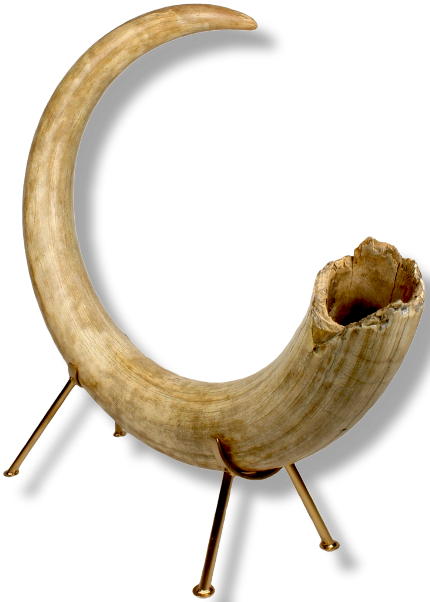
Mammoth ivory is fossilised tusk material from the woolly mammoth (scientific name: Mammuthus primigenius), a species of the extinct elephantid genus Mammuthus that lived across the northern hemisphere during the last Ice Age. Recovered from the Siberian permafrost after thousands of years in the frozen ground, it is one of the few genuinely ancient organic materials that can still be legally and ethically worked by artisans today.
For knifemakers, gunmakers, watchmakers, jewellers, pen-turners, scrimshanders and sculptors, it offers the warmth and workability of ivory without the ethical and legal burden of elephant ivory. This guide explains what mammoth ivory actually is, how it forms, and what makes each piece unique.
Where mammoth ivory comes from
The woolly mammoth belonged to the genus Mammuthus, and Mammuthus primigenius was its final species. Mainland populations died out roughly 10,000 years ago at the end of the Pleistocene, while a small relict population survived on Wrangel Island, off the coast of north-east Siberia, until around 4,000 years ago.
Their remains lie preserved in permafrost — ground that stays at or below 0 °C for at least two consecutive years. The cold, oxygen-poor conditions of the Siberian permafrost are exceptionally good at preserving organic material, which is why carvable mammoth ivory survives at all. As the permafrost thaws during the short Arctic summer, tusks and tusk fragments are exposed and recovered. Individual tusks are commonly tens of thousands of years old, with material ranging from roughly 10,000 to over 100,000 years.
Recovering a whole tusk in good condition is rare, and finding a matched pair from the same animal is rarer still. Most recovered material is fragmentary — cracked, weathered and encrusted with ancient mud — which is part of why fine pieces command the prices they do.
The structure of a tusk: ivory, bark and molar
A tusk is a greatly enlarged incisor tooth, and understanding its structure helps explain the different materials we offer.
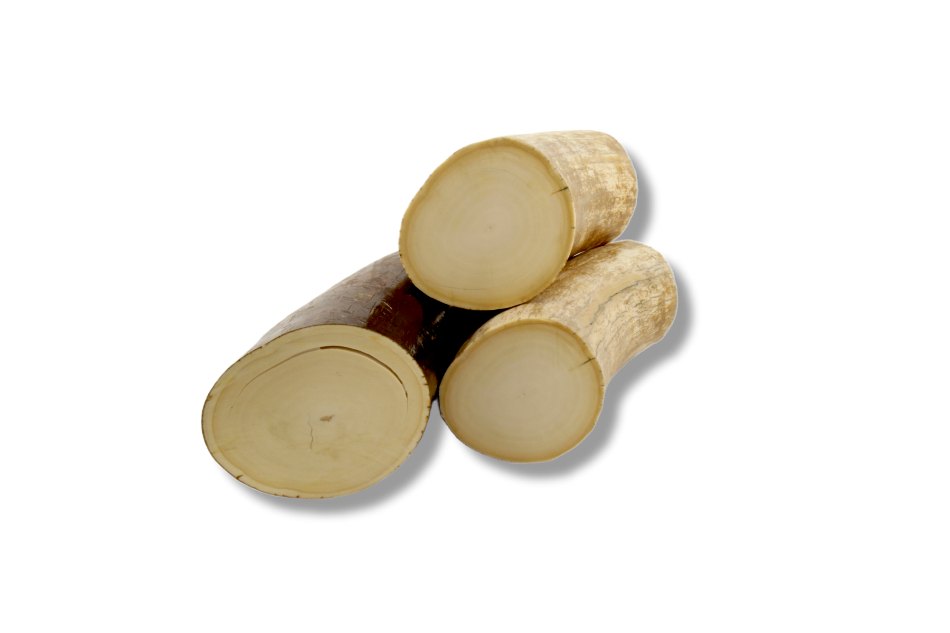
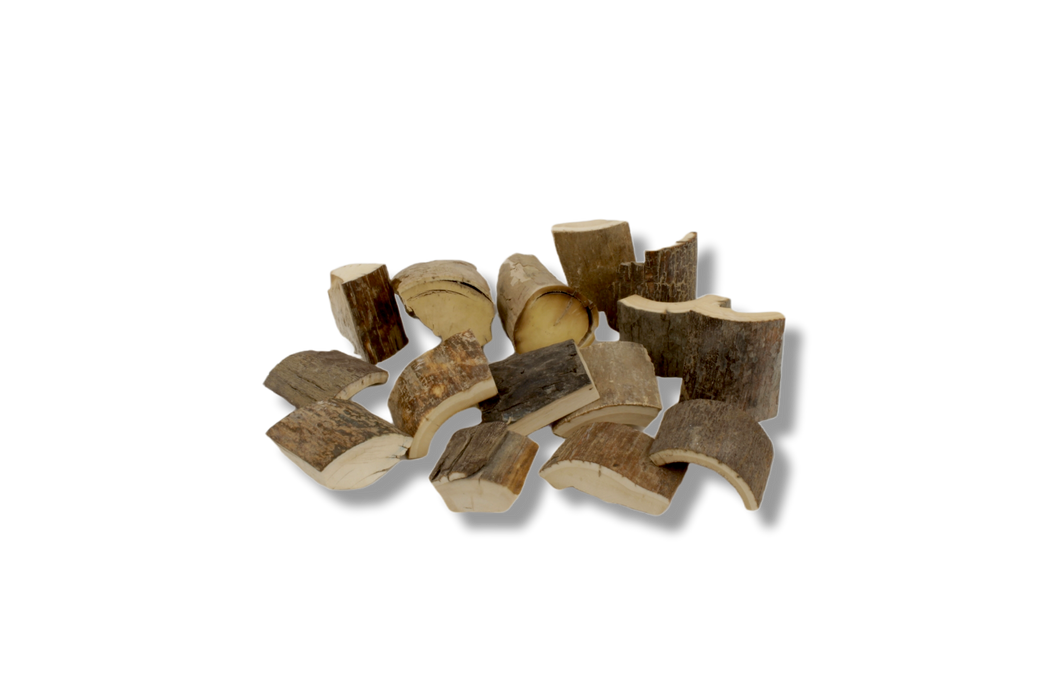
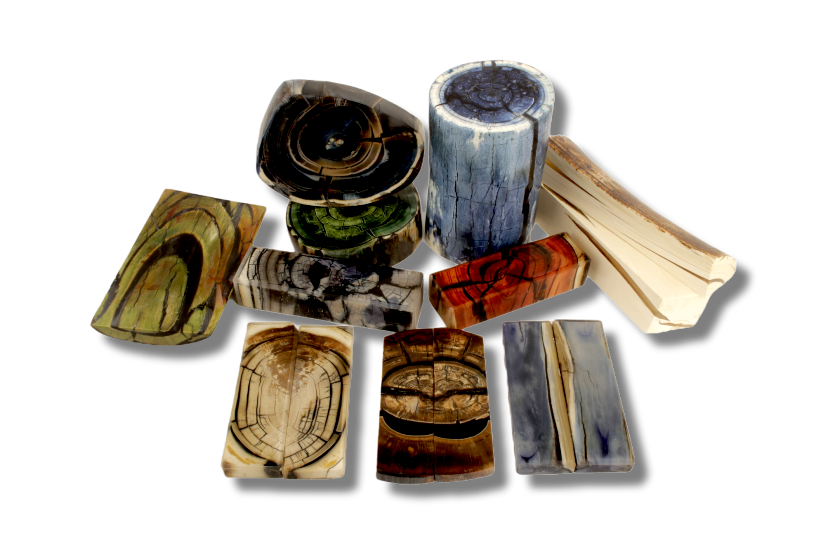
- Mammoth ivory (the core): The main body of the tusk is dentine, which makes up the bulk of the material. This is the creamy-white, fine-grained "ivory" prized for its uniform texture. Our white mammoth ivory and mammoth ivory pieces come from this core.
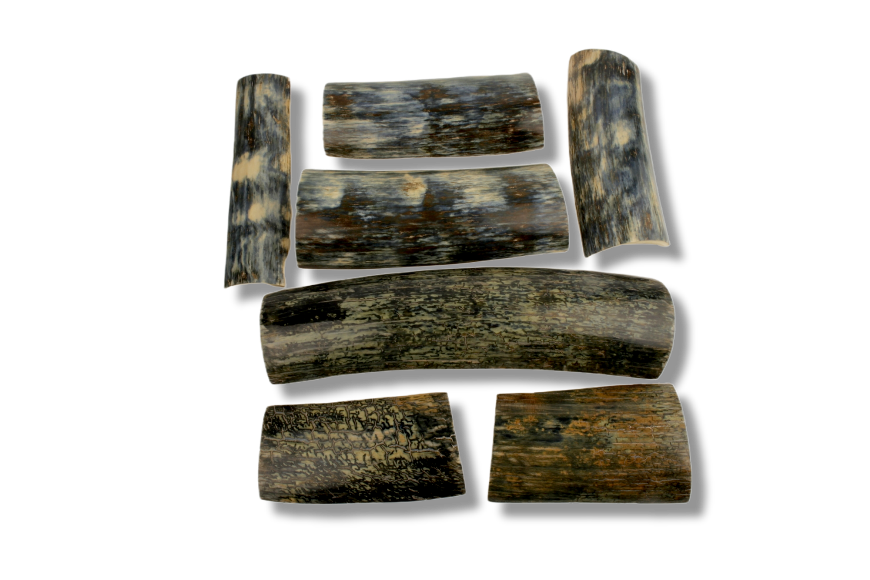
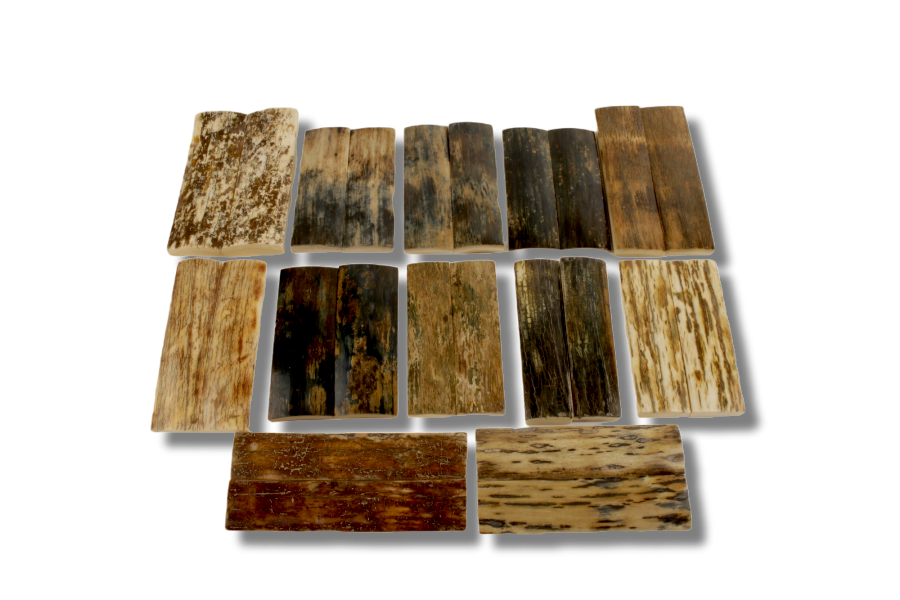
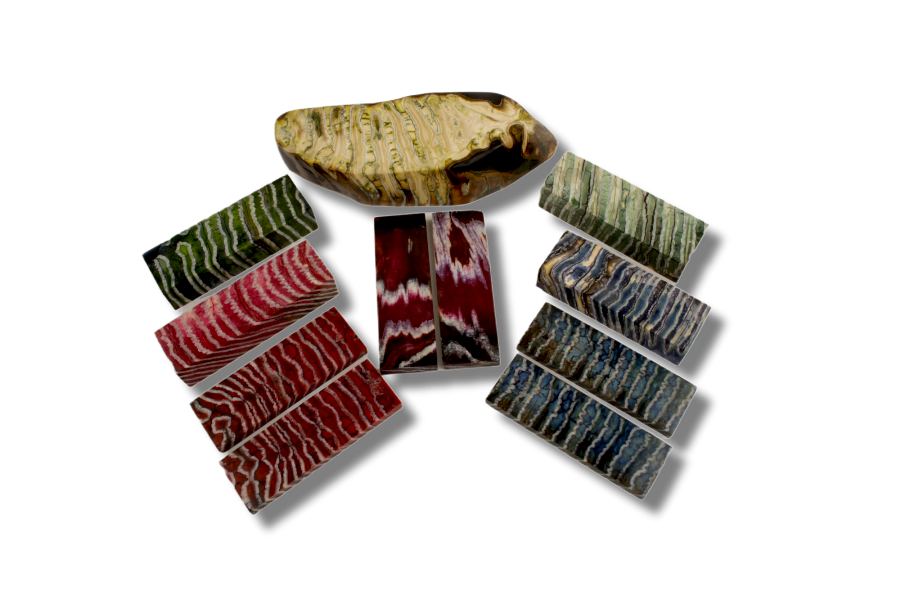
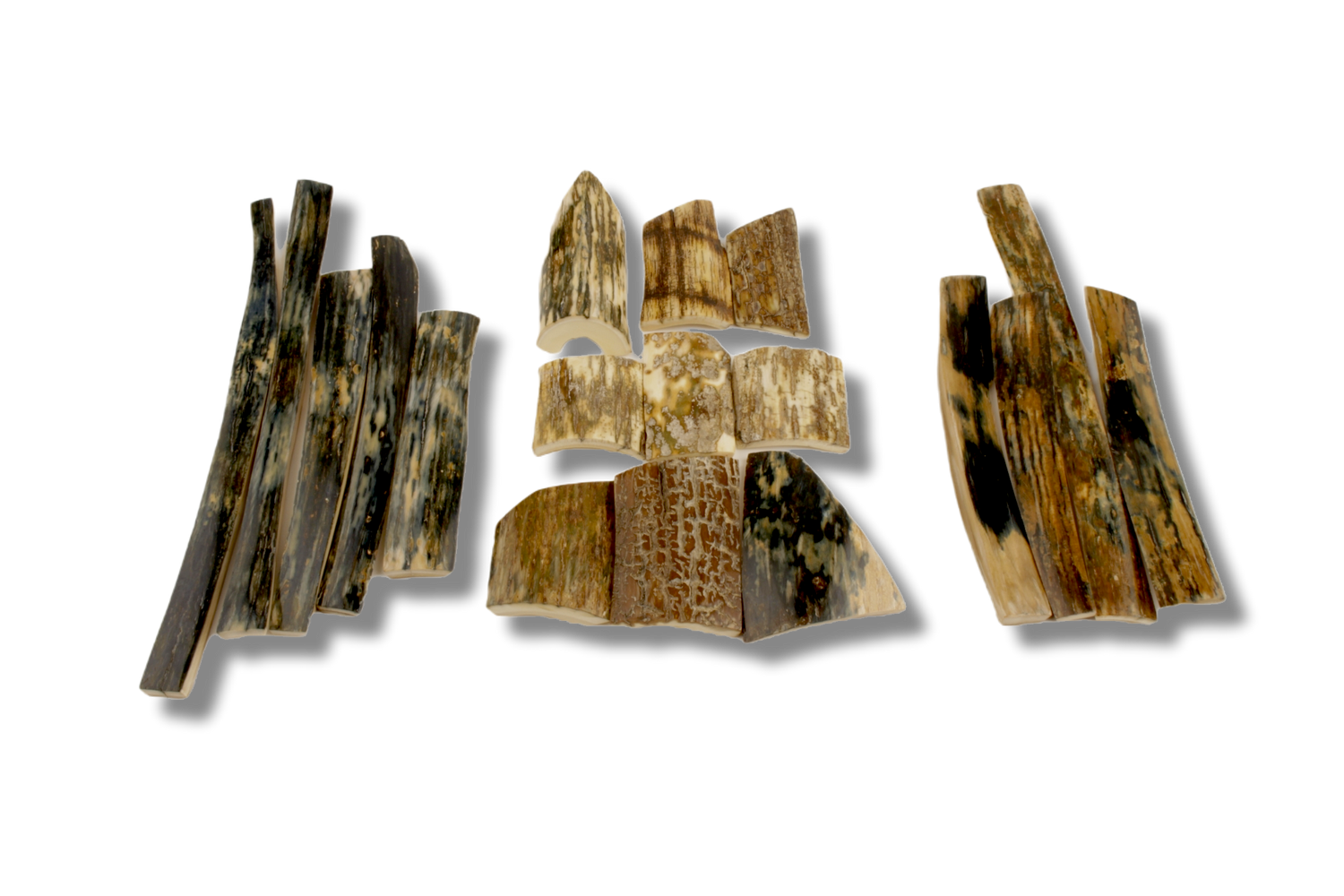
- Mammoth bark (the outer layer): The tusk's outer surface — cementum and the outermost dentine — is what the trade calls "bark." Millennia in the ground give it remarkable patinas in white, tan, bronze, green and blue. The rare blue colour is caused by vivianite, a hydrated iron phosphate that forms as iron migrates into the tusk. Explore our range of mammoth bark for these natural colourings.
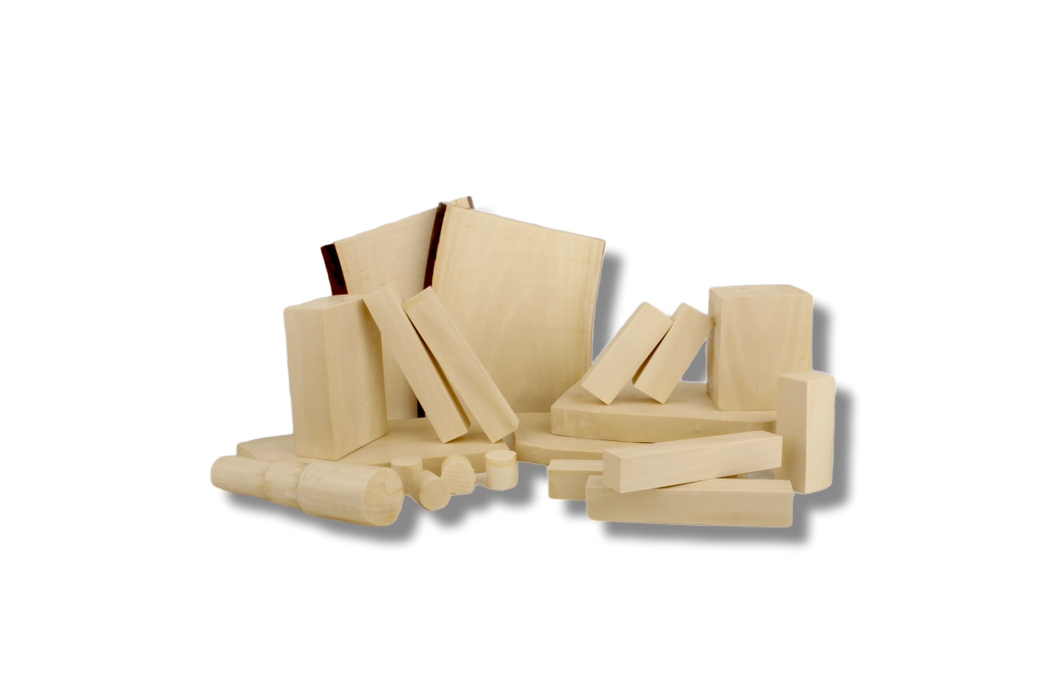
- Mammoth molar: Not from the tusk at all, but from the animal's teeth. Fossil mammoth molars are often porous and are usually professionally stabilised with resin before use. See our range of stabilised mammoth molar.
How to tell mammoth ivory from elephant ivory
The most reliable field test uses Schreger lines — the cross-hatched pattern visible in a polished cross-section of any proboscidean tusk. Where these lines intersect near the outer surface, they form angles: in mammoth (and other extinct proboscideans) the outer angles are acute, averaging below 100°, while in modern elephant ivory they are obtuse, averaging above 100°. This distinction, established by the U.S. Fish & Wildlife Service forensic laboratory, is how customs officers worldwide separate legal mammoth ivory from banned elephant ivory. Occasional blue-green vivianite staining is another tell-tale marker unique to fossil material.
Why craftspeople choose mammoth ivory
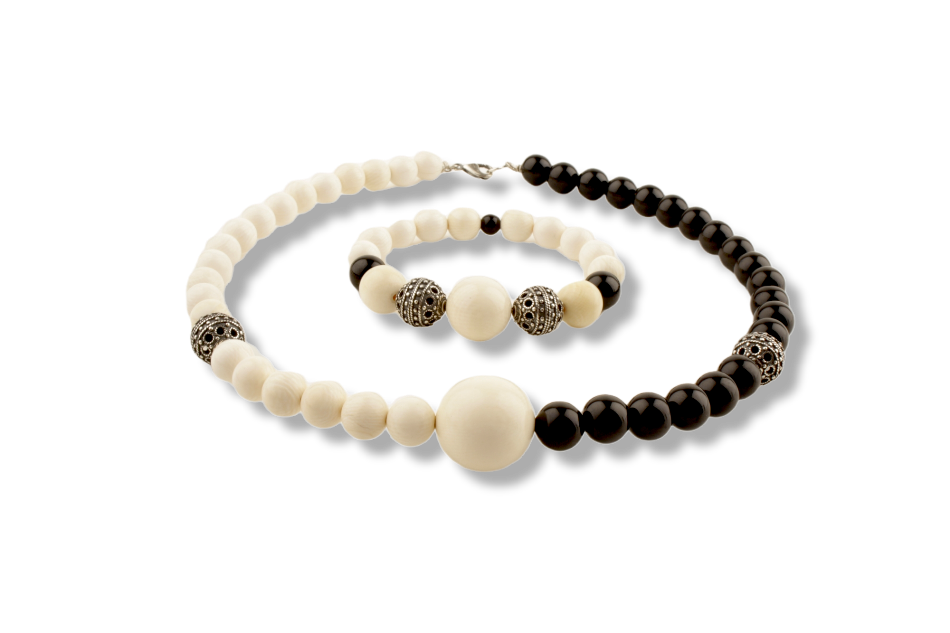
Polished mammoth ivory has a glassy, warm surface that has been valued for centuries. Because every tusk aged differently in the ground, no two pieces share the same colour, grain or character — a quality that bespoke craftspeople and collectors specifically seek. It is legal to trade (the woolly mammoth is extinct and not listed under CITES), and when accompanied by our proper documentation it gives makers and their clients a clear, ethical provenance.
If you would like help choosing the right material for your craft, please email us: info@arcticantiques.com
Bibliography
- Dehasque, M., et al. (2024). "Temporal dynamics of woolly mammoth genome erosion prior to extinction." Cell, 187(14). [Extinction dating: mainland c. 10,000 years ago; Wrangel Island c. 4,000 years ago]
- Locke, M. (2008). "Structure of ivory." Journal of Morphology, 269(4), 423–450. [Tusk / dentine structure]
- Espinoza, E. O., & Mann, M.-J. (1993). "The History and Significance of the Schreger Pattern in Proboscidean Ivory Characterization." Journal of the American Institute for Conservation, 32(3), 241–248. [Schreger angle test]
- Wang, X., et al. (2021). "Vivianite and Its Oxidation Products in Mammoth Ivory and Their Implications to the Burial Process." ACS Omega, 6(35). [Vivianite / blue colouration]
- Espinoza, E. O., & Mann, M.-J. (1991). Identification Guide for Ivory and Ivory Substitutes (2nd ed.). World Wildlife Fund & U.S. Fish & Wildlife Service. [Schreger angles for distinguishing mammoth from elephant ivory; vivianite markers]
- National Snow and Ice Data Center (NSIDC). "Frozen Ground & Permafrost." [Permafrost definition]
- CITES (2019). CoP18 Prop. 13: Proposal to include Mammuthus primigenius in Appendix II (rejected). [Confirms the woolly mammoth is not CITES-listed and trade in mammoth ivory is legal]