Fossil Mammoth Tusks as a Long-Term Store of Value: A Collector's Guide to Tangible Assets
For more than two decades, our clients have included bespoke private collectors, family offices, interior designers and estate owners who share a common instinct: the desire to hold something real. Alongside fine art, vintage cars, rare wine and coloured diamonds, fossil mammoth ivory (Mammuthus primigenius) belongs to the category that Knight Frank and Deloitte describe as "investments of passion" — tangible assets held for the long term, valued as much for what they are as for what they cost.
This article explains why exceptional fossil mammoth tusks are increasingly considered a legitimate component of a diversified holding of tangible assets, what actually drives their value, and — equally importantly — what any serious collector should understand about the risks before acquiring one.
Arctic Antiques GmbH is a dealer in fossil mammoth ivory, not a financial adviser, and nothing in this article constitutes investment advice or a forecast of future prices. Collectors considering a significant acquisition should form their own view and, where appropriate, take independent professional advice.
What "Passion Assets" Actually Are
Academic research into collectibles as an asset class is extensive. In the most widely cited long-run study, Elroy Dimson and Christophe Spaenjers examined art, stamps and musical instruments over the period 1900–2012 and found that these assets appreciated at roughly 6.4% to 6.9% per year in nominal terms, or approximately 2.4% to 2.8% in real terms after inflation. Over that horizon, collectibles outperformed government bonds, Treasury bills and gold, while trailing equities.
The Knight Frank Luxury Investment Index, which tracks ten passion-asset categories, has risen 38.6% over the past decade. Critically, in its 2026 Wealth Report, Knight Frank observed that market strength has returned specifically to those segments defined by rarity, cultural significance and exceptional provenance, reflecting an increasingly disciplined and selective global collector base.
That last point matters more than any index figure. The collector market no longer rewards category alone. It rewards quality, rarity and documentation — the three characteristics on which the value of a fossil mammoth tusk ultimately rests.
A Genuinely Finite, Non-Renewable Resource
The woolly mammoth has been extinct for thousands of years. No new supply is being created, and none ever will be. Every tusk that exists today grew on a living mammoth during the Pleistocene, and every tusk recovered is one fewer remaining in the Siberian permafrost.
This is a rarer property than it sounds. Most tangible assets that appreciate do so despite ongoing production — new watches are manufactured, new wine is bottled, new artists emerge. Fossil mammoth ivory sits in the much smaller category of assets with a genuinely fixed and permanently closed supply, alongside meteorites, dinosaur fossils and the work of deceased artists.
An honest qualification belongs here. In the short term, warming permafrost has made some Siberian deposits more accessible than they were in previous decades, and this has periodically increased the flow of raw material reaching the market. Supply of raw tonnage is therefore not constant year to year. But supply of display-grade, structurally intact, professionally prepared tusks has always been a tiny fraction of total tonnage, and it is this narrow top tier — not bulk carving material — that constitutes the exclusive collector market.
Exceptional Quality and Matched Pairs
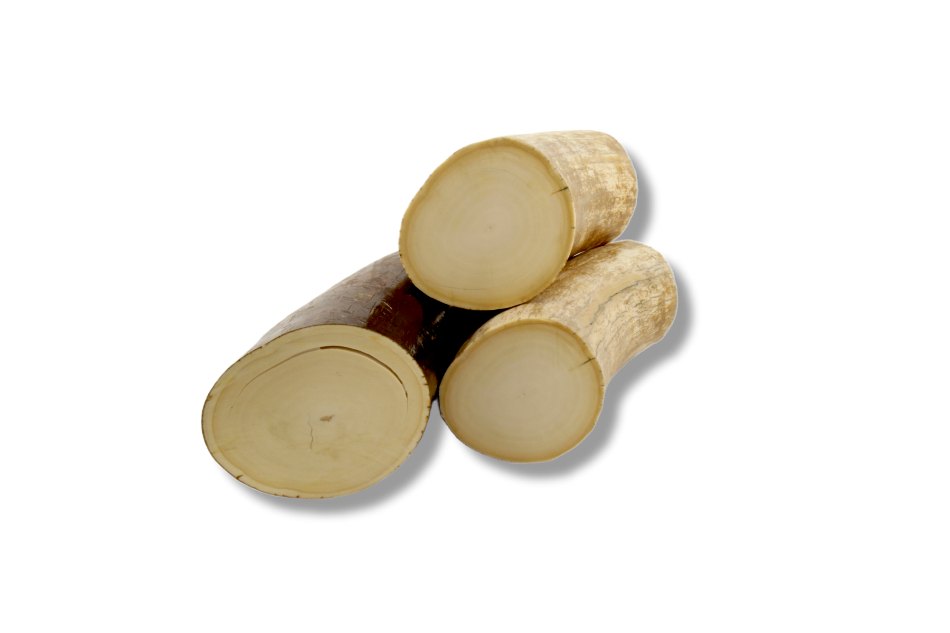
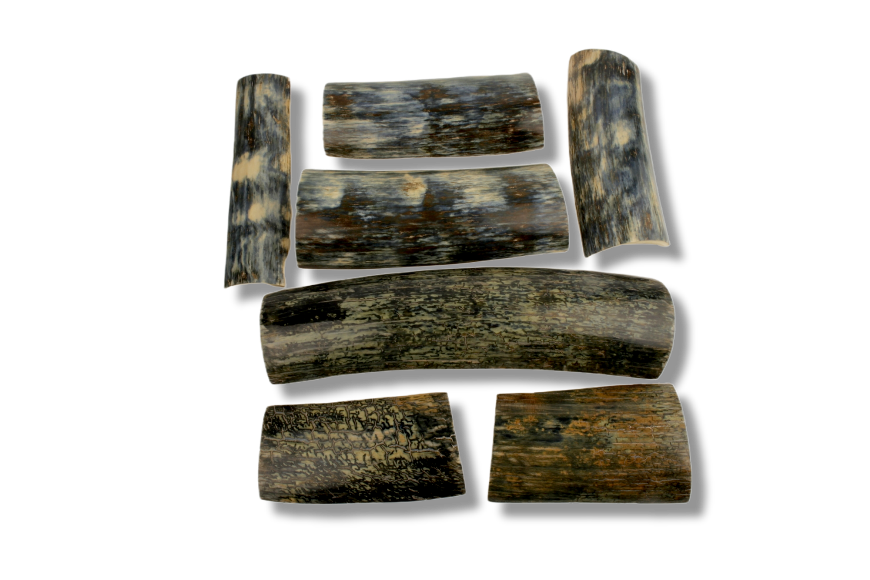
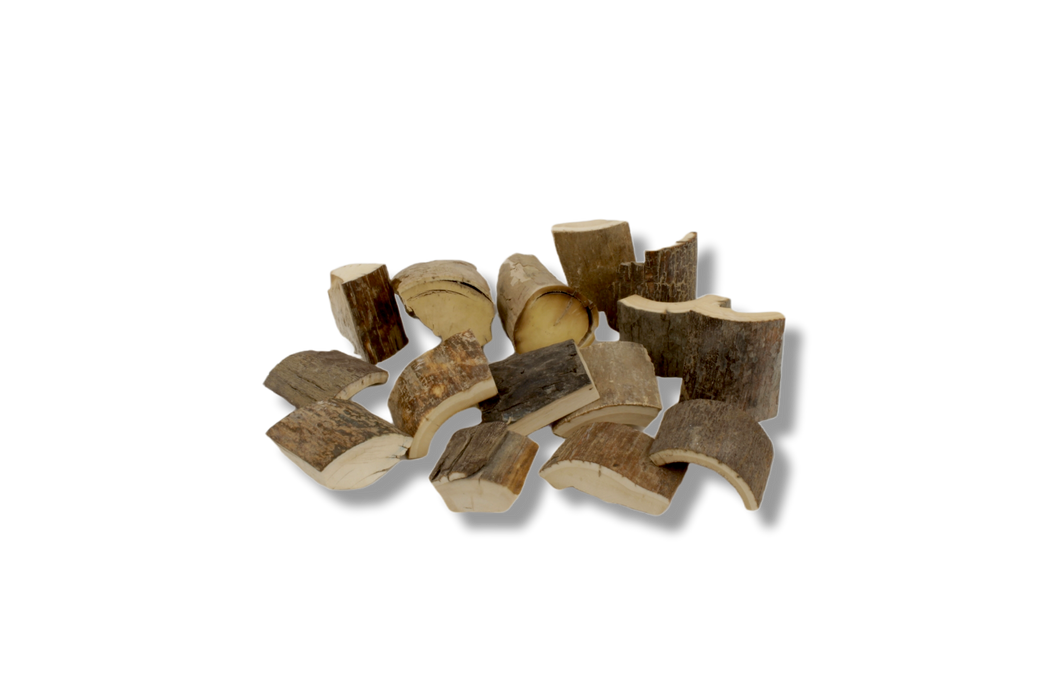
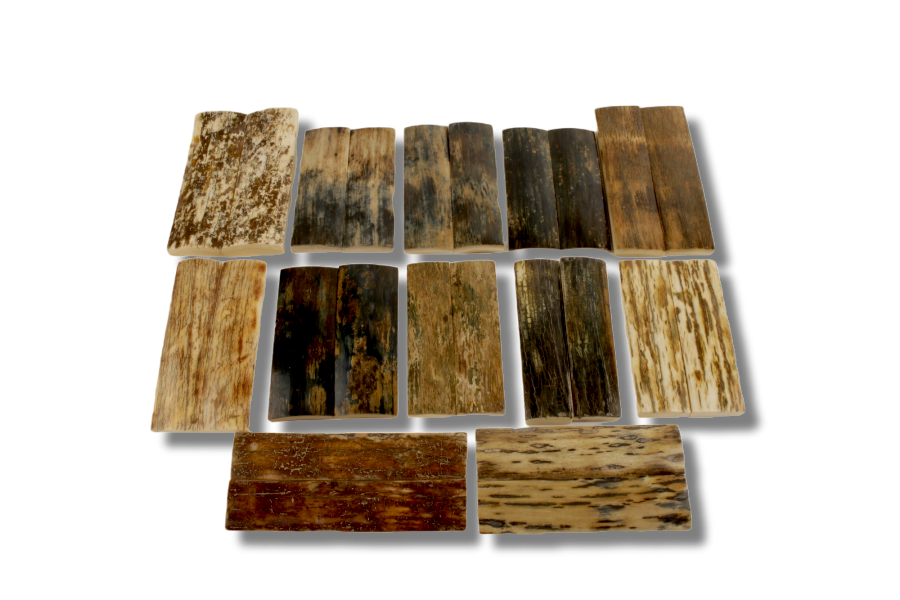
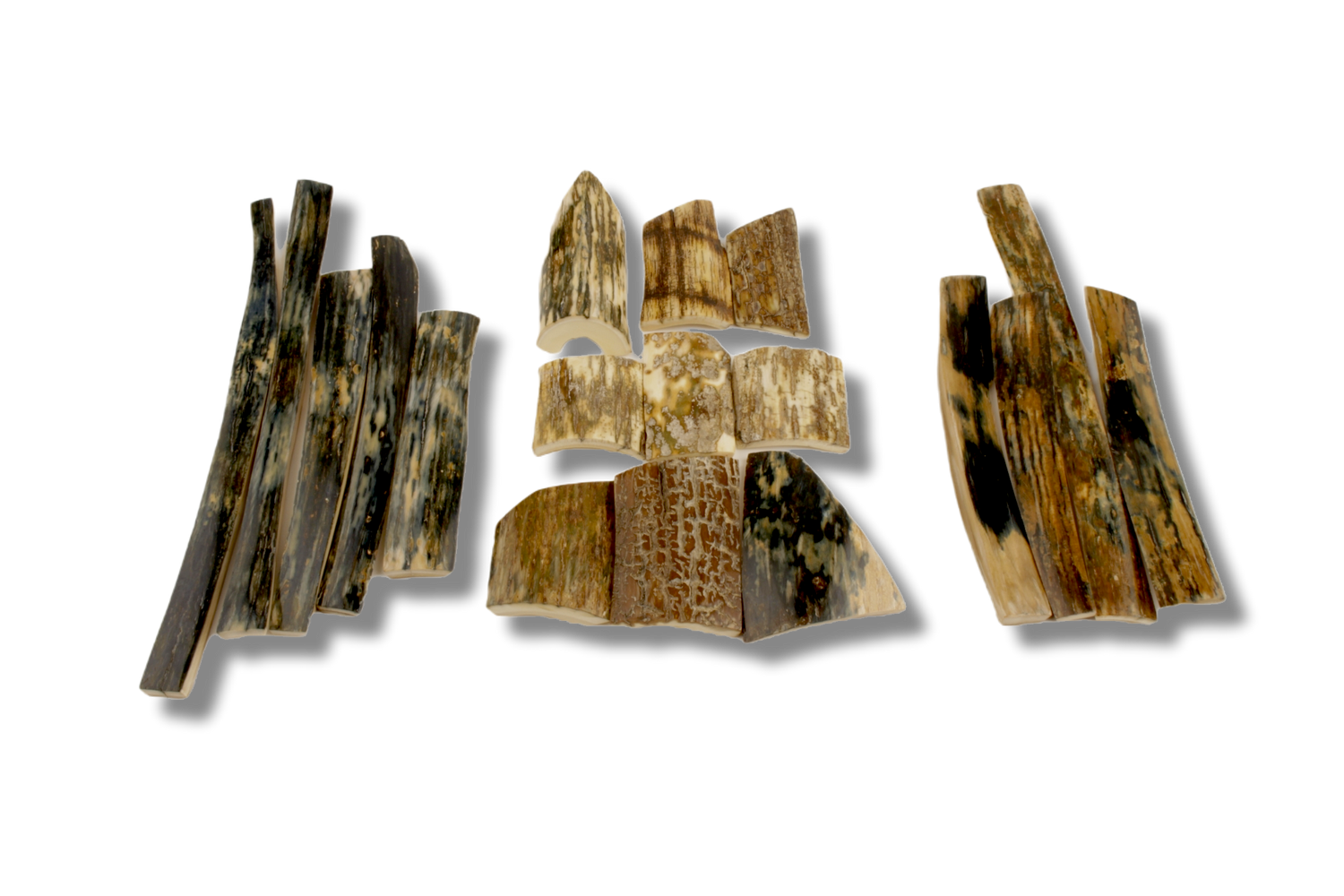
The vast majority of mammoth ivory recovered from Siberia never becomes a display specimen. Material is often recovered rotten, fractured, delaminated, incomplete, poorly preserved, or degraded by exposure after emerging from the permafrost. Much of it is only suitable for cutting into small worked pieces.
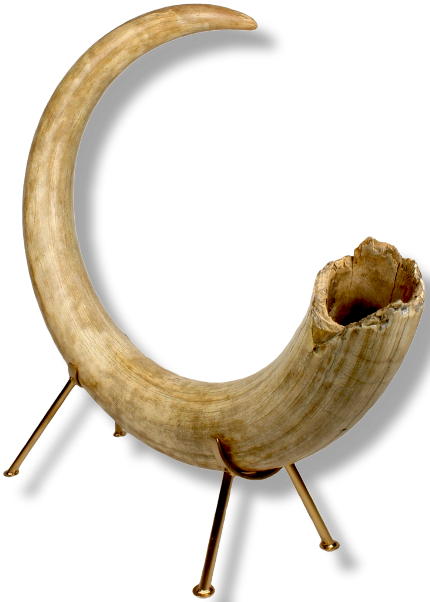
A large, structurally sound mammoth tusk of genuine display quality — with intact curvature, sound inner core, natural bark colouration, and no significant structural compromise — represents an exceptionally small proportion of what is recovered. Arctic Antiques specialises in precisely this top grade of material, and our specimens are of the highest museum quality: fully comparable to institutional display pieces, and in many cases better preserved, because we select only from the highest grade available and prepare each tusk to a standard that public institutions with fixed acquisition budgets frequently cannot pursue.
Matched pairs are rarer again by an order of magnitude. A genuine pair — two tusks from the same animal, of complementary size, curvature and colour — requires both tusks to have survived tens of thousands of years, to have been recovered together, and to have been kept together through the supply chain. This combination is uncommon enough that pairs occupy a distinctly separate tier of the market, and are widely regarded within the trade as the most valuable configuration in which mammoth ivory is held.
Documentation and Provenance: Why it Matters
In every collectibles market that has matured — fine art, classic cars, vintage watches, rare diamonds — the same pattern has emerged: documented examples command a premium over undocumented ones, and the gap widens over time. Knight Frank's 2026 findings on the renewed importance of provenance simply confirm what auction specialists have long known.
Every mammoth tusk supplied by Arctic Antiques is accompanied by an official German Certificate of Origin, certifying that the material is genuine fossil mammoth ivory (Mammuthus primigenius), together with our full supporting documentation.
This matters for three concrete reasons:
- Verification of species: It establishes definitively that the material is fossil mammoth ivory and not elephant ivory — a distinction with substantial legal and commercial consequences, and one that also supports independent verification via Schreger line analysis (see our article "Mammoth Bark vs Mammoth Ivory: What Is the Difference?").
- Cross-border movement: Documentation supports customs clearance and demonstrates good-faith due diligence in jurisdictions with differing ivory regulations.
- Resale and insurance: Undocumented natural history material is materially harder to insure, harder to place with a reputable auction house, and harder to resell at full value. A specimen without paperwork is not simply worth slightly less — in the higher tiers of the market it may be effectively unsaleable.
Documentation is therefore not an administrative formality. It is a substantive component of the asset itself.
The Natural History Market Has Come of Age
Perhaps the most significant development for collectors of fossil material has been the institutionalisation of the natural history market over the past three decades.
When Sotheby's sold "Sue," a Tyrannosaurus rex skeleton, for $8.4 million in 1997, it was treated as an anomaly. It is no longer. Christie's sold the T. rex "Stan" for $31.8 million in 2020. Sotheby's sold the Stegosaurus "Apex" for $44.6 million in 2024, and a juvenile Ceratosaurus for $30.5 million in 2025 against a pre-sale estimate of $4–6 million. In July 2026, the T. rex "Gus" achieved $50.1 million — a record for any fossil at auction, after nineteen bids.
The infrastructure has followed the money. Sotheby's now operates a dedicated Natural History department and an annual "Geek Week" sale series in New York; Christie's has run its "Sculpted by Nature" fossil, mineral and meteorite sales since 2018; Phillips sold its first dinosaur fossil in 2025. Museum-quality fossil material now sits alongside blue-chip art and rare watches as a recognised trophy category among ultra-high-net-worth collectors, and specialists report natural history pieces being integrated directly into the architecture and interiors of private homes.
Fossil mammoth tusks are not dinosaur skeletons, and we would not suggest the price levels are comparable. But they benefit from the same structural shift: a collector base that now understands, values and actively competes for documented natural history specimens.
The Return You Can Live With
There is one respect in which a fossil mammoth tusk differs fundamentally from a share certificate, a bond, or a line in a brokerage statement.
You can see it. A tusk displayed in a hunting lodge, a private library, a boardroom or an entrance hall delivers something every day that a financial instrument cannot — and this is not merely sentiment. In a 2026 study published in the Financial Analysts Journal, Dimson, Pukthuanthong and Vorsatz analysed up to 110 years of returns across thirteen collectible categories in order to quantify precisely this: the "emotional yield" that owners implicitly accept in place of financial return. Their finding — that collectors give up roughly 2.6% per year in foregone financial return for the pleasure of ownership — is usually reported as a cost. It can equally be read as a measurement of how much that pleasure is demonstrably worth to the people who pay for it.
Put differently: the enjoyment is not a consolation prize attached to the investment. It is a real and quantifiable part of the total return, and it is the reason collectors have rationally held these assets for centuries.
It is also the reason mammoth tusks pass between generations. A well-prepared, properly displayed tusk requires almost no maintenance, does not depend on any counterparty remaining solvent, cannot be diluted by issuance, and will still be there in eighty years.
Understanding the Risks
No responsible discussion of tangible assets should omit this section, and we would be sceptical of any dealer who did.
Prices fluctuate, and they do not only rise. Collectible markets are cyclical. The Knight Frank index declined in 2023 and 2024 before stabilising in 2025. The mammoth ivory market specifically experienced a downturn following China's 2018 domestic elephant ivory ban, which sharply reduced demand from the Chinese carving trade that had historically absorbed the majority of Siberian raw tonnage. Any claim that mammoth ivory prices rise steadily and continuously would be inaccurate, and we do not make it. What can reasonably be said is that the high-quality documented collector segment behaves quite differently from the bulk commodity trade, and that rarity and provenance have consistently proved more resilient than volume material.
These are illiquid assets. There is no exchange, no daily price, and no guarantee of a buyer at a given moment. Realising value can take months. Tangible assets suit capital that does not need to be accessed quickly.
Transaction costs are meaningful. Academic work on collectibles emphasises repeatedly that headline index returns overstate what owners actually realise, once acquisition costs, transport, insurance and eventual sale commissions are accounted for.
Regulation can change. Mammoth ivory is not regulated under CITES or the U.S. Endangered Species Act, as mammoths are extinct and not a protected living species. However, several U.S. states — including California, New York, New Jersey, Illinois, Nevada and Hawaii — have extended their ivory legislation to cover fossil mammoth ivory, and regulatory attitudes in other jurisdictions may evolve. Collectors should verify the position in their own jurisdiction before acquiring.
Quality and documentation are not optional. Everything set out above applies to top-grade, fully documented specimens. It does not apply to poor-grade or undocumented material, which is a different market entirely.
Acquiring the Exceptional
Fossil mammoth tusks occupy an unusual position: a finite prehistoric resource, a museum-quality natural history specimen, a commanding interior feature, and a tangible asset that can be held across generations — all at once.
For collectors and designers who value substance over speculation, we would encourage the same approach we apply to our own sourcing: buy the best grade you can, insist on complete documentation, and hold for the long term.
Our current selection of fossil mammoth tusks and matched pairs is available to view here.
For guidance on selecting a specimen, or to discuss availability of pairs, please email us: info@arcticantiques.com
Bibliography:
Dimson, E.; Spaenjers, C. (2014). "Investing in Emotional Assets". Financial Analysts Journal, 70(2): 18–22.
Dimson, E.; Spaenjers, C. (2013). "The Investment Performance of Art and Other Collectibles". SSRN Working Paper.
Dimson, E.; Pukthuanthong, K.; Vorsatz, B. (2026). "Emotional Yields of Collectibles". Financial Analysts Journal.
Dimson, E.; Rousseau, P. L.; Spaenjers, C. (2015). "The Price of Wine". Journal of Financial Economics, 118(2): 431–449.
Mei, J.; Moses, M. (2002). "Art as an Investment and the Underperformance of Masterpieces". American Economic Review, 92(5): 1656–1668.
Knight Frank (2026). The Wealth Report, 20th edition — Knight Frank Luxury Investment Index.
Deloitte (2023). Art & Finance Report, 8th edition. Deloitte Luxembourg and ArtTactic.
Goetzmann, W.; Spaenjers, C.; Van Nieuwerburgh, S. (2021). "Real and Private-Value Assets". Review of Financial Studies.
Espinoza, E. O.; Mann, M. J. (1999). Identification Guide for Ivory and Ivory Substitutes. CITES Secretariat.
"Trade in Mammoth Ivory" (CoP17 Doc. 38). Convention on International Trade in Endangered Species of Wild Fauna and Flora (CITES).
Lister, A. M.; Sher, A. V.; Van Essen, H.; Wei, G. (2005). "The pattern and process of mammoth evolution in Eurasia". Quaternary International, 126–128: 49–64.