Mammoth Ivory vs Mammoth Bark: What is the Difference?
New customers often ask us about the difference between mammoth bark and mammoth ivory (Mammuthus primigenius). This is a fair question, since the two terms are used side by side throughout the trade, and the answer is worth explaining properly.
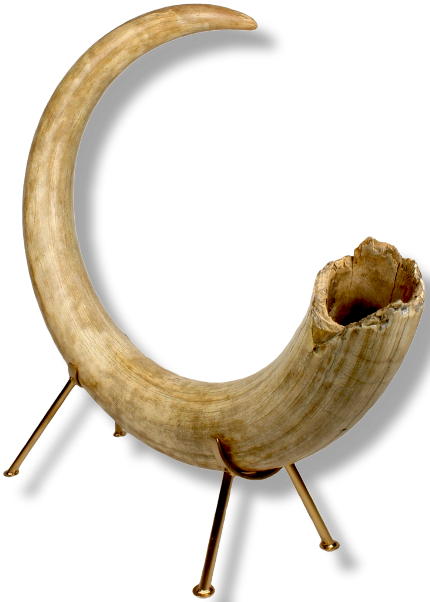
Mammoth bark and mammoth ivory are not two different materials. Mammoth bark is mammoth ivory. The term simply describes which part of the tusk a particular piece comes from (think of a tree: bark is the outer layer, while the inner core is the equivalent of the trunk's inner wood). Mammoth bark forms the outer layer of a fossil mammoth tusk, while what collectors usually call "mammoth ivory" refers to the inner core. Both originate from the same tusk, the same animal, and the same Mammuthus primigenius dentine structure.
The Outer Layer: Mammoth Bark
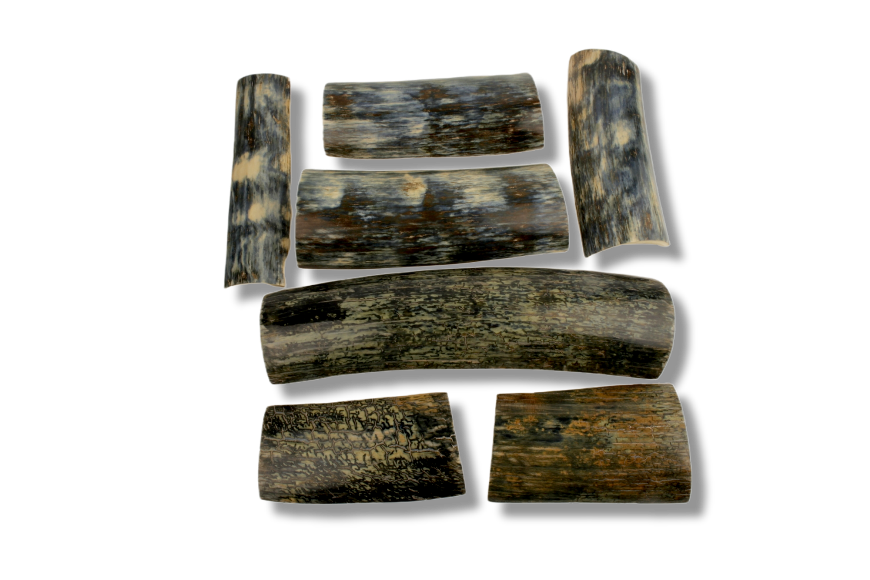
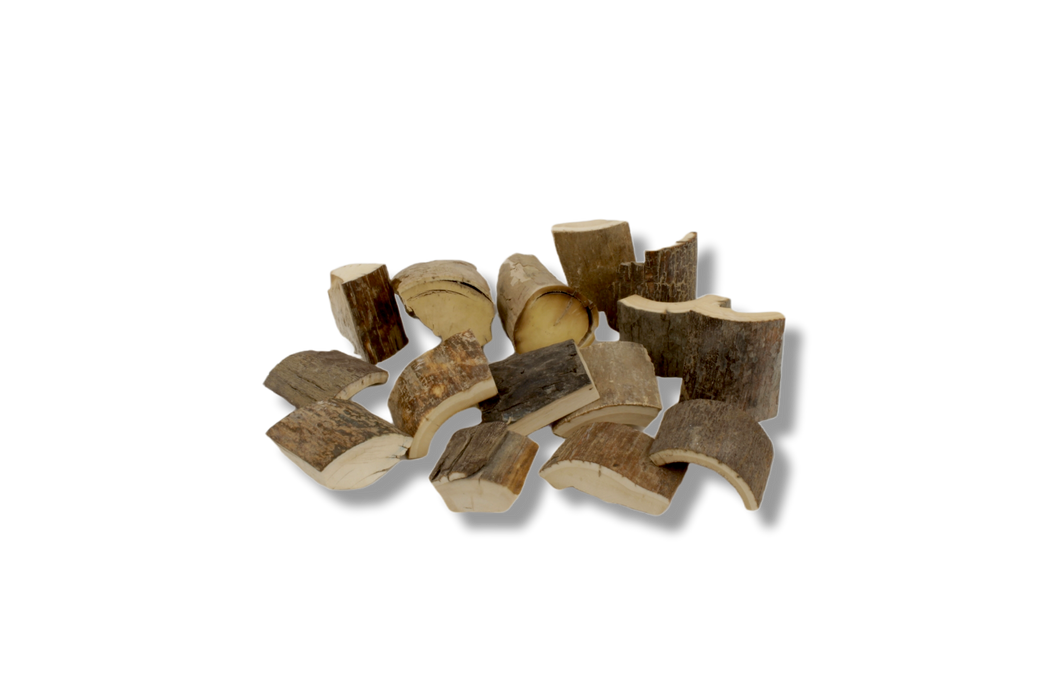
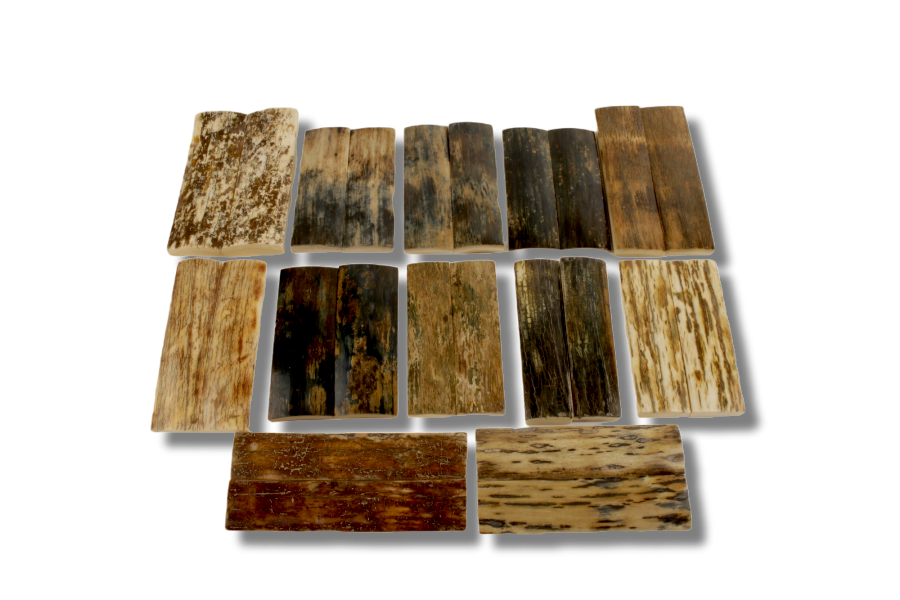
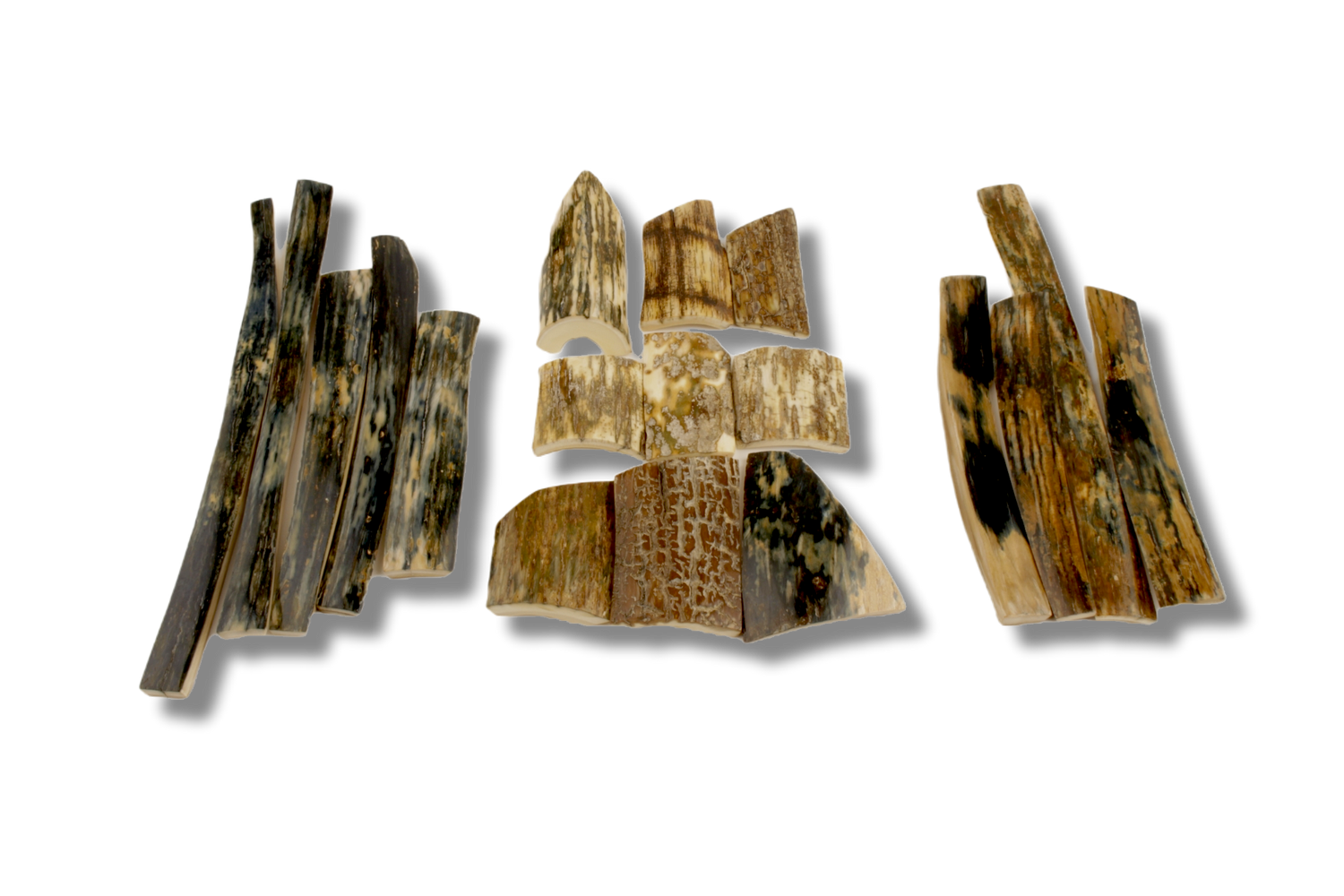
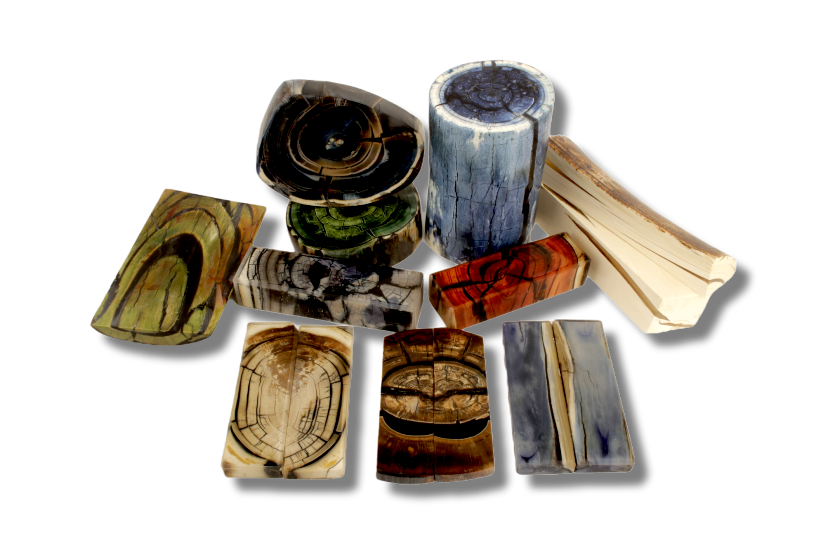
Mammoth bark is the outer surface of the tusk, the layer that was exposed to the Siberian permafrost, mineral-rich soils and groundwater for tens of thousands of years. This prolonged, natural exposure is precisely what gives mammoth bark its outstanding variety of colouration. Depending on the minerals present in the surrounding ground and the exact conditions of burial, a piece of bark can develop tones ranging from soft cream (typical ivory tone), honey and amber, through to deep brown, blue-grey, or almost black, often with dramatic patina, cracking patterns and textures unique to that specific tusk.
Nature knows no limitations when it comes to the color palette of natural mammoth bark. This is one of the main reasons bark is so prized by artisans, designers and collectors: no two pieces are ever truly identical. Importantly, this range of natural colouration is a hallmark specific to genuine Siberian fossil mammoth ivory. It is not something that occurs in fresh, non-fossilized elephant ivory.
The Inner Core: Mammoth Ivory
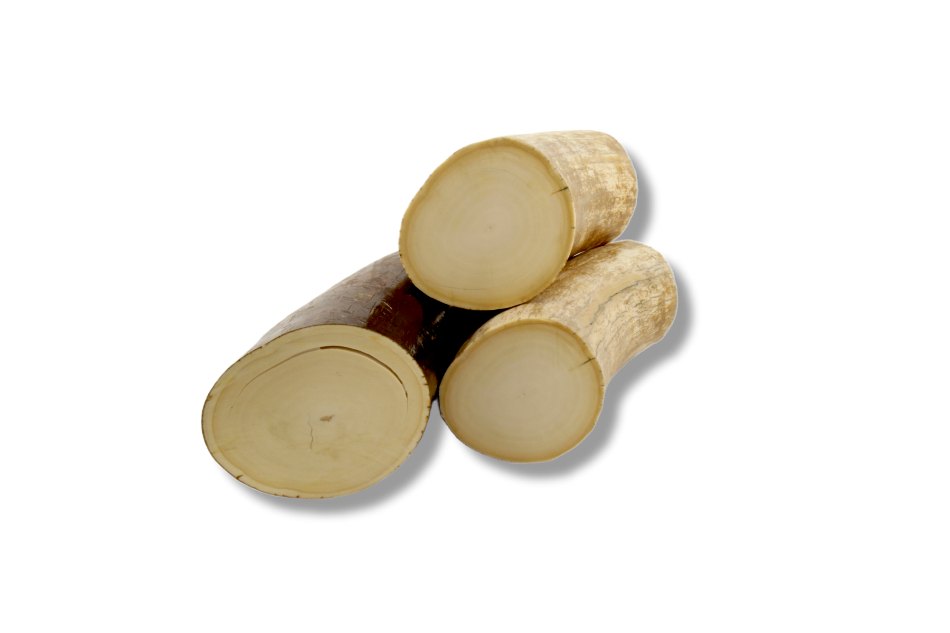
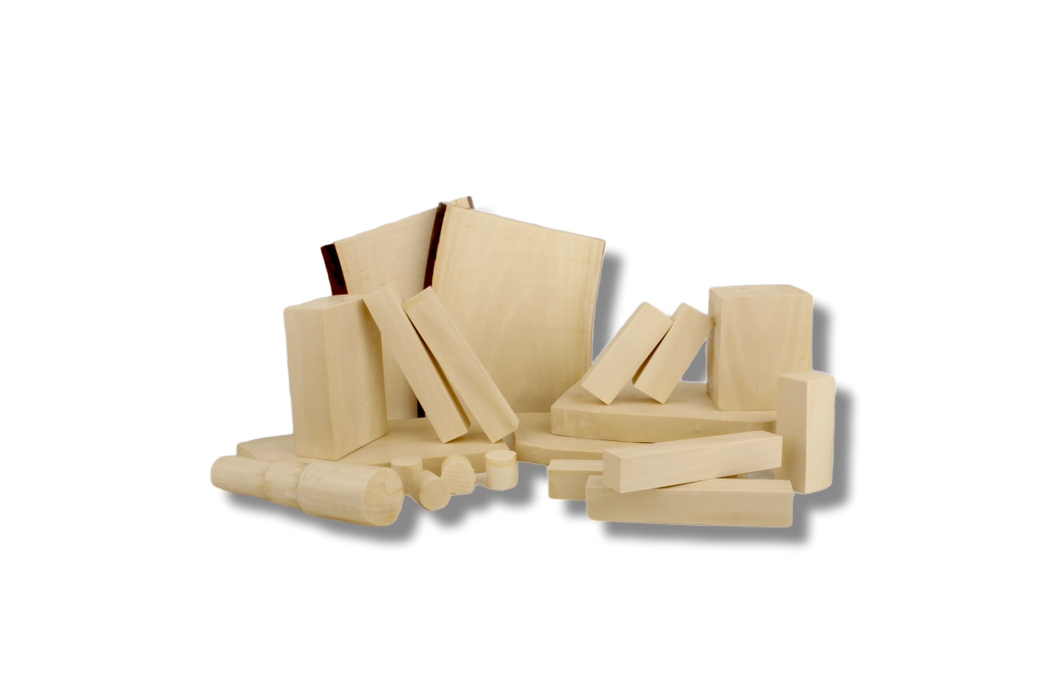
The inner core of a mammoth tusk is, in the vast majority of cases, white or creamy-white – the familiar tone most people associate with the word "ivory". This is simply the natural, unweathered dentine that was shielded from direct contact with the surrounding ground during the fossilization process.
On rare occasions, the inner core itself can also be brown, sometimes as a result of mineral penetration deeper into the tusk, or other rare, naturally occurring circumstances. This is a genuine rarity in nature, and brown-toned inner core material is considerably harder to come by than the typical white inner core.
Same Tusk, Same Structure, Same Tools
Whether you are holding a piece of natural mammoth bark or a piece of white inner core, you are holding mammoth ivory (Mammuthus primigenius). The structure, density and solidity of the material are identical – only the position within the tusk, and consequently the surface colouration, differ. This means that, in practice, the same cutting and finishing tools are used for both bark and inner core. There is no need for different saw blades, feed rates or techniques depending on which part of the tusk you are working with (for more detail on the correct tools and technique, see our article "Cutting Mammoth Ivory").
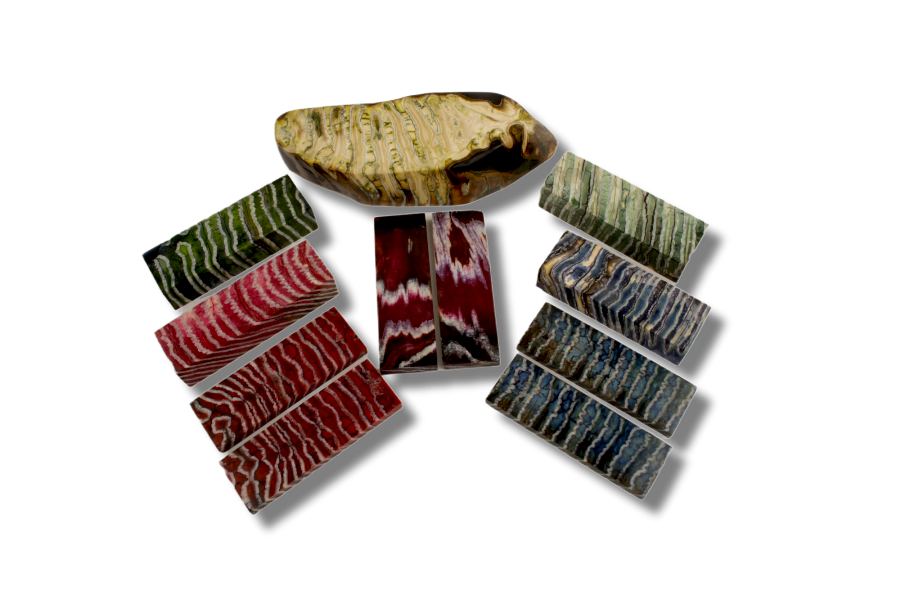
This is an important distinction from stabilised mammoth molar. Mammoth molar is not mammoth ivory – it is dental tissue of a different structure (a molar also contains enamel and cementum), from the animal's teeth rather than its tusks, and it requires stabilisation along with different tools and methodologies to work with (see our article "Processing Stabilised Mammoth Molars"). Mammoth ivory, whether bark or inner core, is naturally solid and dense, behaving more like a soft metal than like wood, and is considerably easier and more predictable to work with than mammoth molar.
Schreger Lines: The Fingerprint of Genuine Mammoth Ivory
One of the clearest ways to distinguish mammoth ivory from elephant ivory is by examining a cross-cut section of the material under good light. Any polished cross-section, whether taken through the outer bark layer or the inner core, will reveal a pattern of fine, criss-crossing lines known as Schreger lines (also called cross-hatchings, engine turnings, or stacked chevrons).
Schreger lines were first described by the German anatomist Bernhard Gottlob Schreger in 1800, and they remain one of the standard diagnostic features used by the CITES Identification Guide for Ivory and Ivory Substitutes to distinguish between the ivory of different proboscidean species. The lines are formed by the arrangement of dentinal tubules within the tusk and can be split into two categories: the easily visible outer Schreger lines, found closer to the outside of the cross-section, and the fainter inner Schreger lines, found nearer the tusk's nerve or pulp cavity.
Where these lines intersect, they form angles that are either concave (opening towards the centre of the tusk) or convex (opening towards the outside of the tusk). Extinct fossil mammoth ivory characteristically displays tighter, more acute Schreger angles than the ivory of modern elephants, which tend to show wider, more obtuse angles. This measurable difference is why Schreger lines are used as a forensic tool in wildlife trade enforcement, and it is a feature any genuine piece of Siberian fossil mammoth ivory will show clearly, whether you are looking at the outer bark or the inner core.
If you have any further questions or require further explanations, please email us: info@arcticantiques.com
Bibliography:
Espinoza, E. O.; Mann, M. J. (1991). Identification Guide for Ivory and Ivory Substitutes. Baltimore: World Wildlife Fund and Conservation Foundation.
"Identification Guide for Ivory and Ivory Substitutes" (PDF). Convention on International Trade in Endangered Species of Wild Fauna and Flora (CITES).
"Schreger line". Wikipedia, The Free Encyclopedia.
"Ivory". Wikipedia, The Free Encyclopedia.
Lister, A. M.; Sher, A. V.; Van Essen, H.; Wei, G. (2005). "The pattern and process of mammoth evolution in Eurasia". Quaternary International. 126–128: 49–64.