What Is a Woolly Mammoth?
The woolly mammoth (scientific name: Mammuthus primigenius) was a large, cold-adapted relative of today's elephants that roamed the northern hemisphere during the last Ice Age. Every piece we offer once belonged to one of these unique animals, so it is worth knowing the creature behind the material — its story is a large part of what makes a mammoth ivory piece so compelling to collectors.
An Ice Age giant
Woolly mammoths were among the most abundant large herbivores of the Pleistocene. From roughly 300,000 years ago they grazed a vast, cold grassland known as the "mammoth steppe," which stretched from Western Europe across Siberia and Beringia into North America. Fully grown males reached shoulder heights between 2.7–3.4 m (8.9–11.2 ft) and weighed up to 6 tonnes (12,000 lb). Female woolly mammoths reached 2.6–2.9 m (8.5–9.5 ft) in shoulder heights and weighed up to 4 tonnes (8,000 lb). A newborn calf would have weighed about 90 kg (198 lb).
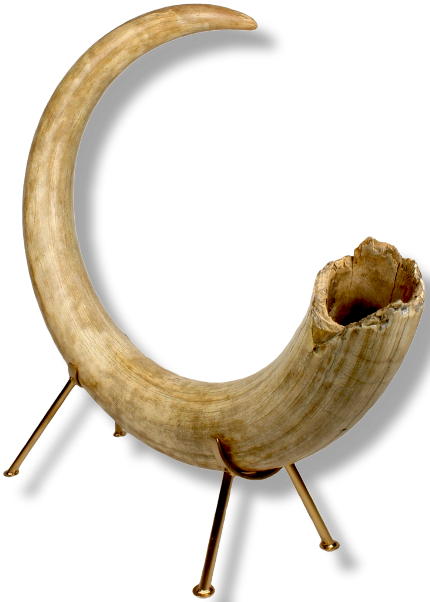
Woolly mammoths had large, beautifully curved tusks and four molars. Mammoth molars were replaced about 5 times during the lifetime of an individual. The molars grew larger and contained more ridges with each replacement. The woolly mammoth is considered to have had the most complex molars of any elephant.
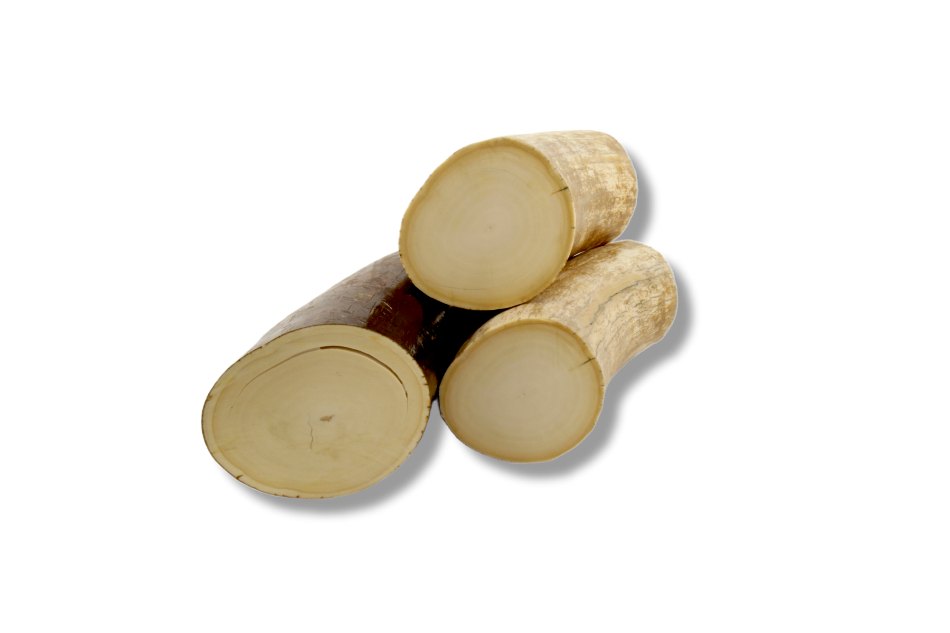
Woolly mammoths were superbly built for the extreme cold. A thick coat of long outer hair covered a dense woolly undercoat; beneath the skin lay an insulating layer of fat. Their ears and tails were short to limit heat loss, and a high, domed skull carried long, strongly curved tusks that in older bulls could cross over one another. These mammoth tusks — enlarged incisor teeth — were used for foraging, display and defense, and are the source of the mammoth ivory prized today.
When did the woolly mammoth go extinct?
There are two dates worth distinguishing, because they are often confused.
- Mainland extinction (~10,000 years ago): As the Ice Age ended, the cold steppe gave way to wetter tundra and forest. Habitat loss, a warming climate and human hunting together drove continental populations to extinction around the Pleistocene–Holocene boundary, roughly 10,000 to 10,500 years ago.
- The last mammoths (~4,000 years ago): A small population survived in isolation on Wrangel Island, off north-east Siberia, after rising seas cut the island off around 10,000 years ago. Recent genomic work published in Cell shows this population remained demographically stable for over 200 generations before disappearing abruptly about 4,000 years ago — meaning mammoths were still alive when the pyramids of Giza were being built.
As far as our knowledge goes, there is no definitive scientific conclusion for their extinction.
Why mammoth tusks survive in Siberia
The reason mammoth ivory can be worked at all comes down to Siberian permafrost — ground that stays at or below 0 °C for at least two consecutive years. Siberia holds the largest continuous permafrost region on Earth, and its cold, low-oxygen conditions preserve organic remains extraordinarily well. Bones, molars, frozen carcasses and, most valuably, tusks can survive for hundreds of thousands of years.
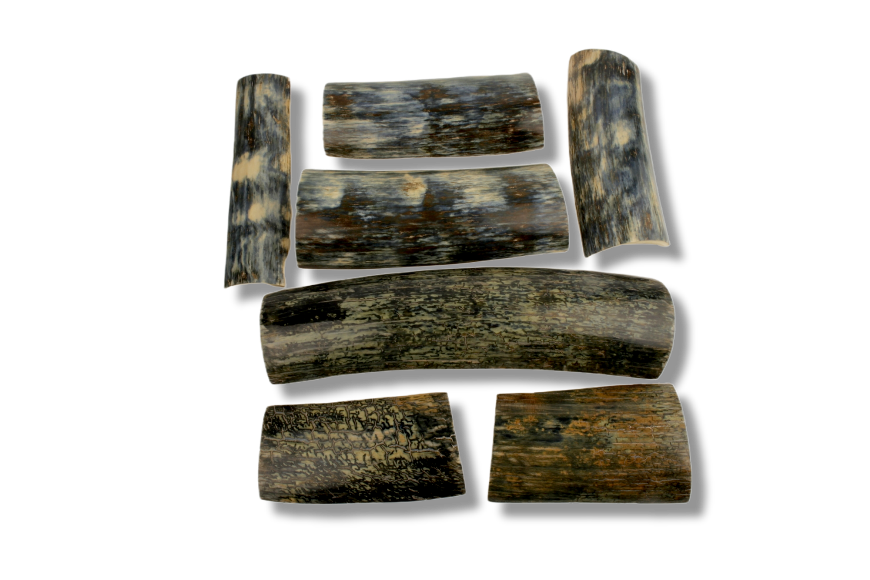
As the surface layer thaws each summer (July and August), remains are exposed and recovered. Even so, well-preserved tusks are the exception rather than the rule; most material comes to the surface heavily fragmented and weathered.
A tangible link to the Ice Age
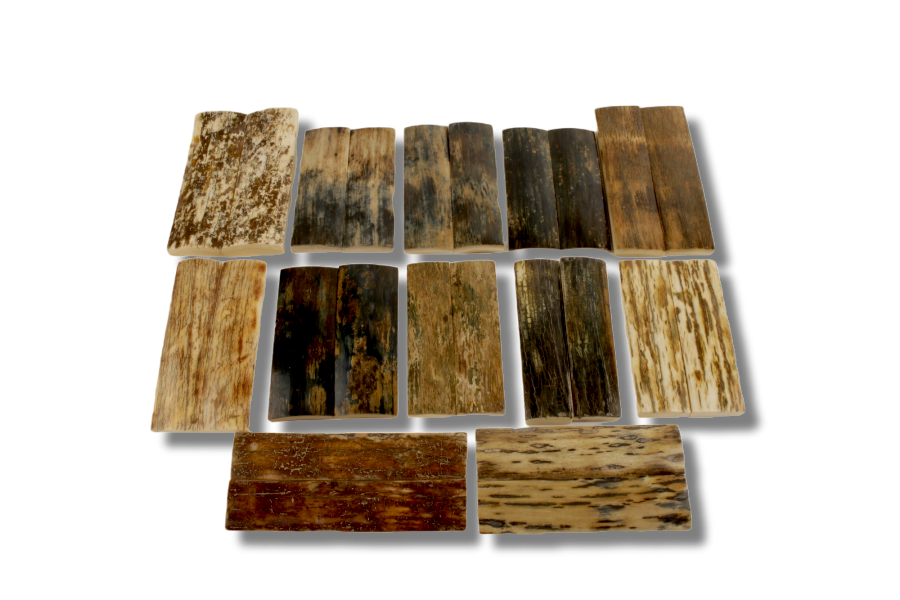
Holding a mammoth tusk is holding a genuine fossil that predates all recorded human history. That combination of natural history, rarity and beauty is why the material appeals so strongly to bespoke fossil collectors, interior designers and the artisans who transform it into lasting objects.
If you have any further questions or require further explanations, please email us: info@arcticantiques.com
Bibliography
- Dehasque, M., et al. (2024). "Temporal dynamics of woolly mammoth genome erosion prior to extinction." Cell, 187(14). [Wrangel Island isolation and extinction ~4,000 years ago; demographic stability]
- Kurtén, B., & Anderson, E. (1980). Pleistocene Mammals of North America. New York: Columbia University Press, pp. 348–354. [Mammoth range and biology]
- Vartanyan, S. L., et al. (2008). "Collection of radiocarbon dates on the mammoths and other genera of Wrangel Island, north-east Siberia." Quaternary Research, 70(1), 51–59. [Radiocarbon dating of the last mammoths]
- Lister, A., & Bahn, P. (2007). Mammoths: Giants of the Ice Age (rev. ed.). London: Frances Lincoln. [General natural history of the woolly mammoth]
- Arctic Portal. "Woolly Mammoth (Mammuthus primigenius)." [Adaptations to cold; range and extinction summary]
- National Snow and Ice Data Center (NSIDC). "Frozen Ground & Permafrost." [Permafrost definition; Siberia as largest permafrost region]
- Boeskorov, G.; Tikhonov, A.; Shchelchkova, M.; Ballard, J. P.; Mol, D. (2020). "Big tuskers: Maximum sizes of tusks in woolly mammoths - Mammuthus primigenius (Blumenbach) - from East Siberia". Quaternary International. 537: 88–96.
- Reich, M.; Gehler, A.; Mohl, D.; van der Plicht, H.; Lister, A. M. (2007). "The rediscovery of type material of Mammuthus primigenius (Mammalia: Proboscidea)". International Mammoth Conference IV (Poster): 295.
- Cuvier, G. (1796). "Mémoire sur les épèces d'elephans tant vivantes que fossils, lu à la séance publique de l'Institut National le 15 germinal, an IV". Magasin Encyclopédique, 2e Anée: 440–445.
- Gross, L. (2006). "Reading the Evolutionary History of the Woolly Mammoth in Its Mitochondrial Genome". PLOS Biology. 4 (3): e74.